Mango Agua Fresca (Agua de Mango)
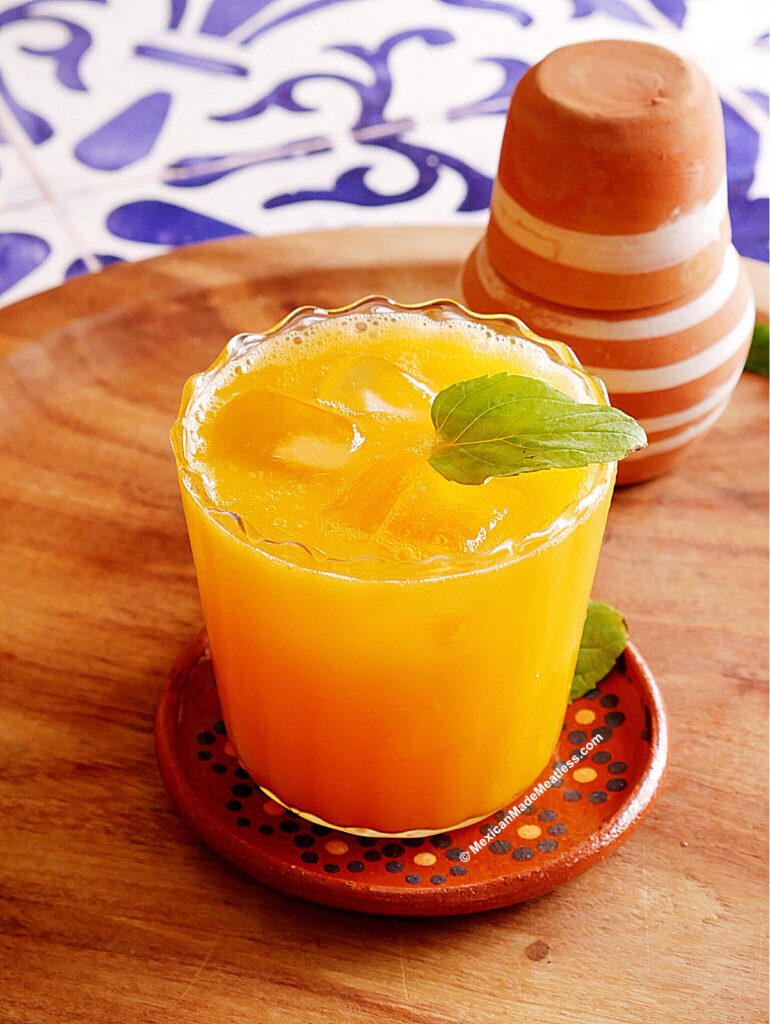
Mango agua fresca, or agua de mango, is one of the most refreshing and popular drinks in Mexico. You make it by blending ripe fresh mangoes with cold water and serving it over plenty of ice. It takes about 10 minutes, only a handful of ingredients, and zero cooking.
What is Mango Agua Fresca?
Mango agua fresca, also called agua de mango, is a traditional Mexican drink made by blending fresh ripe mangoes with cold water and serving over ice. It is naturally sweet, light, and refreshing. Unlike juice or a smoothie, it has a lighter consistency. Ready in about 10 minutes with just 3 ingredients.
Agua de mango is one of the most popular aguas frescas in Mexico, and for good reason.
I have been making this at home for 13 years, ever since I moved back to Mexico. My first glass was at a small, casual restaurant in Playa del Carmen, and I was hooked.
The thing is, most places water it down quite a bit. So I started making my own at home with a higher mango-to-water ratio, which means the flavor is stronger, more delicious, and naturally sweet enough that I don’t need to add sugar.
Sometimes on a hot summer day, I squeeze in a little lime juice to make it extra refreshing.
You may have seen versions online made with sweetened condensed milk or evaporated milk. Those are a richer, creamier variation. Tasty, but that is not the traditional agua de mango you will find at most Mexican markets and taquerías. What I am sharing here is the classic fruit-forward version that lets the mango do the work.
Recipe at a Glance
- What it is: A naturally sweet, light Mexican drink made by blending fresh mangoes with water and ice. Vegan and naturally dairy-free.
- Cuisine: Mexican, naturally vegan
- Dish type: Agua fresca, drink
- Difficulty: Easy
- Ready In: 10 minutes
- Method: Blender
- Key ingredients: Mango, cold water, ice, lime juice (optional), sweetener (optional)
- Flavor: Sweet, fruity, tropical, light, refreshing
- Best for: Summer gatherings, everyday meals, Cinco de Mayo, family cookouts, hot weather
Why You’ll Love This Mango Agua Fresca
🥭 Only 3 ingredients. Fresh mango, cold water, and ice are all you need. Lime juice and sweetener are completely optional.
💛 Naturally sweet. Ripe mangoes are sweet on their own, so you can skip the added sugar entirely.
⚡ Ready in 10 minutes. Blend, pour, and serve. It is that simple.
🌿 100% plant-based and naturally dairy-free. No condensed milk, no evaporated milk, just pure fresh fruit.
A Classic Mexican Drink Made with Seasonal Fruit
Aguas frescas have been part of Mexican food culture for centuries. You will find them at street stalls, markets, restaurants and taquerías across the country, made fresh daily with whatever fruit is in season. Mango is one of my most beloved flavors.
Mexico grows many mango varieties, and they pile up at every mercado from spring through summer. My favorite is the ataulfo, sometimes called a honey mango or champagne mango. It is small, yellow, creamy, and smooth with very little fibrous texture, so perfect for blending into an agua fresca.
I first tasted agua de mango at a small restaurant in Playa del Carmen, and when I settled back in Mexico 13 years ago, I started making it at home.
My agua de mango version uses more mango and less water than most places serve, so the flavor is strong and delicioso. Having the more concentrated flavor means no added sugar is needed.
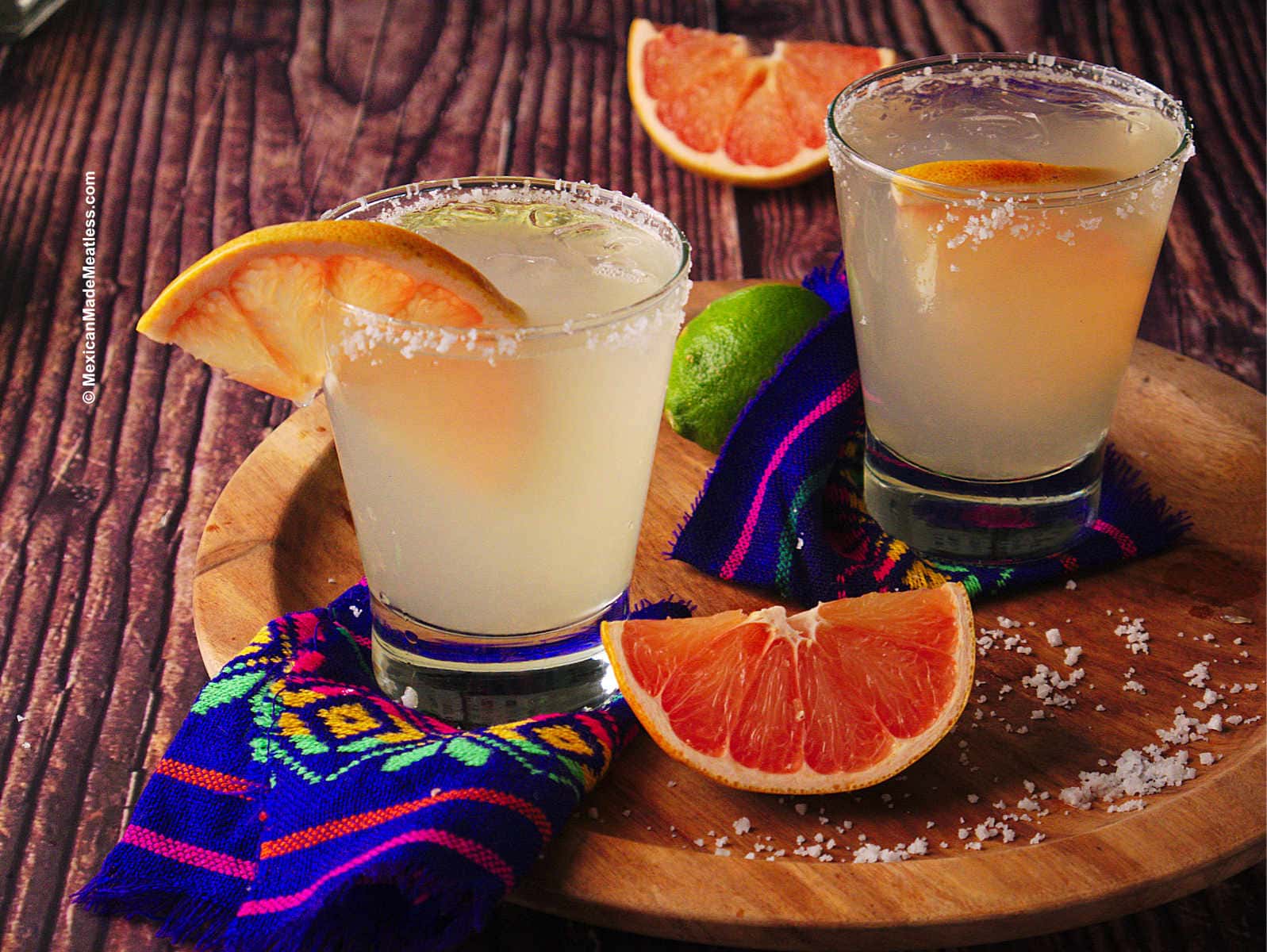
If you love fresh fruit drinks, browse my full collection of refreshing agua fresca recipes for more ideas.
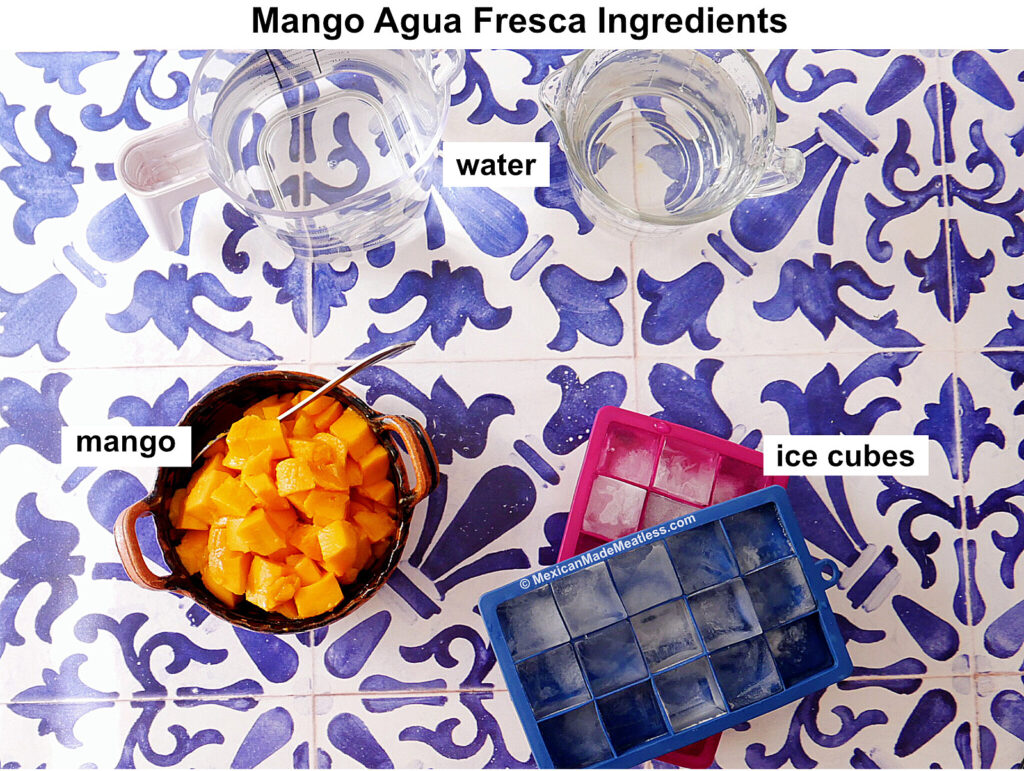
What You’ll Need
Fresh mango: The star of the drink. Ripe mango provides all the natural sweetness and that beautiful golden color. Fresh is best when in season, but frozen works well too.
Cold water: This is what makes it an agua fresca rather than a smoothie. Use cold water for the best flavor and texture.
Ice cubes: Lots of them. Ice keeps the drink cold and slightly dilutes it to the perfect drinking consistency.
Lime juice (optional): A squeeze of fresh lime brightens the flavor and makes the mango taste even more refreshing. I especially love this addition on a hot day.
Sweetener of choice (optional): If your mangoes are ripe and sweet, you likely will not need this at all. If you do want a little extra sweetness, use sugar, agave, or honey.
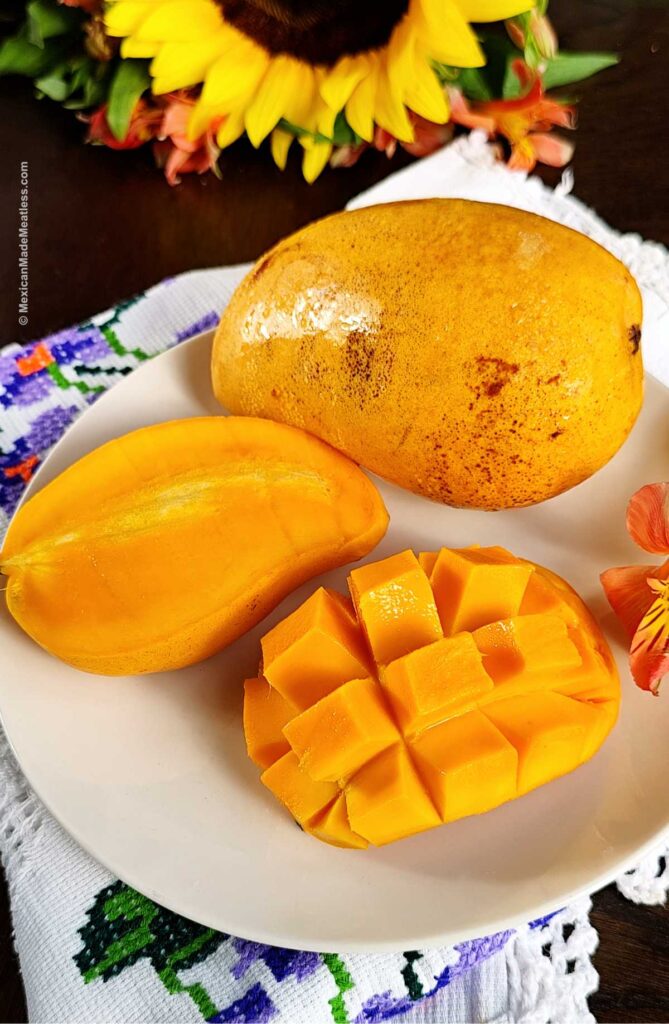
Best Mango Varieties for Agua Fresca
Not all mangoes are the same, and the variety you choose makes a difference.
Ataulfo (honey or champagne mango): My top pick. Creamy, smooth, naturally sweet, and low in fiber. Blends beautifully without straining.
Manila mango: Similar to ataulfo, smooth and sweet. A great option if that is what is available.
Tommy Atkins: The large red and green mango most common in US grocery stores. It works well but can be a bit more fibrous, so straining is recommended.
Kent or Keitt: Juicy and sweet with less fiber than Tommy Atkins. A solid choice when ataulfo is not available.
Not sure how to prep your mango? Check out my guides on how to peel a mango and how to eat a mango before you get started.
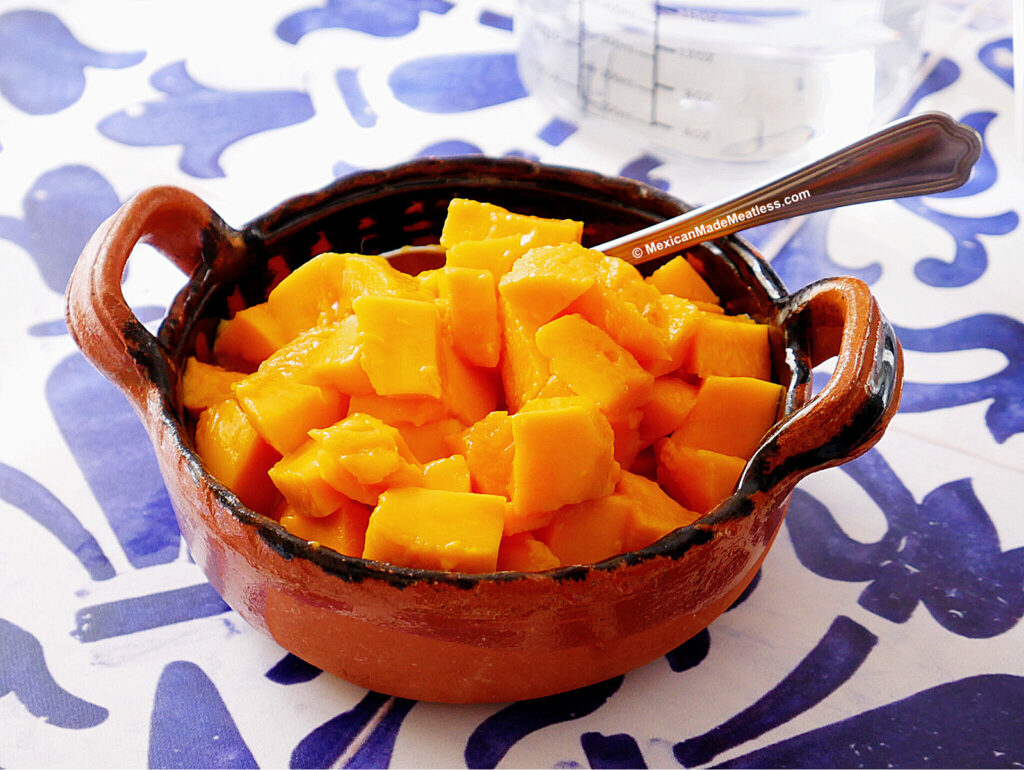
How to Choose The Best Mangos
Choosing the right mango makes a big difference in how your agua fresca turns out. Here’s how I choose the perfect mangoes for my agua fresca.
Smell it first. A ripe mango smells sweet and fragrant near the stem. If it has no scent, it isn’t ripe enough and will have a mild flavor.
Give it a gentle squeeze: A ripe mango gives slightly under gentle pressure, similar to a ripe peach or avocado. Very firm means unripe mangos. Mushy means overripe.
Do not judge by color alone: Mango color varies by variety. An ataulfo mango turns golden yellow when ripe, but a Tommy Atkins can stay red and green even when perfectly ripe.
Frozen mango works too: If fresh mangoes are not in season, frozen mango is a great option. Fruit is typically frozen at peak ripeness, so the flavor is still great. Just blend straight from frozen or thaw slightly first.
Sourcing tip: Ataulfo mangoes are widely available at Latin grocery stores and many mainstream supermarkets in the US from spring through early summer. If you are having trouble finding them, Manila mangoes are a good substitute.
How To Make Mango Agua Fresca
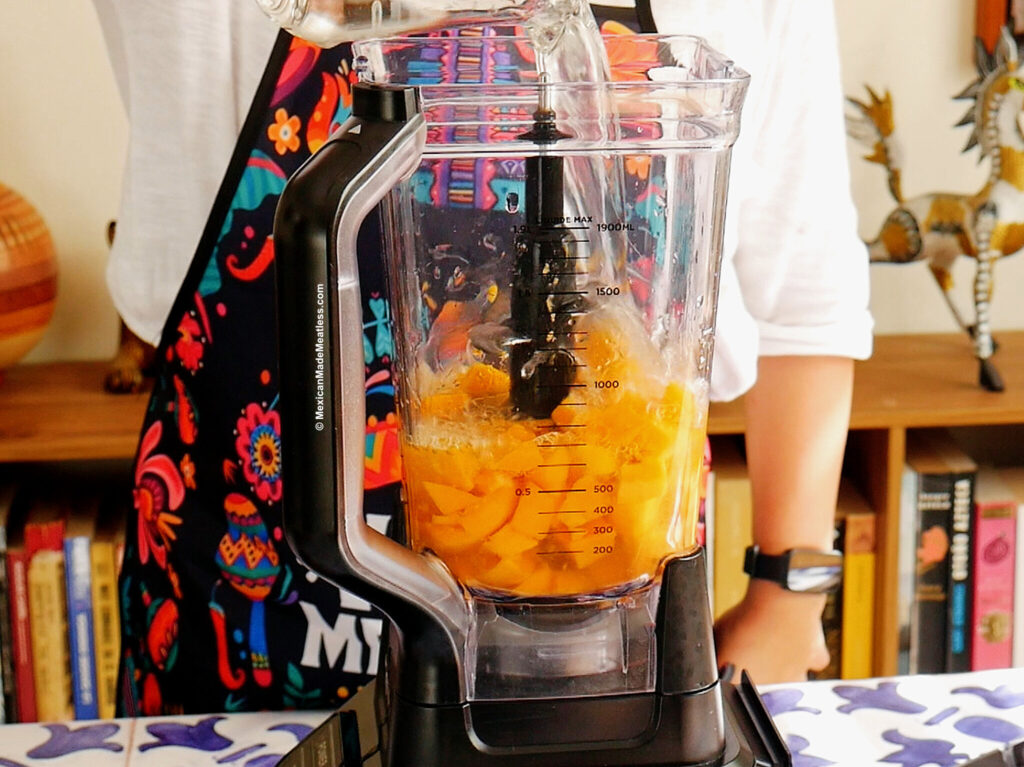
1. Blend the mango. Add the chopped mango, 2 cups of cold water, and lime juice if using to a blender. Blend until completely smooth.
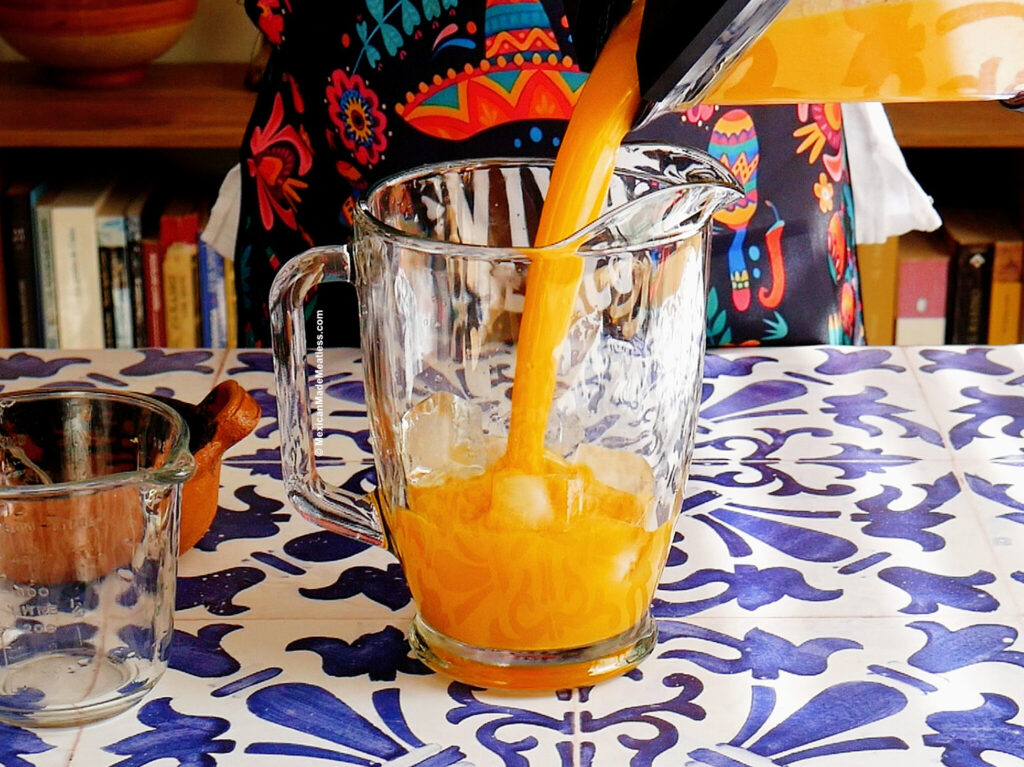
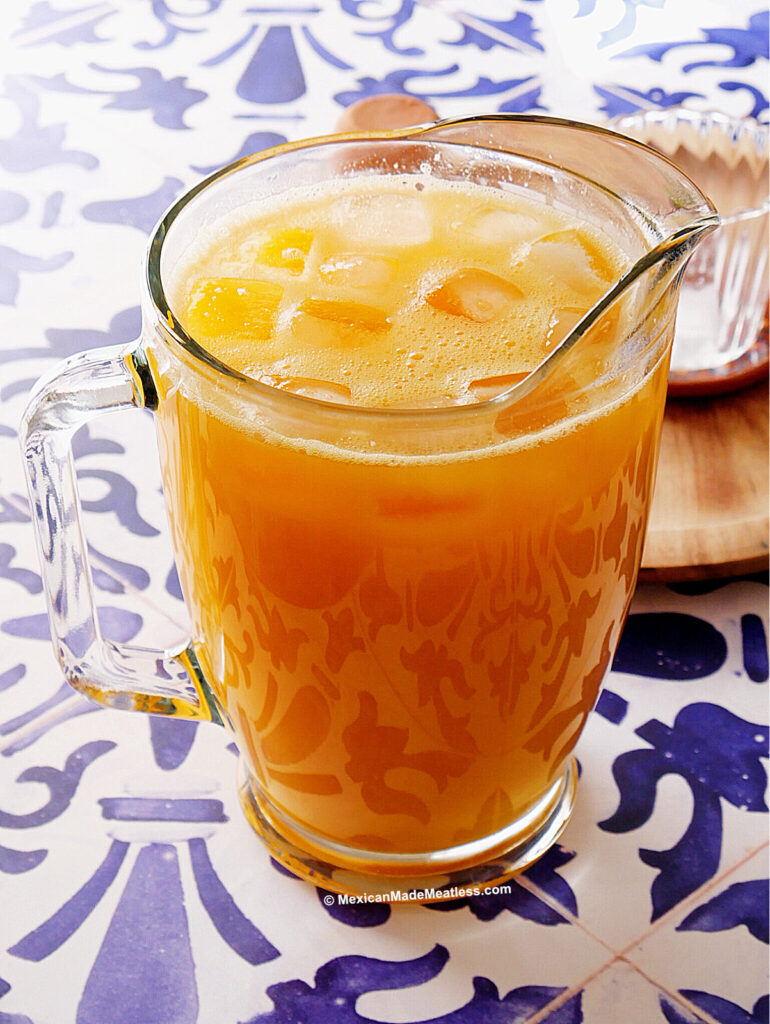
2. Fill your pitcher. Add lots of ice to a large pitcher, then pour in the blended mango mixture.
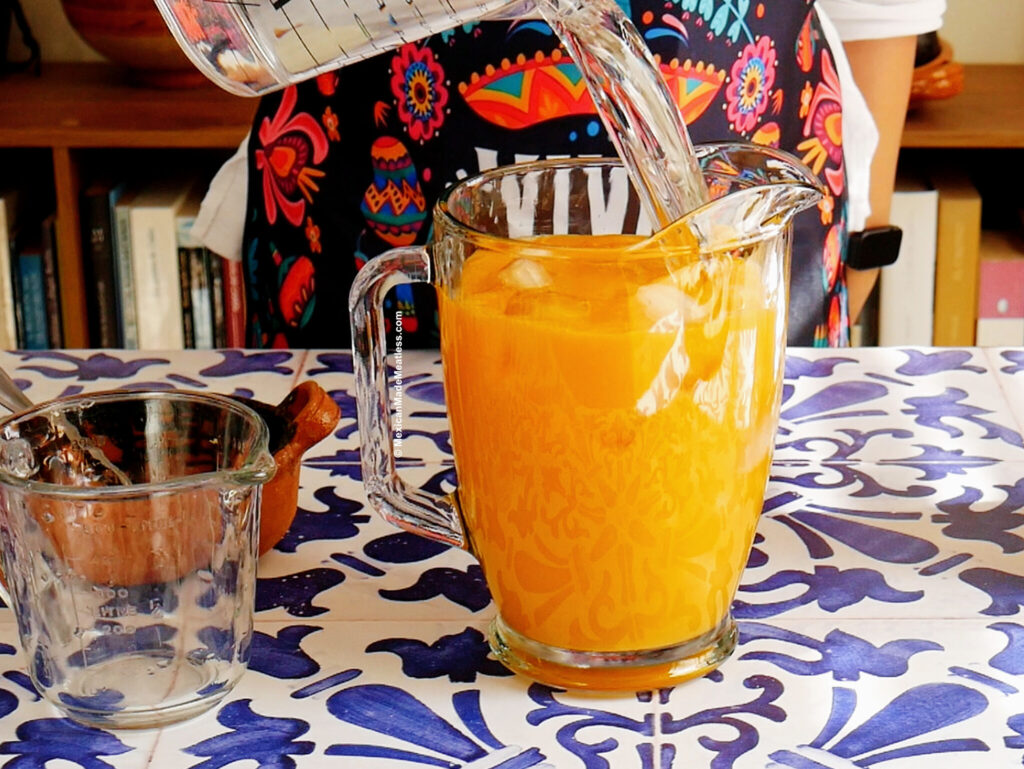
3. Add the remaining water. Pour in the remaining 4 cups of cold water and stir well to combine.
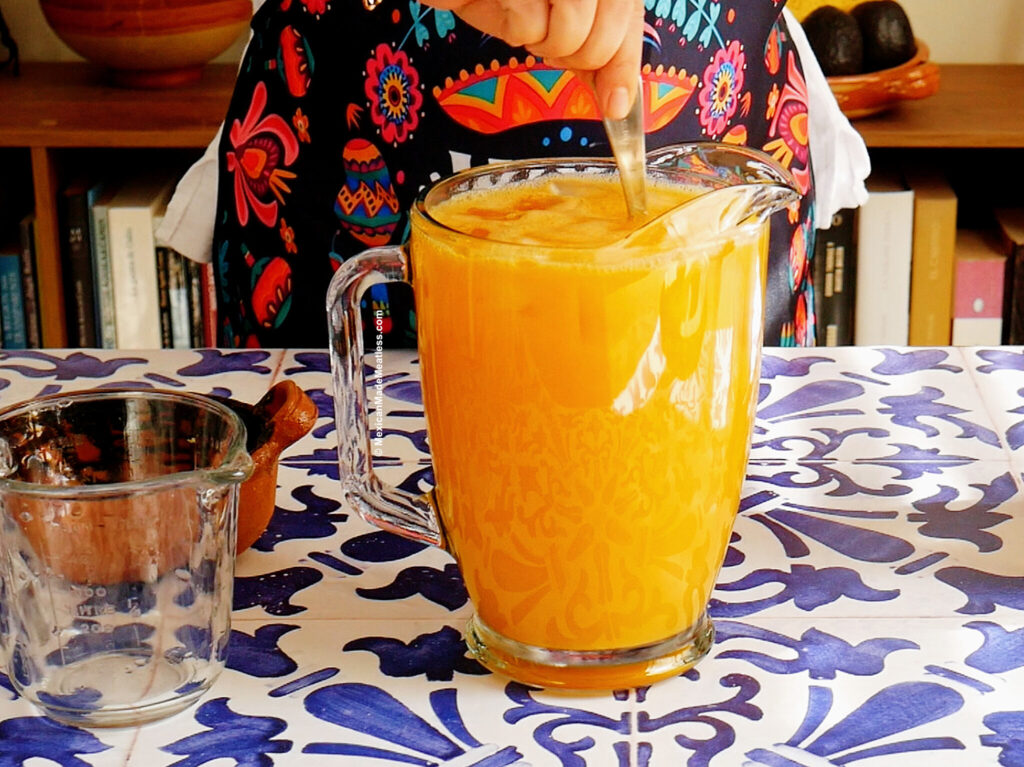
4. Taste and adjust. If your mangoes are sweet and ripe, you likely will not need any sugar. Add sweetener now if desired.
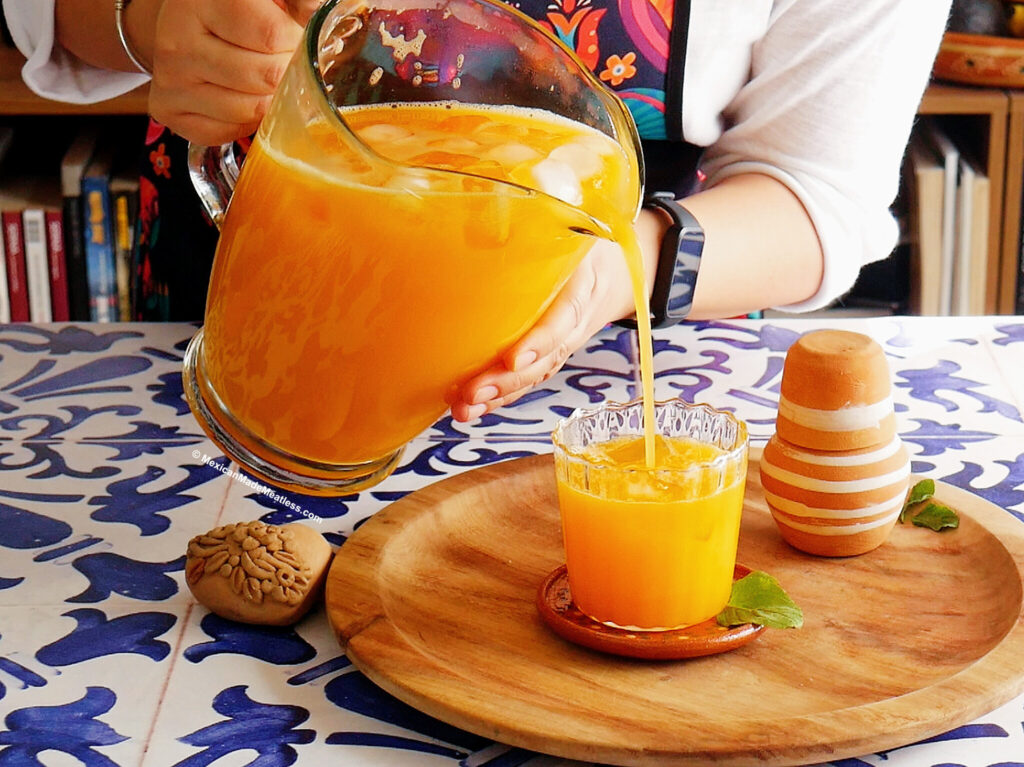
5. Serve. Pour into ice-filled glasses and garnish with a mint leaf or lime wedge if you like.
Nancy’s Tips for The Best Agua de Mango
🥭 Use the ripest mangoes you can find. The riper the mango, the sweeter and more flavorful your agua fresca will be. This is the single most important tip.
💧 Make it concentrated. Use less water than you think you need at first. You can always add more, but you cannot take it away. A more concentrated base means better flavor.
🍋🟩 Add lime juice last. Squeeze it in after blending and taste as you go. A little goes a long way.
❄️ Do not skip the ice in the pitcher. Adding ice directly to the pitcher keeps everything cold and slightly mellows the intensity of the mango. It also looks beautiful when serving.
🔪 No need to strain if you are using ataulfo or Manila mangoes and have a powerful blender. The flesh is smooth enough that straining is unnecessary. For Tommy Atkins or other fibrous varieties, a quick strain through a medium mesh strainer will give you a better consistency.
🍬 Taste before adding sweetener. Ripe ataulfo mangoes are naturally sweet enough on their own. Add sugar or agave only if your mangoes need a little help.
How to Serve Mango Agua Fresca
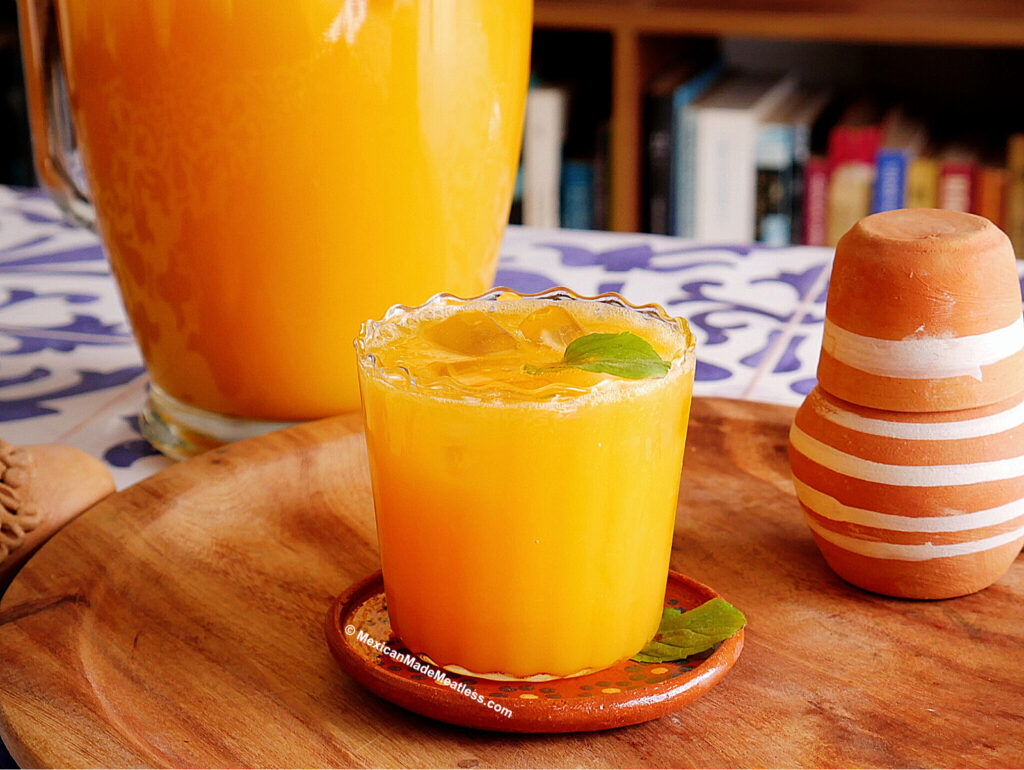
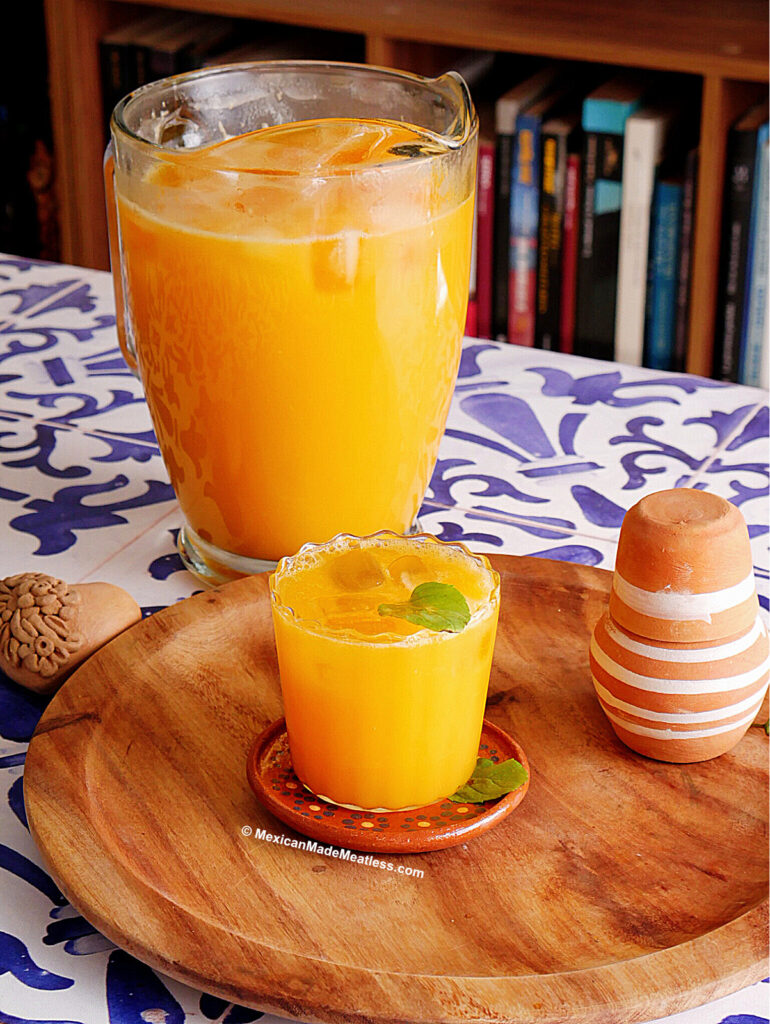
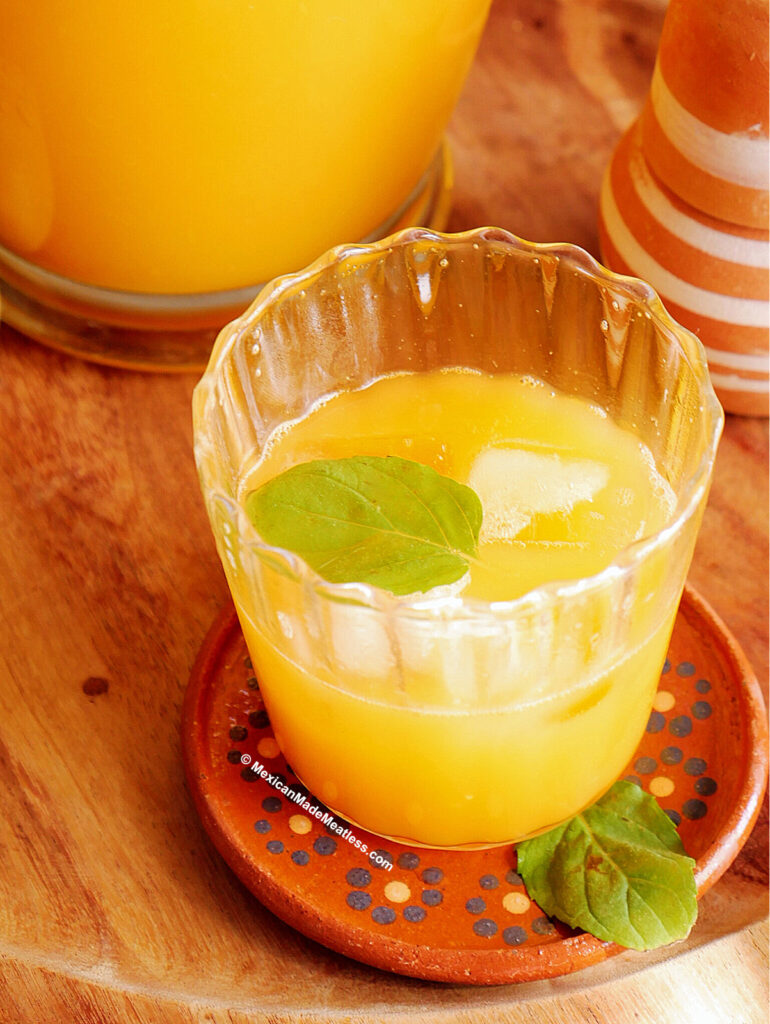
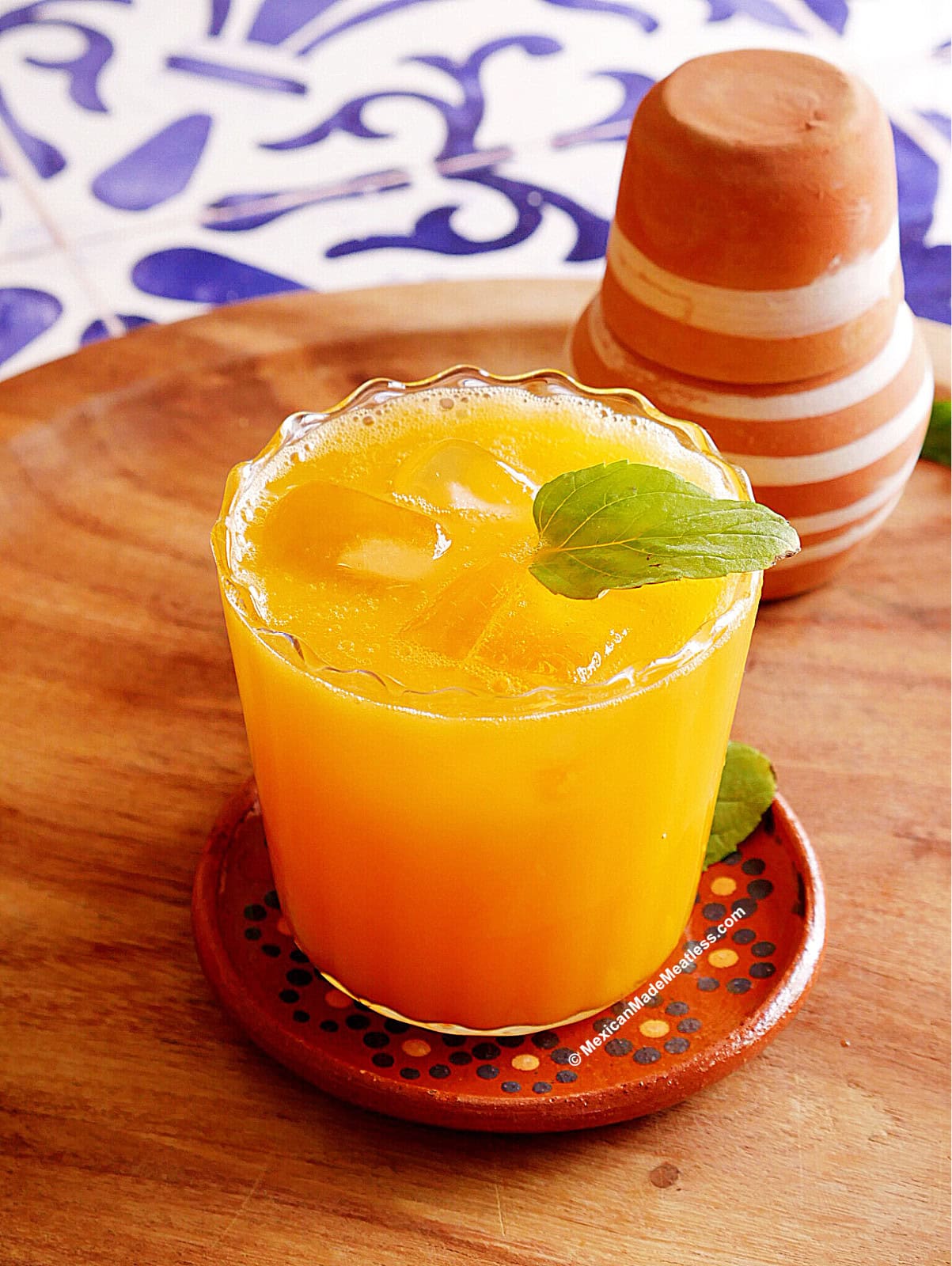
The best way is to serve it cold in a glass filled with plenty of ice cubes. If you want to make it look pretty, add a sprig of fresh mint or a wedge of lime.
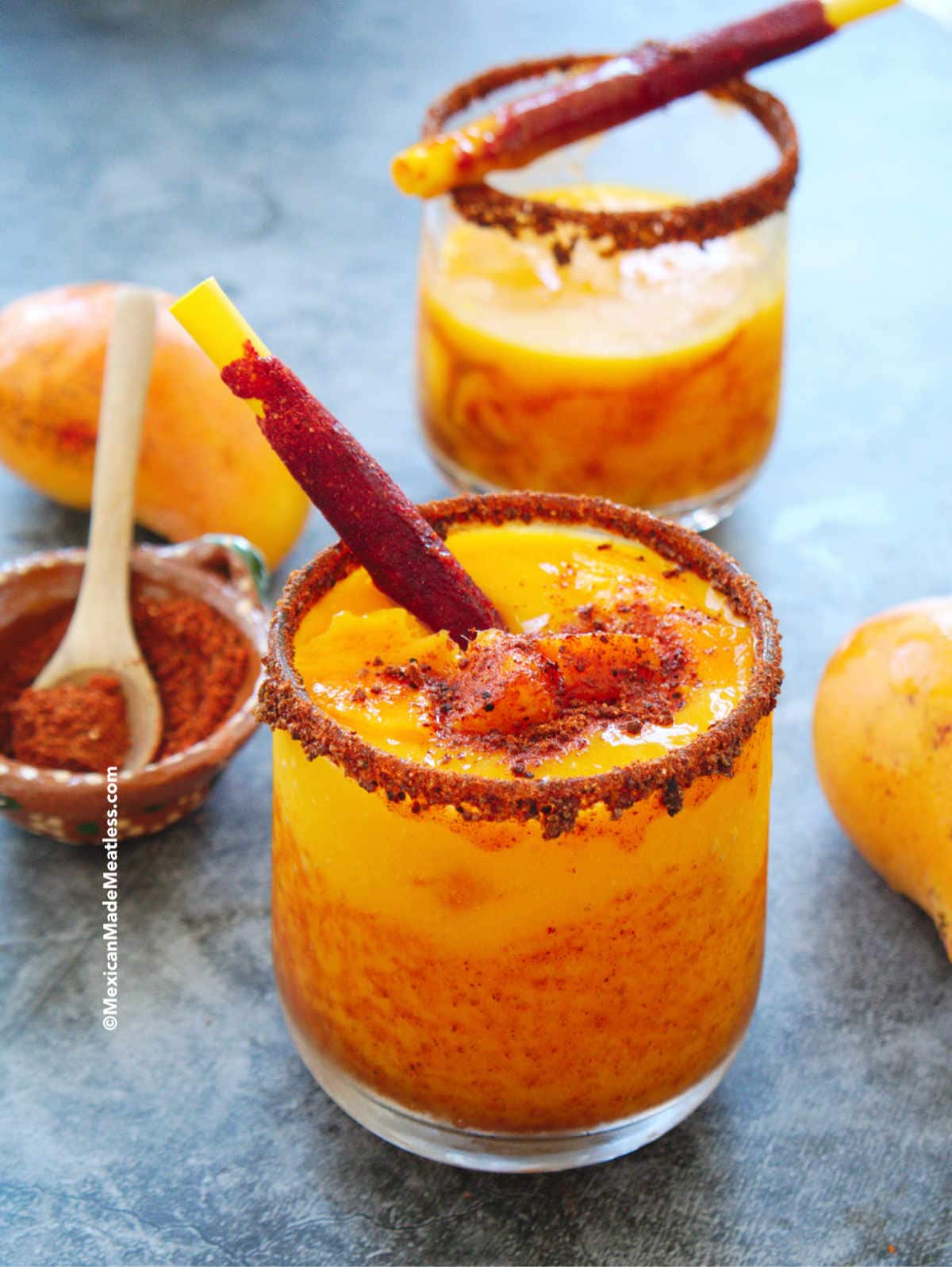
For a classic Mexican street-style touch, sprinkle a little Tajin on the rim of the glass or add a dash of chamoy.
This agua fresca is perfect for everyday meals, summer cookouts, Cinco de Mayo, and family gatherings. It’s a crowd-pleaser that works for kids and adults alike.
It pairs especially well with:
🌮 Vegan fish tacos – the sweet mango flavor balances the spicy, tangy taco perfectly.
🥣 Frijoles charros – a classic pairing you will find at any Mexican cookout.
🌱Cauliflower ceviche – fresh, light, and tropical flavors that complement each other beautifully.
🫕 Jalisco-style carne en su jugo – the richness of the stew is a natural match for a cold, refreshing drink.
Honestly, agua de mango goes with just about anything you would serve at a Mexican table. It is that versatile.

Love aguas frescas? Also try my watermelon agua fresca, agua de Jamaica, or agua de pepino for more refreshing options.
How to Store Mango Agua Fresca
Mango agua fresca is best enjoyed fresh, but it stores well for a couple of days.
Refrigerator: Store in a sealed pitcher or airtight container for up to 2 days. Stir or shake well before serving as it will naturally settle.
Make-ahead tip: Blend the mango base ahead of time and store it separately in the fridge. Add the water and ice when you are ready to serve for the freshest flavor.
Freezer tip: Pour leftover agua fresca into ice cube trays and freeze. Drop the cubes into your next glass to keep it cold without watering it down.
Your Mango Agua Fresca Questions, Answered
Can I use frozen mango instead of fresh?
Yes, frozen mango works great. Fruit is typically frozen at peak ripeness so the flavor is still delicious. Blend straight from frozen or thaw slightly first. You may need to adjust the amount of water slightly as frozen mango releases more liquid when blended.
Do I need to strain mango agua fresca?
Not necessarily. If you are using Ataulfo or Manila mangos and a powerful blender, the result is smooth enough without straining. For more fibrous varieties like Tommy Atkins, a quick pass through a medium mesh strainer will improve the texture.
How is mango agua fresca different from mango juice?
Agua fresca is lighter and more diluted than juice. It is blended with a generous amount of water, which gives it a lighter consistency somewhere between flavored water and juice. Traditional agua fresca is meant to be refreshing and thirst-quenching, not thick or heavy.
Can I make mango agua fresca without sugar?
Absolutely. If your mangoes are ripe, especially ataulfo mangoes, they are sweet enough on their own. I rarely add sugar to mine. If you feel it needs a little extra sweetness, add sugar, agave, or honey a little at a time and taste as you go.
What is the difference between mango agua fresca and creamy mango agua fresca?
The creamy version is made with sweetened condensed milk and evaporated milk, which makes it rich, thick, and very sweet. It is a popular variation but it is not the traditional agua fresca you find at most Mexican markets and street stalls. The classic version uses only mango, water, and a touch of sweetener if needed.
How long does mango agua fresca last in the fridge?
Up to 2 days stored in a sealed pitcher or airtight container. Stir well before serving as it will settle. For the freshest flavor, it is best enjoyed the same day you make it.
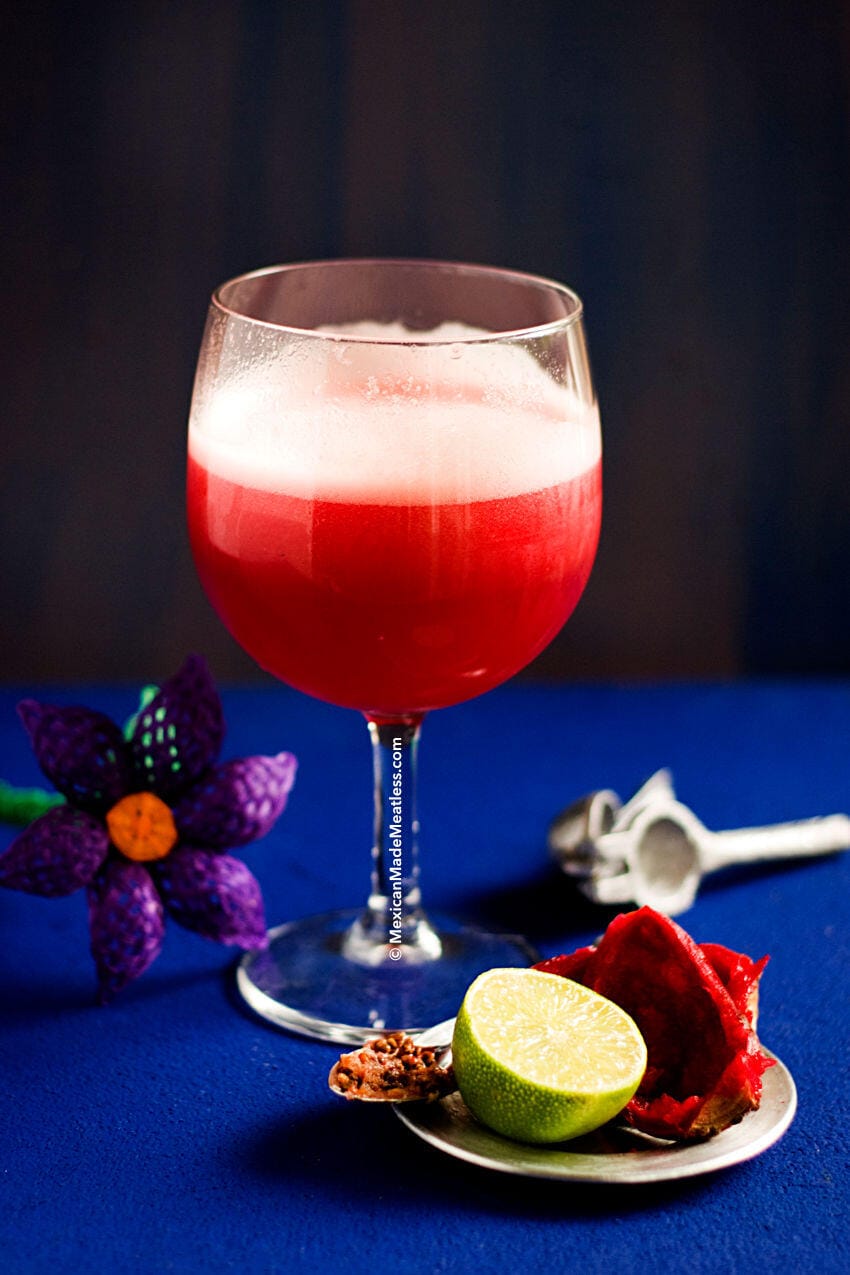
Looking for more fruit agua fresca flavors? Try pineapple agua fresca or prickly pear agua fresca next.
Mango Agua Fresca (Agua de Mango)
Video
Ingredients
- 2 cups Ataulfo mango finely chopped (it’s 4 large Ataulfo mangos)
- 6 cups cold water adjust to taste*
- Lots of ice cubes
- 1 small lime optional and to taste
- sugar or sweetener optional and to taste
Instructions
- Place the chopped mango into the blender cup, pour in 2 cups of water and blend until smooth. If using sugar you can add it in now.
- Add lots of ice cubes to a large pitcher, then pour in the mango mixture. If you used a mango variety that’s fibrous, you will want to strain the mixture into the pitcher.
- Pour in the remaining water and mix well. You can add less or more water depending on the consistency and flavor you want. If using lime juice mix it in now.
- Serve ice cold in glassed filled with plenty of ice cubes.
- If you’d like you can decorate each glass with a fresh mint leaf, a slice of lime, a Tajin rim, or chopped mango.
Recipe Notes & Pro Tips
Nutrition
📌Pin for Later

Nancy Lopez is a Mexican-born published cookbook author and recipe developer with 20+ years of cooking experience. Raised in the U.S. and now living in North-Central Mexico, she creates authentic vegan and vegetarian Mexican recipes rooted in tradition and tested for real home kitchens. Read more…