
Mexican Green Spaghetti Recipe (Espagueti Verde)
Mexican green spaghetti, or espagueti verde, is spaghetti tossed in a creamy sauce made of roasted poblano peppers, onion, garlic, and Mexican crema. It’s mild, a little smoky, and ready in about 40 minutes with just a blender and a pot.
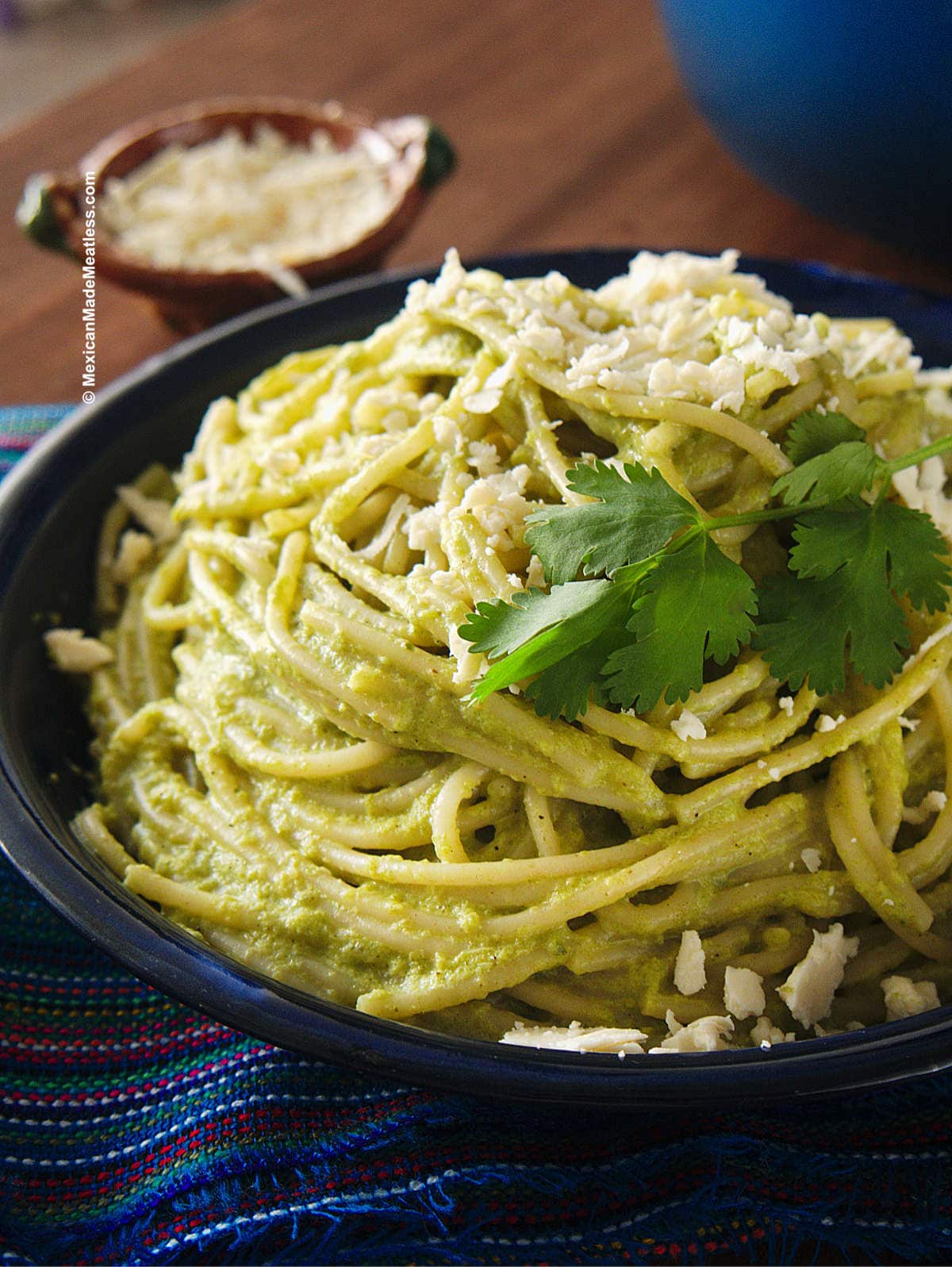
In Mexico, this green spaghetti is a party and holiday dish, and Christmas is when it really shows up. At my family’s Nochebuena (Christmas Eve dinner), my oldest sister makes it for everyone, and it sits on the table right next to the tamales and the turkey. I still make it every holiday season here in Mexico.
My version keeps the focus on the poblanos, with media crema (a light Mexican table cream) and no cream cheese or cilantro. It’s vegetarian, and if you’re dairy-free, I also have a vegan espagueti verde that I’ve been cooking for several years.
Quick Answer: What is Green Spaghetti?
Mexican green spaghetti (espagueti verde) is spaghetti coated in a creamy sauce of roasted poblano peppers blended with onion, garlic, and Mexican crema. It’s mild and slightly smoky, not spicy. In Mexico, it’s a classic side dish for Nochebuena (Christmas Eve) and family parties, often served with meat dishes and tamales. This vegetarian version uses vegetable broth instead of chicken and takes about 40 minutes.
What is Espagueti Verde?
Mexican green spaghetti is one of the lesser-known Mexican dishes to non-Mexicans, and amigos, it’s one you’ve got to try!
This is creamy poblano sauce pasta dish is traditionally served as a side dish. It’s also perfect as a main dish for a busy weeknight.
Other popular holiday spaghetti dishes are espagueti blanco, a creamy white sauce pasta, and espagueti rojo, spaghetti in a creamy red tomato sauce.
Recipe at a Glance
- What it is: Mexican green spaghetti (espagueti verde), pasta in a creamy roasted poblano sauce, made vegetarian with vegetable broth instead of chicken, with an easy vegan option.
- Cuisine: Mexican, vegetarian
- Dish type: Pasta / side dish or main dish
- Difficulty: Easy
- Ready in: 40 minutes
- Method: Stovetop and blender
- Key ingredients: poblano peppers, spaghetti, media crema (or thick Mexican crema), white onion, garlic, vegetable broth, cotija cheese
- Flavor: creamy, mildly smoky, earthy, savory, not spicy
- Best for: Nochebuena and Christmas dinner, family gatherings, serving with tamales, potlucks, busy weeknights, a meatless main

What Are Poblano Peppers
Poblano peppers (chile poblano) are large, dark green chiles named after the state of Puebla, and they’re very common in Mexican cuisine. They’re mild, usually around 1,000 to 2,000 Scoville heat units, so they’re much milder than a jalapeño. You can get them at just about any grocery store in the US now.
When poblanos are dried, they become ancho chiles. For green spaghetti, always use fresh poblanos and roast them first, because roasting is what gives the sauce its smoky flavor.
Espagueti Verde on the Mexican Christmas Table
Espagueti verde is a home-style Mexican pasta: spaghetti tossed in a creamy sauce of roasted poblano peppers and crema. In Mexico, it’s a party dish, made in big pots for family gatherings and the holidays. At Christmas, it’s often served on Nochebuena (Christmas Eve) as a side dish next to meat dishes and tamales.
In my family, it’s been on the table at every one of our Christmas Eve dinners. My oldest sister makes a much bigger pot than I do, and she adds cream cheese for a richer sauce. My version is on the lighter side, with just poblanos and media crema, and that’s the one I’m sharing here.
Creamy Espagueti Verde
This pasta gets its green color and flavor mainly from the roasted poblano peppers, the main ingredient in this recipe.
Recipes vary across Mexico and from cook to cook. Some people add jalapeños or serranos for extra heat, and some add fresh cilantro, spinach, or tomatillos. I don’t usually add these, but feel free to adjust the sauce to your taste.
The creaminess comes from the dairy. It can be crema or Mexican sour cream, milk, cream cheese, or any combination of the three.
I’m personally not a huge fan of too much dairy in savory recipes, so I only use media crema, also called table cream. It’s lighter than American heavy cream, and I think it works amazing in cream-based sauces. If you can’t find it, a thick Mexican crema works too.
Why You’ll Love This Recipe
• Smoky, not spicy. Roasted poblano peppers give the sauce a slightly smoky flavor that’s mild enough for kids and picky eaters.
• Holiday-ready. It makes 8 servings for Nochebuena, Christmas, and special occasions, and you can make the sauce ahead of time.
• Creamy but lighter. The sauce gets its creaminess from media crema alone, with no cream cheese, so it’s rich without feeling heavy.
• Side dish or main, vegetarian or vegan. Serve it next to tamales or as a meatless main, and it’s super easy to veganize!

Ingredients Used in Poblano Spaghetti
The ingredients for this poblano pasta are actually quite simple, and you can find all of them at most grocery stores.
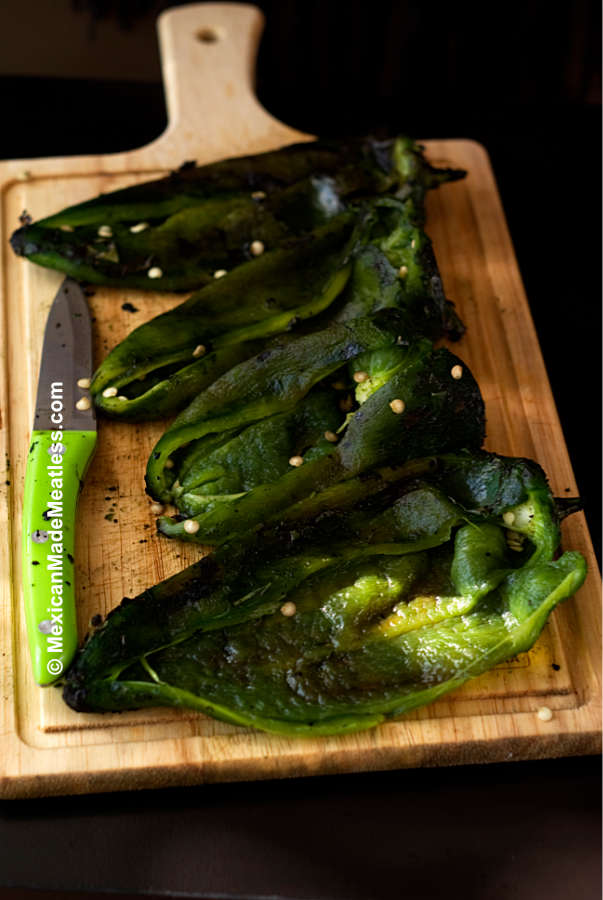
Poblano peppers: The star of the sauce. They’re blackened directly over the gas stove burner, which gives them their smoky flavor and makes the skin easy to peel off.
Spaghetti: Traditionally spaghetti is used, and it’s what my family always makes. You could really make this creamy pasta with any type of pasta you have.
White onion and garlic: They’re blended raw with the poblanos, then cook down as the sauce simmers, giving it a savory base.
Vegetable broth: This is what makes my recipe vegetarian. Most espagueti verde recipes, in Mexico and online, use chicken stock or chicken bouillon. I use vegetable bouillon powder mixed with water.
Media crema or Mexican crema: I like media crema (table cream) because it makes the sauce creamy without being heavy. If you can’t find it, use a thick Mexican crema. Some cooks mix in milk or cream cheese too. My sister adds cream cheese to hers for a richer sauce.
Olive oil: Traditionally vegetable oil or butter is used. I prefer olive oil for health reasons, but you can use any of these.
Salt and black pepper: No other seasonings are needed. The roasted poblanos bring plenty of flavor.
Cotija cheese: For topping. In a pinch, queso fresco, parmesan, or even crumbled feta can be used instead.
Pasta water: A little of the starchy water from boiling the pasta makes the sauce even creamier and helps it cling to the spaghetti. Not traditional, but it adds flavor and creaminess.
After you make my Poblano Cream Sauce Spaghetti, try my Fideo Seco.
Tips for Choosing Your Ingredients
Pick firm, glossy poblanos. Look for dark green peppers with smooth, shiny skin and no soft or wrinkled spots. Flatter poblanos are easier to roast evenly over the flame.
Look for media crema in a can. Media crema comes in small cans, like evaporated milk. You can find it in Mexican grocery stores, in the Hispanic aisle of many US supermarkets, or on Amazon. In the US, it’s often sold as Nestlé Media Crema.
Check your bouillon label. Popular bouillon powders, like caldo de pollo, are chicken-based. For a vegetarian sauce, make sure yours says vegetable.
Find cotija near the queso fresco. It’s usually in the refrigerated cheese case with the other Mexican cheeses. Buy a block and crumble it yourself for the best texture.
Peel, don’t rinse. After roasting, peel off the charred skin with the back of a knife instead of rinsing the poblanos under water. Rinsing washes away some of the smoky flavor.

How to Make Mexican Espagueti Verde
This recipe is so easy that cooks of any experience level can make it, even if it’s your first time roasting poblanos.
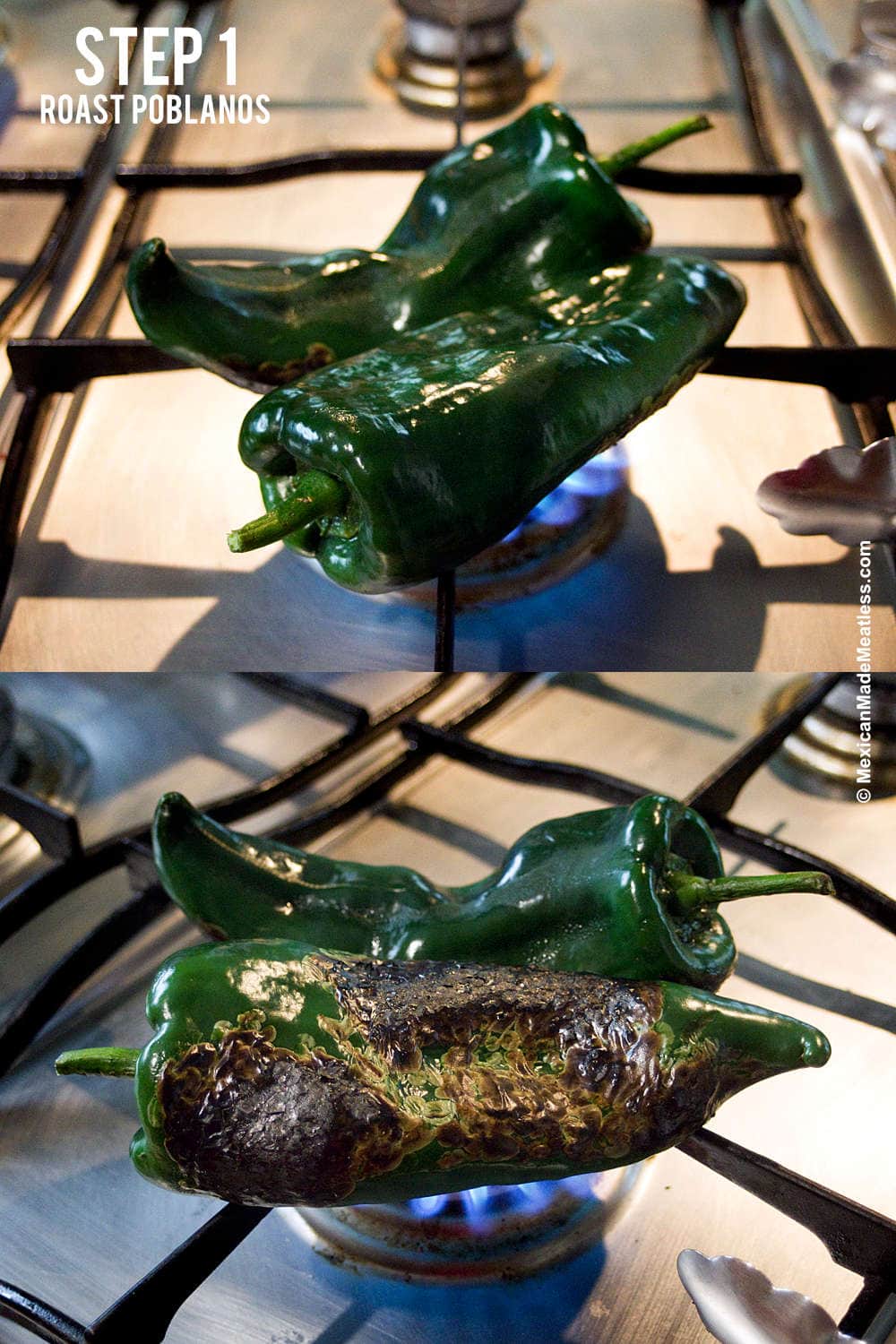
Step 1: Roast poblano peppers
Char them directly over a gas flame on medium-high, turning until blackened on all sides. No gas stove? Use the broiler. For a full visual guide and video, see my How to Roast Poblano Peppers Guide.

Step 2: Let them sweat
Cover the hot poblanos with plastic wrap, or seal them in a plastic bag, for 10 minutes. The steam loosens the skin. While they sweat, start boiling your pasta water.

Step 3: Peel and seed
Scrape off the charred skin with the back of a butter knife. Remove the stems and seeds.

Step 4: Cook Spaghetti
Cook it al dente according to the package directions. Save 1/2 cup of the pasta water before draining.

Step 5: Blend the sauce
Add the poblanos, onion, garlic, salt, pepper, vegetable broth, pasta water, and media crema to a blender. Blend until completely smooth.

Step 6: Simmer
Warm the olive oil in a large pot over medium heat. Pour in the sauce and simmer, stirring, until it thickens enough to coat a spoon.

Step 7: Toss and serve
Add the drained spaghetti and toss until every strand is coated. Top with crumbled cotija and serve.
Nancy’s Tips for the Best Espagueti Verde
• Leave the burnt bits behind. Peel the poblanos well before blending. Too many blackened bits of skin can make the sauce taste bitter and turn it a dull, speckled color.
• Char the poblanos all over. Spots that don’t blister won’t peel easily, so keep turning the peppers until the whole skin is blackened.
• Don’t overcook the sauce. Simmer it just until it thickens. Cooking it too long will thicken it too much and dull the bright green color.
• Fix the thickness with pasta water. If the sauce gets too thick, stir in a splash of pasta water or broth. If it’s too thin, let it simmer a few more minutes.
• Toss right before serving. You can make the sauce ahead, but mix it with the spaghetti just before eating. Pasta that sits in the sauce soaks it up and gets dry.
• Want it richer or spicier? For a richer sauce, add cream cheese the way my sister does, or a splash of half and half. For heat, blend in a jalapeño or serrano with the poblanos.
How to Serve Spaghetti in Poblano Sauce
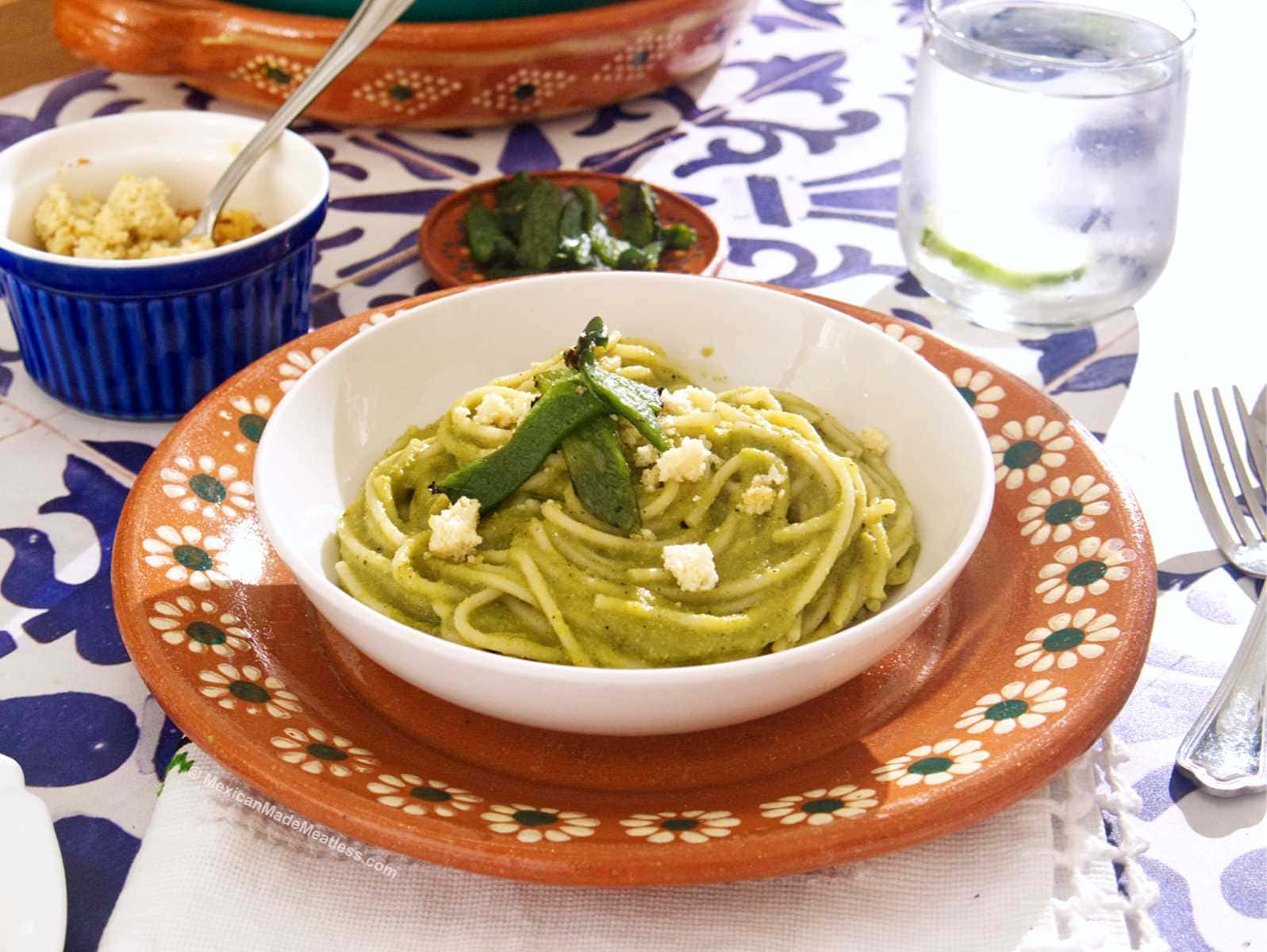
Top each plate with crumbled cotija, queso fresco, or even grated parmesan. Serve it as a main dish or as a side.
At Christmas, espagueti verde sits on the table with the other Nochebuena dishes. For a meatless holiday spread, serve it with tamales de rajas con queso or bean and cheese tamales, my vegan turkey roast, and a Mexican Christmas Eve salad. A warm cup of ponche navideño rounds out the meal.
The rest of the year, it’s a great dish for birthday parties and potlucks. It’s one of those Mexican recipes that’s perfect for feeding a crowd, and I have to say even picky eaters enjoy it.
Before going meatless, I loved pairing it with chicken breast or even salmon fillets. Now I serve it with a green salad and sometimes a light vegetable soup like caldo de verduras.

What Does Espagueti Verde Taste Like?
Espagueti verde for sure will become one of your favorite pastas. Think of it as a Mexican twist on Alfredo sauce, but with more depth of flavor.
The texture is creamy, and the flavor is a little earthy and smoky from the poblanos. It’s not spicy, and it tastes like downright flavorful comfort food.
How to Store & Reheat
Let any leftovers cool, then store them in an airtight container in the fridge within 2 hours of cooking.
Fridge: Espagueti verde keeps for up to 4 days.
Freezer: It will keep for up to 3 months, but the texture will change. Thaw it overnight in the fridge before reheating.
Reheating: Warm it in the microwave with a couple tablespoons of water so the pasta doesn’t dry out. On the stove, add a splash of water or a little olive oil to the pan, then add the spaghetti and toss it with tongs until it’s heated through.
Can You Make Espagueti Verde Ahead of Time?
Yes. You can make the poblano sauce ahead and keep it in the fridge until you’re ready to cook. For the best texture, warm the sauce and toss it with freshly cooked spaghetti right before serving. That’s what I do for the holidays, so the pasta stays creamy instead of soaking up all the sauce.

Is Espagueti Verde Spicy?
Short and quick answer is no… well, maybe not. Poblano peppers are generally not spicy, but now and then you’ll get one with some heat.
If that happens, the media crema tames it, so really don’t worry. The chances of too much heat are low.
If you can’t tolerate any spiciness at all, you could use roasted green bell peppers instead. Just be aware that the flavor will be completely different. I’ve never made green spaghetti with bell peppers myself, so I can’t tell you how it compares.

Vegan Spaghetti Verde
For a dairy-free version, swap the media crema for my homemade vegan crema, or use a store-bought vegan heavy cream. For the topping, try my vegan cotija.
The rest of the ingredients, including the spaghetti, are already vegan, so it’s quite an easy recipe to veganize. For the full dairy-free recipe, see my vegan espagueti verde.
Espagueti Verde FAQ
What is green spaghetti called in Mexico?
In Mexico, green spaghetti is called espagueti verde. You’ll also see it called spaghetti verde, pasta verde, or pasta poblana, and in my family we’ve always called it espagueti verde.
Is espagueti verde the same as poblano pasta?
Yes, espagueti verde is a poblano pasta. It’s the classic Mexican version, with spaghetti and a sauce of roasted poblanos and crema. Other poblano pasta recipes often use different pasta shapes or add corn, chicken, or extra cheese.
Is green spaghetti vegetarian?
Not always. Many espagueti verde recipes use chicken stock or chicken bouillon in the sauce. This recipe uses vegetable broth, so it’s fully vegetarian.
Can I make green spaghetti without cilantro?
Yes. My version doesn’t use any cilantro at all. The green color comes from the roasted poblanos, and the flavor is smoky and creamy without it.
Can I use a different pasta?
Yes. Spaghetti is traditional, but the creamy poblano sauce works with any pasta shape you have, like penne, fettuccine, or bow ties.
Can I double the recipe for a party?
Yes. One batch serves 8. Use the 2x or 3x button on the recipe card to scale the ingredients, and make sure you have a pot big enough to toss all the pasta with the sauce.
Gracias
I’m so happy you stopped by. If you have any questions or want to let me know how you liked this recipe, do leave a comment. Muchas gracias, I appreciate you!
Mexican Green Spaghetti Recipe (Espagueti Verde)
Video
Ingredients
- 16 oz pack of spaghetti
- ½ cup reserved pasta water
- 4 medium poblano peppers
- ½ small white onion quartered into large chunks
- 4 medium garlic cloves
- ½ teaspoon sea salt
- ½ teaspoon ground black pepper
- ½ cup vegetable broth or 1 teaspoon vegetable bouillon powder mixed with 1/2 cup water
- 1 cup media crema substitute with regular Mexican crema, if desired
- 1.5 Tablespoons olive oil or vegetable oil
- 6 Tablespoons cotija cheese or queso fresco or parmesan cheese
Instructions
- We need to roast them to cook them. Roast on a gas stove over an open flame on medium-high heat. Turning occasionally until evenly charred on all sides.

- Once the poblanos have blackened skin, place in bowl or plate or baking sheet and cover with plastic wrap. (Or place inside a plastic bag.) Leave to sweat for 10 minutes.

- Use the back of a butter knife to peel away the charred skin. Next remove the stem and slice open to deseed.

- Follow the package directions to cook the pasta al dente. Reserve 1/2 cup of the boiling water from the cooked pasta.

- Place peeled poblanos in a blender (or food processor) along with the onion, garlic cloves, salt, black pepper, pasta water, vegetable broth and the media crema and blend until completely smooth.
- Over medium heat, add a bit of olive oil to a large pot then once it’s warm pour in the blended poblano sauce. Stir until well combine and simmer until it thickens up.
- Mix in the cooked and drained spaghetti. Toss to coat the pasta well.

Nutrition
(Please notice that this article contains Amazon affiliate links, which may earn us a small commission if you make a purchase through them. Your support helps us continue to provide valuable content.)

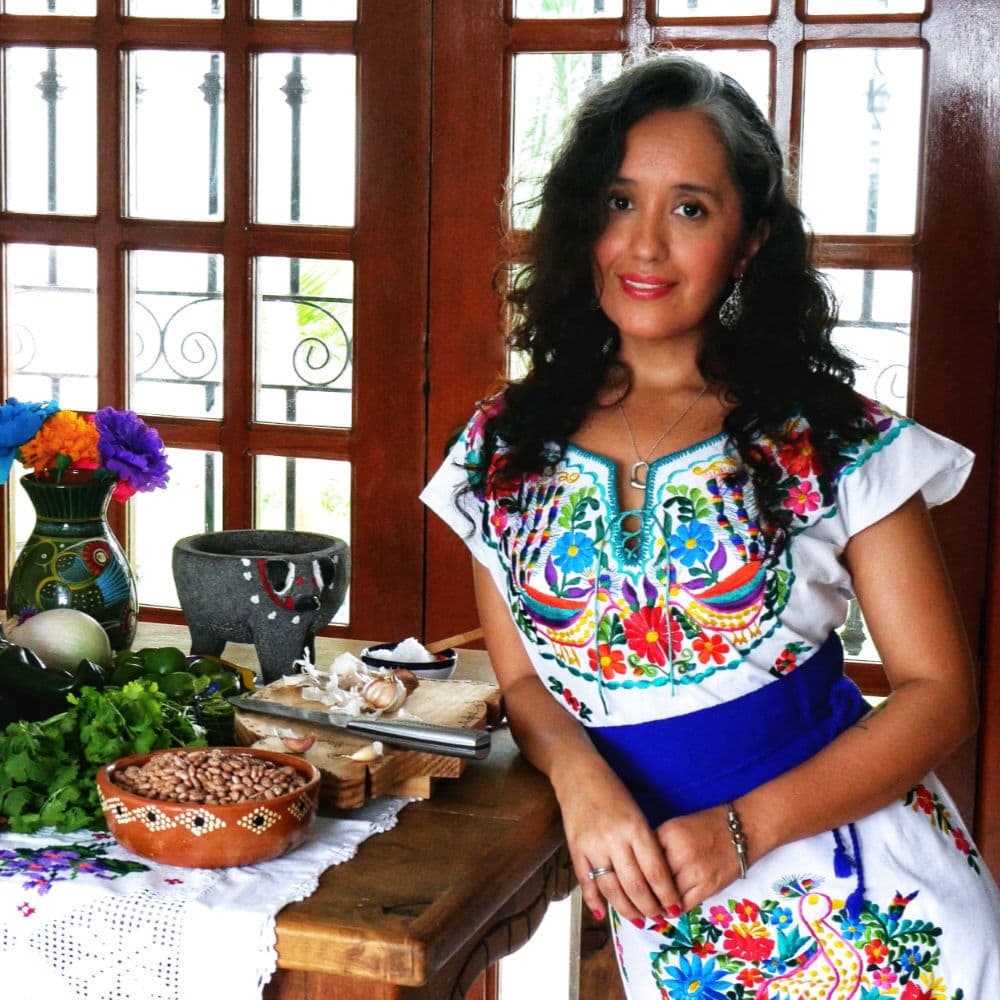
Nancy Lopez is a Mexican-born published cookbook author and recipe developer with 20+ years of cooking experience. Raised in the U.S. and now living in North-Central Mexico, she creates authentic vegan and vegetarian Mexican recipes rooted in tradition and tested for real home kitchens. Read more…


