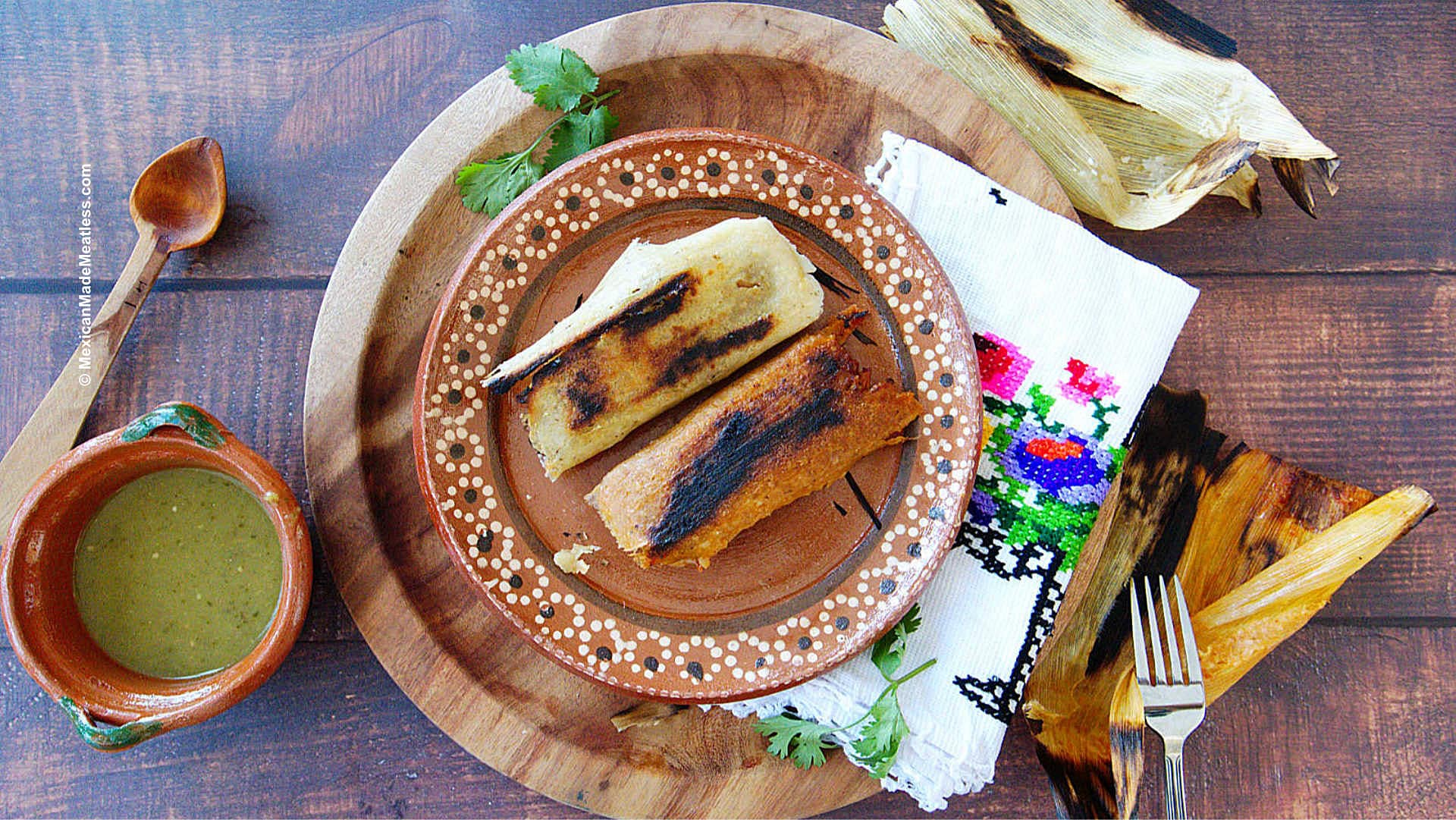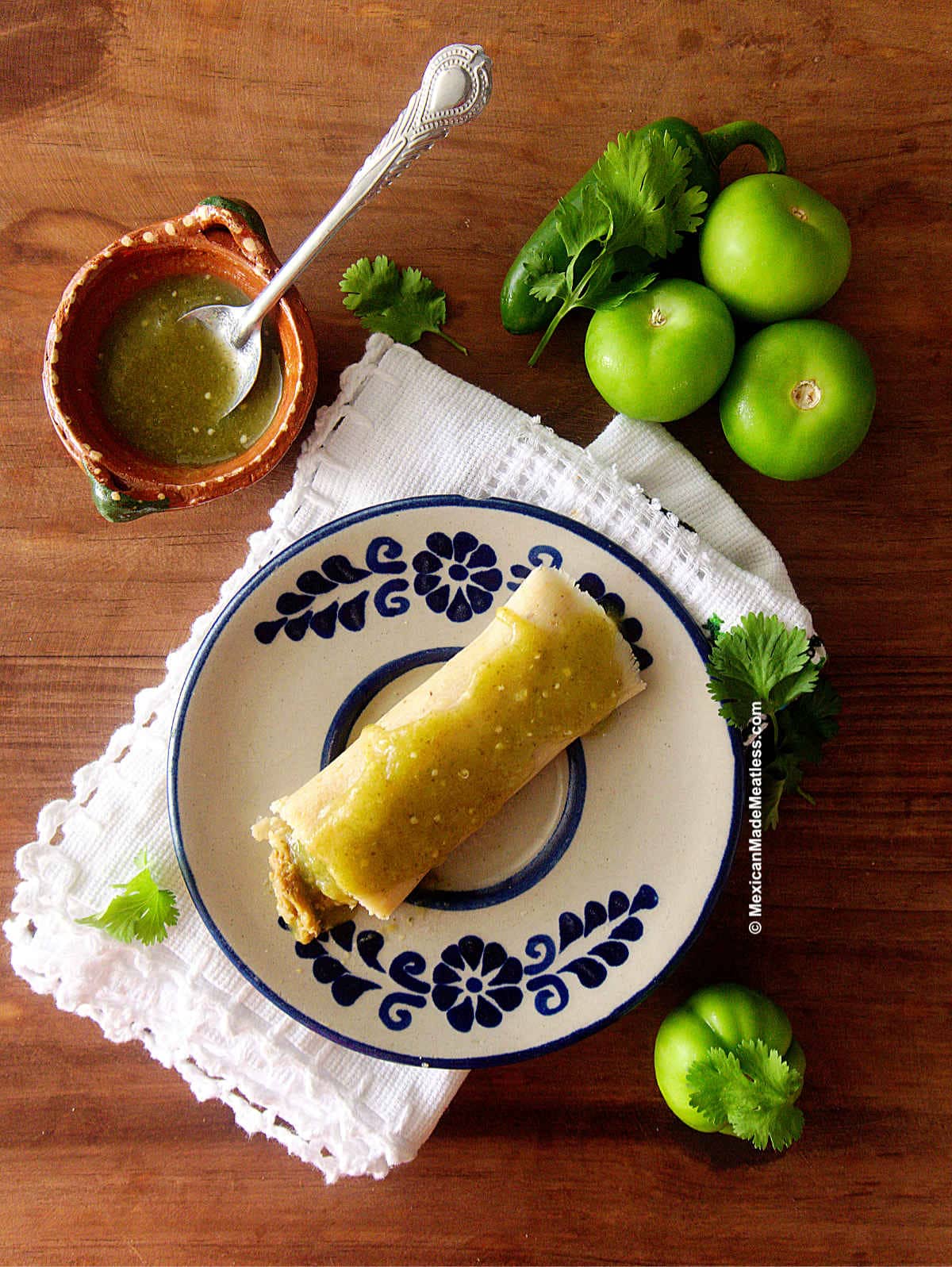
How to Prepare Corn Husks for Tamales
Soft, pliable corn husks are what make it possible to fold tamales without cracking the masa or losing your filling. All it takes is soaking dried corn husks for tamales in hot water for 45 minutes.
How To Prepare Corn Husks for Tamales?
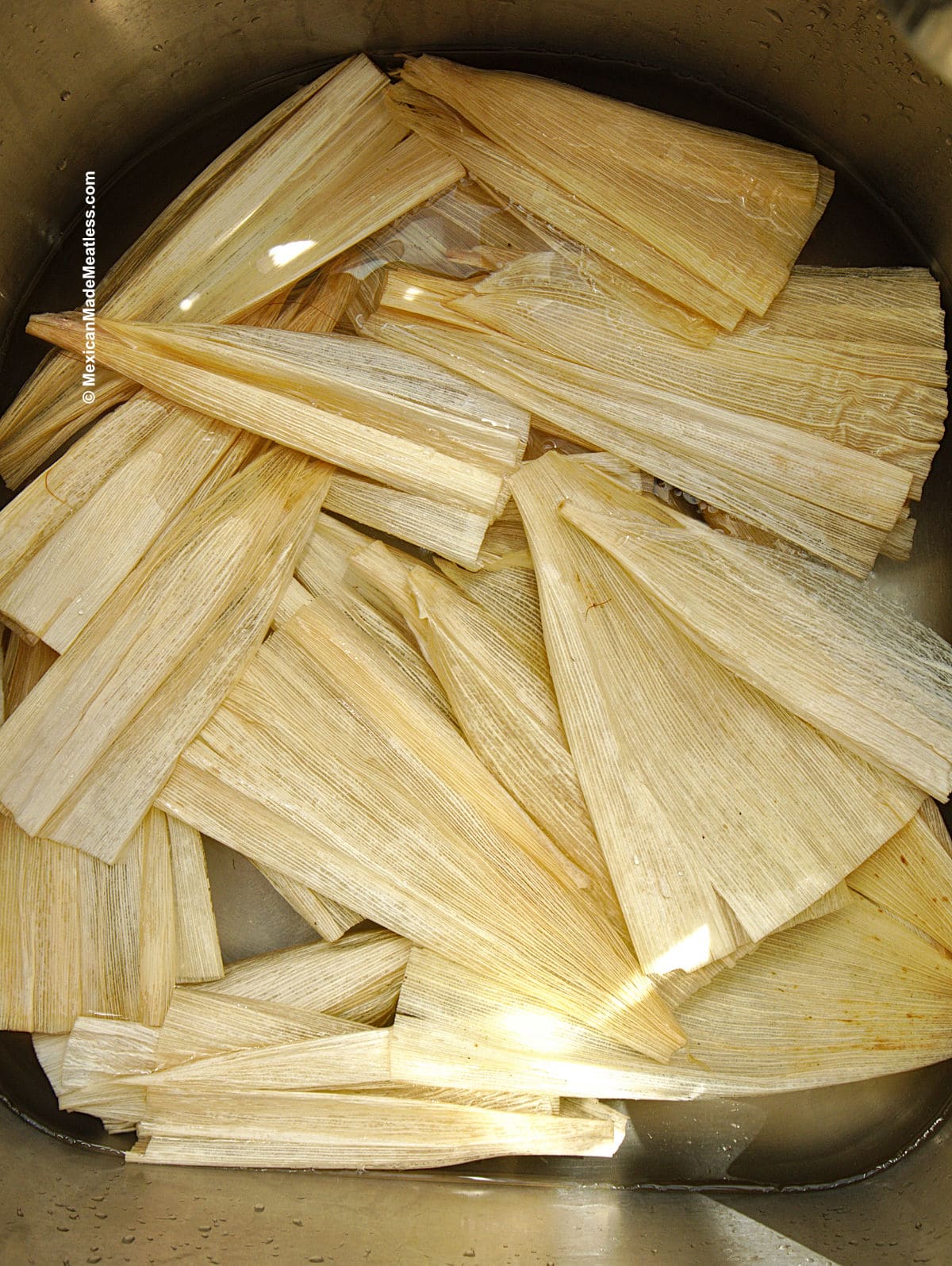
To prepare corn husks for tamales, sort out any torn or moldy husks, then rinse the rest under warm water to remove dirt and corn silk. Soak them in a clean sink or large container of hot water for 45 minutes, until soft and pliable, then drain well before spreading masa.
Recipe at a Glance
- What it is: A step-by-step guide to soaking and prepping dried corn husks, the traditional wrapper for Mexican tamales.
- Cuisine: Mexican, traditional technique
- Dish type: Tamale prep / cooking technique
- Difficulty: Easy
- Ready in: About 45 minutes (soak time)
- Method: Sink or large container soak, no stovetop needed
- Key materials: dried corn husks, hot water, large bowl or sink, kitchen towel
- Texture: soft, pliable, flexible, tear-resistant
- Best for: tamale making day, holiday tamaladas, Day of the Dead, Christmas tamales
What Are Corn Husks
Corn husks are simply the dried outer covering of an ear of corn, and they’re the traditional wrapper for tamales in Mexican cooking. Once they’re separated from the corn and cleaned of any silk, they’re dried for storage, then rehydrated in hot water whenever it’s time to make tamales.
In Mexico you’ll hear them called hoja de maíz or hoja para tamal, and that’s the version most traditional tamales recipes call for. Some regions use fresh green corn husks instead, like for uchepos, or swap in banana leaves entirely, especially in southern Mexico. We’ll cover all three below, but corn husks are where most home cooks start.
Why This Method Works
• No more cracked husks. A proper hot water soak means your husks bend and fold instead of splitting when you spread the masa.
• You can prep ahead. Soak your husks the night before or the morning of, they’ll hold just fine while you make your filling and masa.
• No special equipment needed. A clean sink, a large bowl, or any big container works, no fancy tools required.
• Works for any tamale recipe. Once you know how to prep the husks, you can use this same method whether you’re making savory tamales, sweet tamales, or uchepos with fresh husks.

The Tradition Behind Corn Husks for Tamales
Corn husks have wrapped tamales across most of Mexico for generations, prized for the earthy aroma they lend the masa as it steams and for how naturally they seal in the filling.
In the south, particularly Oaxaca, Chiapas, and the Yucatan Peninsula, banana leaves take over as the traditional wrapper instead, giving tamales a different smell and taste from the corn husk version.
In Nahuatl, dried corn husk is called totomoxtle, though most home cooks today, myself included, just call it hoja de maíz. Banana leaf has its own name too, hoja de plátano.
Sorting and soaking corn husks was actually my first real job in the kitchen. My mom would let me help with tamales starting there, going through the husks and getting them soaking, before I was ever trusted with spreading masa.
Once I had that step down, I got to move on to the next one. It’s a good place for any beginner to start, honestly, there’s no way to mess up a soak.
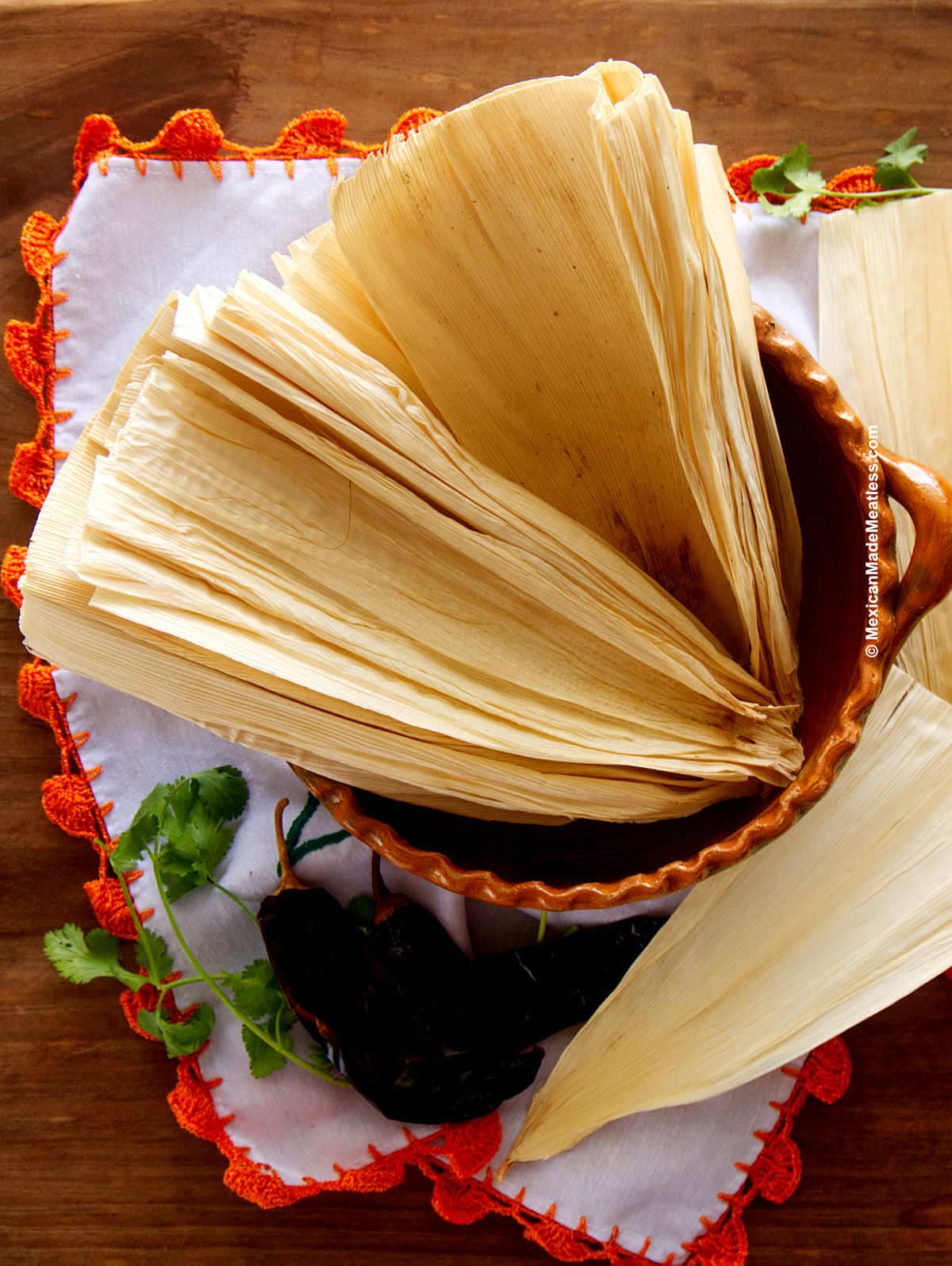
What You’ll Need
Dried corn husks:
The traditional wrapper for tamales, called hoja de maíz in Spanish. Look for a full, unopened pack rather than loose husks so you know they haven’t dried out further or picked up moisture.
Hot Water:
This is what softens and rehydrates the husks. Hot water works faster than cold, since heat helps the dried plant fibers relax and become pliable again.
A clean sink, large bowl, or big container:
Whatever you have room for. The husks need to be fully submerged, so bigger is better here.
A colander:
For draining the husks once they’ve soaked, and useful again later for holding sorted, cleaned husks before they go in the water.
A heavy pot, large plate, or a molcajete:
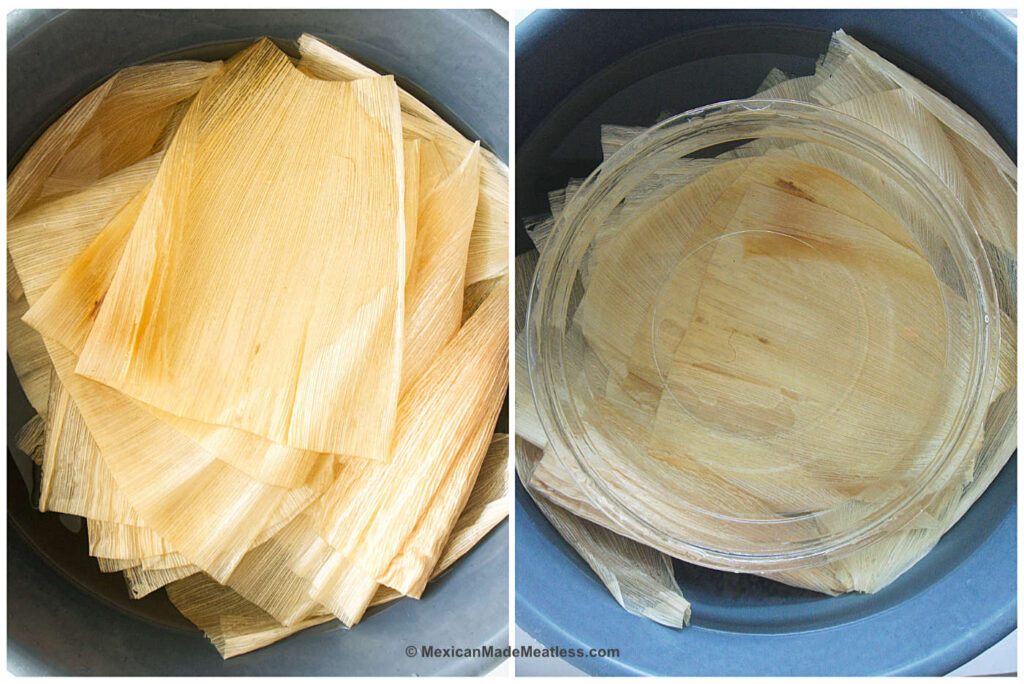
Corn husks float, so something heavy set on top keeps them fully underwater while they soak instead of you having to babysit and push them down by hand.
Where to Buy Corn Husks
You’ll find dried corn husks year-round in the Hispanic foods aisle of most grocery stores, or at any Mexican or Latin market, usually right next to the masa harina. Amazon carries them too if you don’t have either nearby.
When you’re picking a pack, give it a quick once-over through the bag. You want husks that are whole and a consistent tan color, without a lot of visible cracking or crumbling. A few small brown spots are normal and nothing to worry about, we’ll cover that more once we get to sorting.
How to Prepare Corn Husks for Tamales
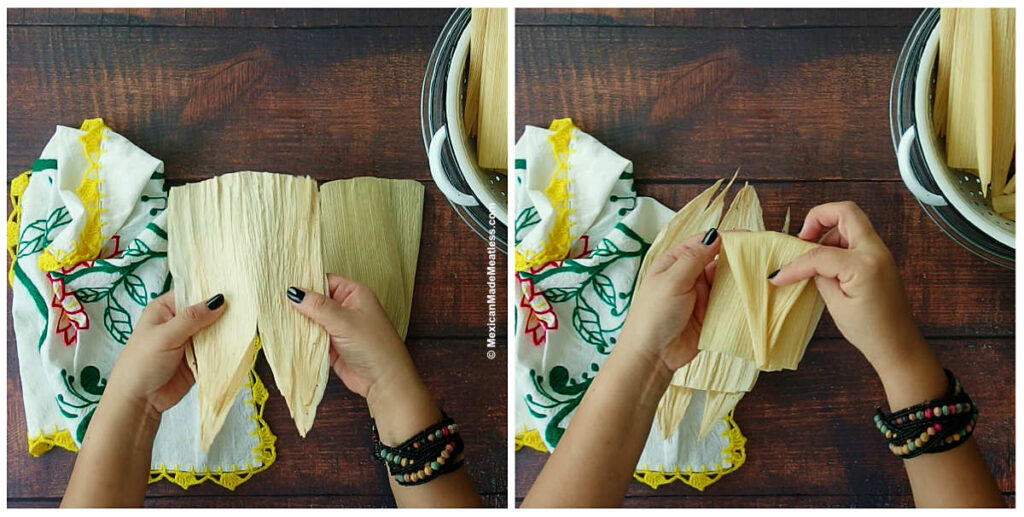
- Sort the husks: Go through the pack and remove any dirt, silk, or debris by hand or with a damp cloth. Set aside husks that are whole and undamaged, especially along the long sides. Toss anything badly cracked or torn.
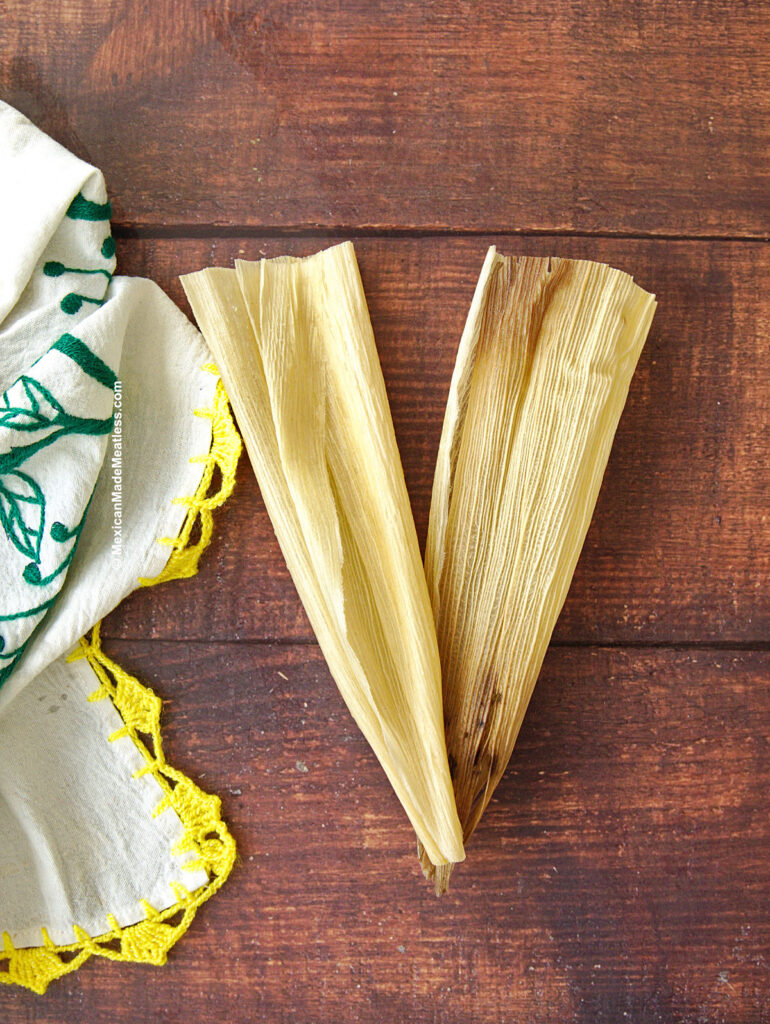
- Set some aside: Don’t toss those torn, cracked, or too-small husks from sorting, save them instead. Traditionally nothing goes to waste, so those get used to line the bottom of your steamer pot, cover the top of the tamales, keeping moisture out of the filling. They’re also what you’ll rip into thin strips if you’re tying your tamales closed.
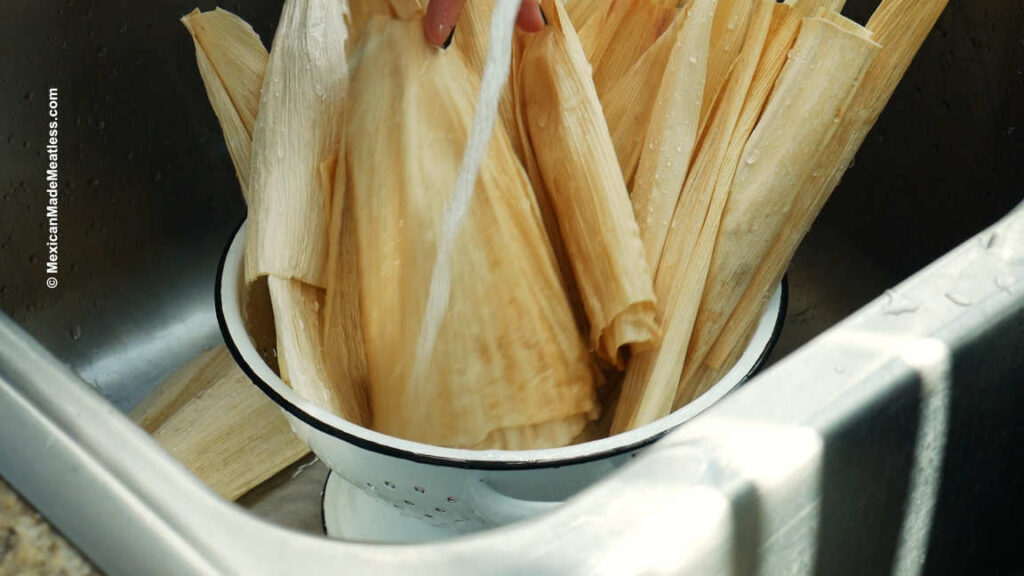
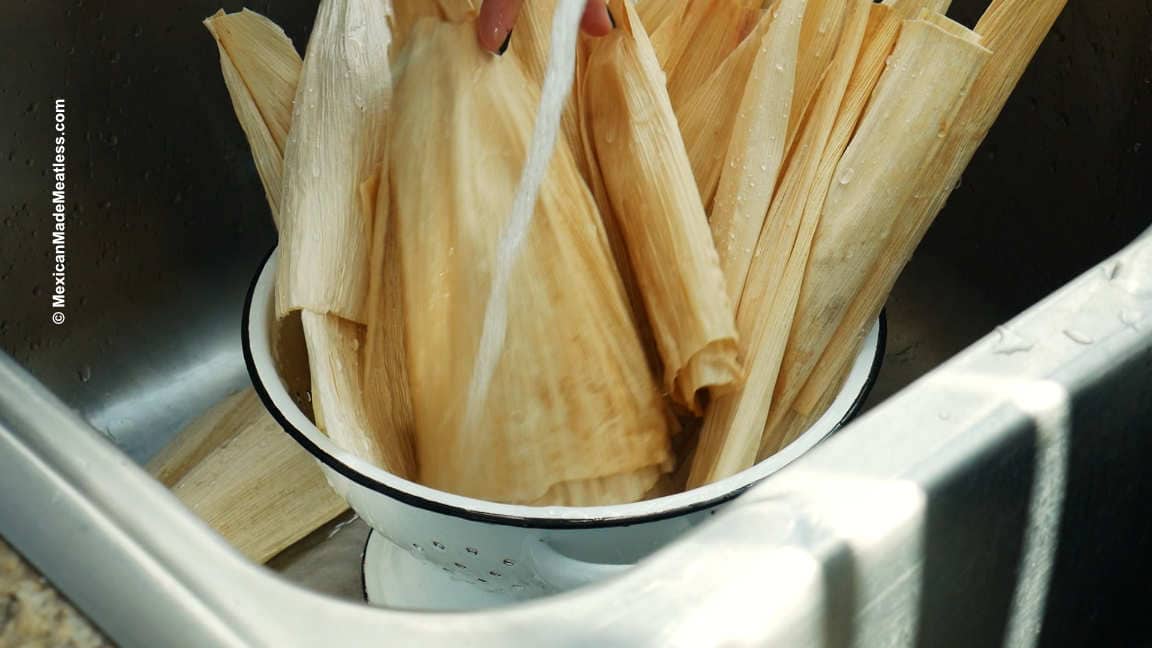
- Rinse them clean: Place the husks in a colander or clean sink and rinse under warm water, separating them so water reaches every husk.
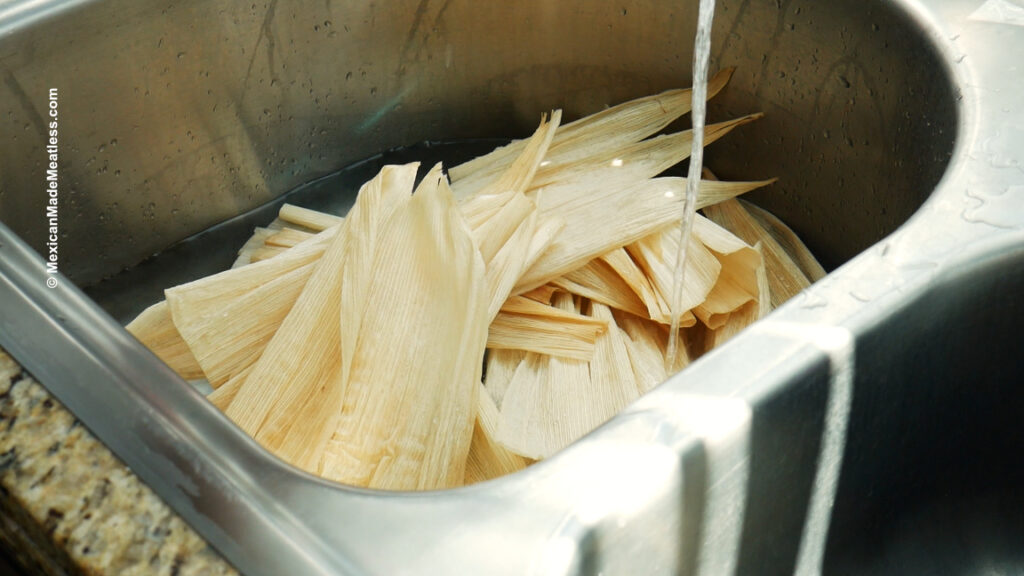
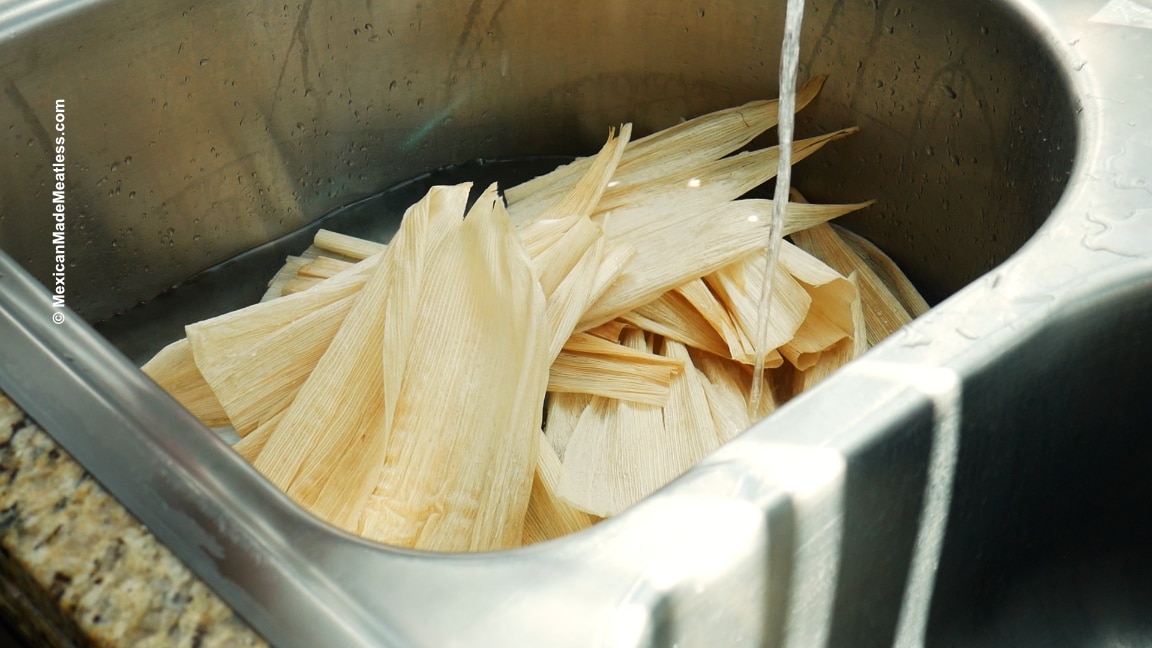
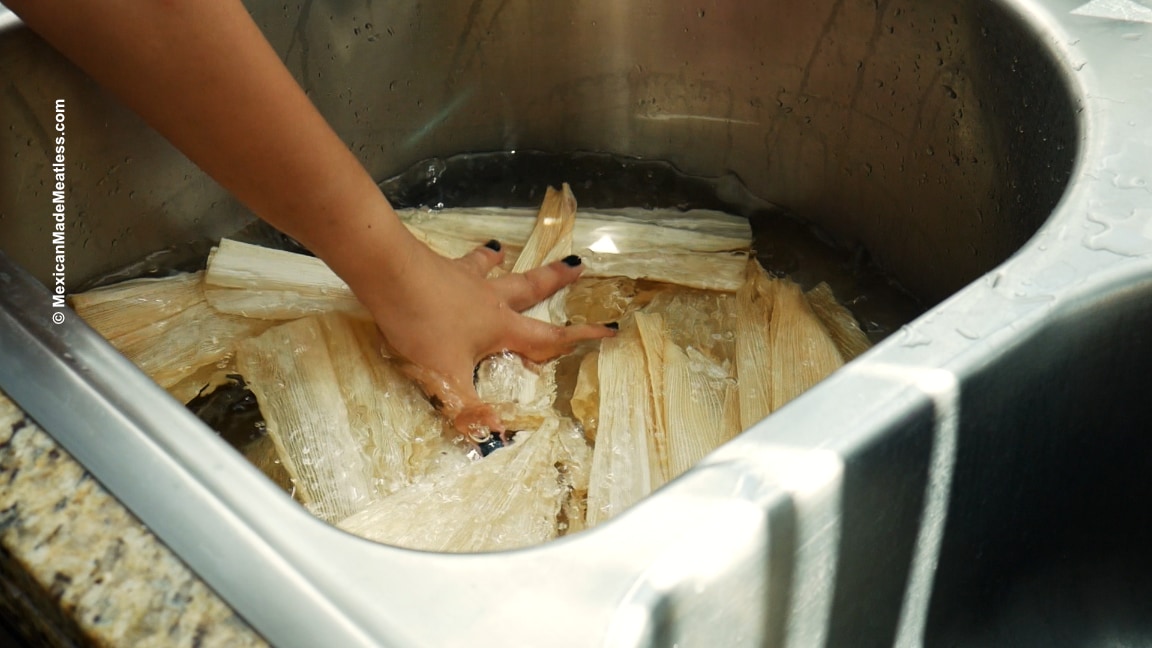
- Soak in hot water: Fill your clean sink or a large container with hot water and submerge the husks completely. Since they float, set a heavy pot, plate, or molcajete on top to keep them under water.
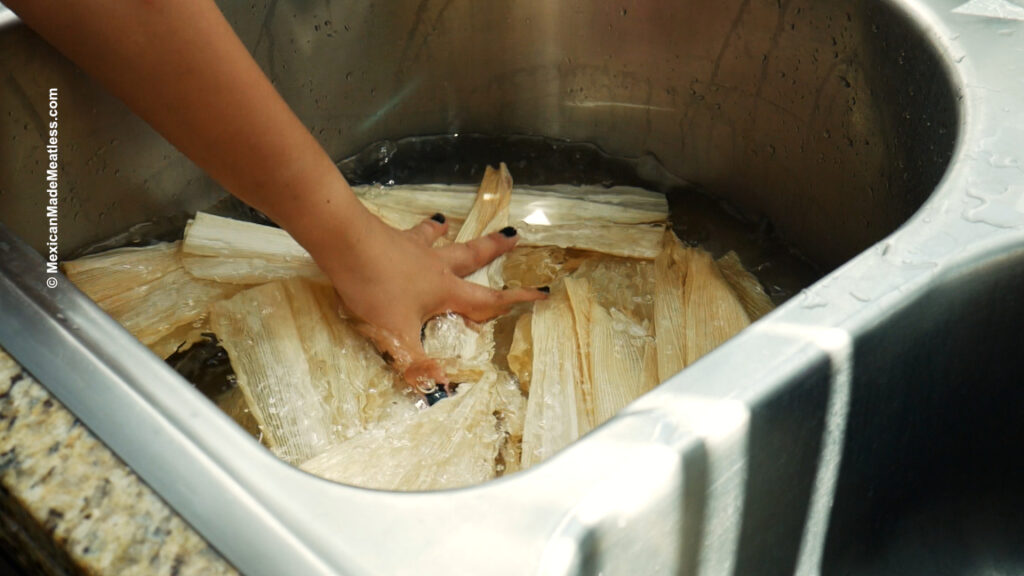
- Let them soak. Give them 45 minutes, or until they’re soft and bend easily without cracking. Don’t drain until your filling and masa are ready, husks can dry back out if they sit too long after draining.
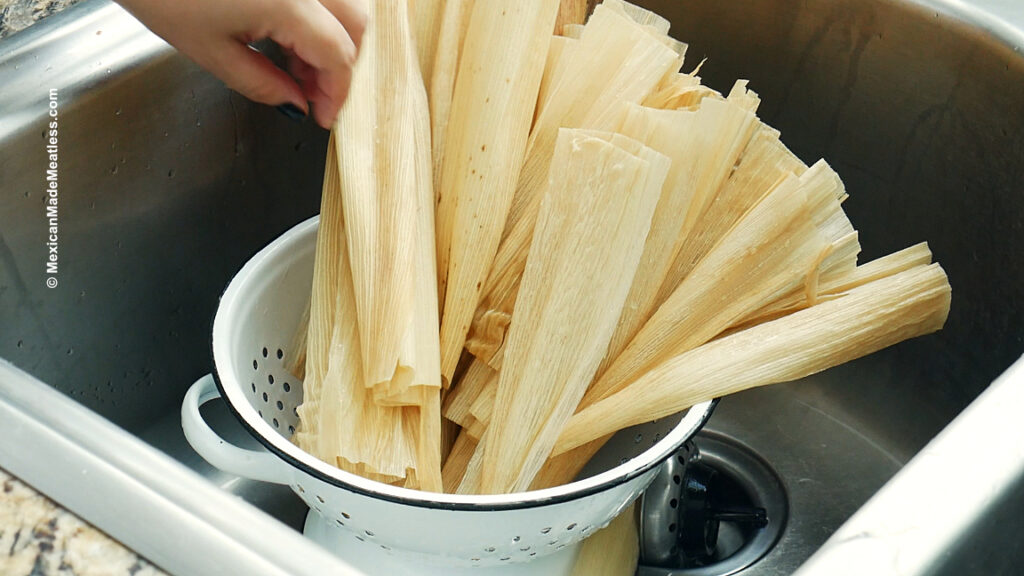
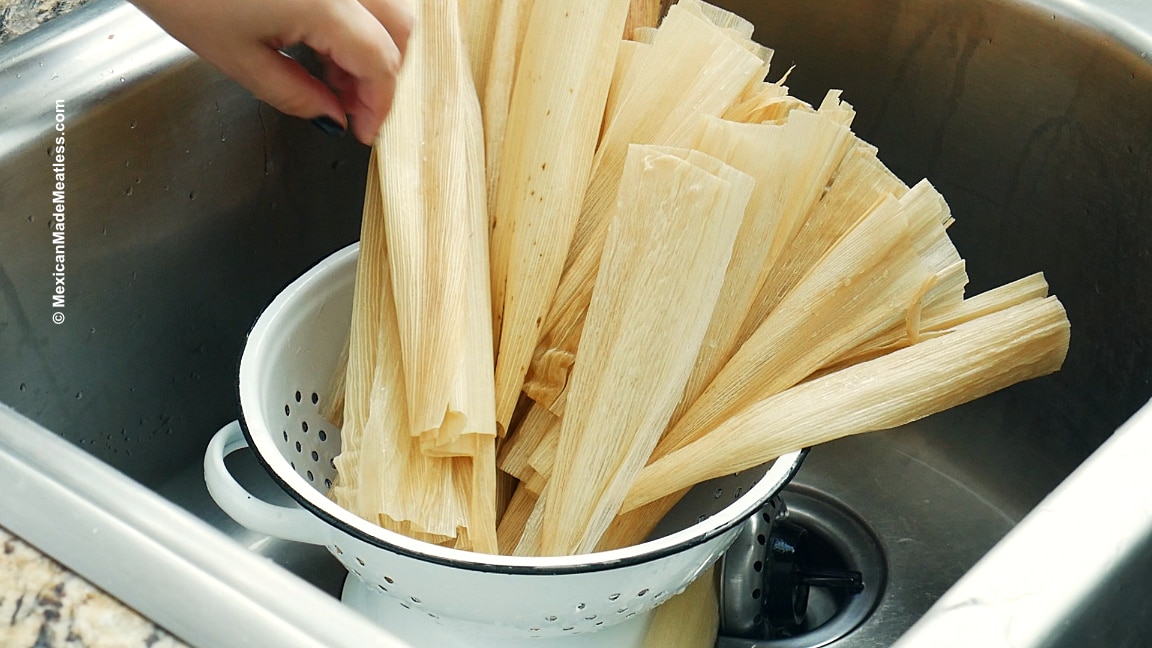
- Drain well: Once pliable, drain the husks in a colander and give them a gentle squeeze. You want them damp, not dripping. Extra water mixing into the masa makes it mushier and adds to your cooking time.
Nancy’s Expert Tips
• Prep your filling first. I like to make my tamales filling the night before so it’s cool and ready to go by the time my husks are soaked. If I’m doing everything same-day, I get the husks soaking first, before anything else, since that’s the step that takes the longest.
• Hot water works faster than cold. Heat helps the dried husk fibers relax and rehydrate quicker. If you only have cold water on hand, it’ll still work, just plan on soaking longer.
• Overnight soaking is fine, if you want. Some cooks leave husks soaking in the clean sink overnight. I don’t do this myself, but it won’t hurt anything if that fits your schedule better.
• If a husk tears while you’re spreading masa, it’s usually because it wasn’t soaked long enough. Give your batch a few more minutes in the water next time, especially if your husks were on the drier, older side to begin with.
What to Do With Your Prepped Husks Next
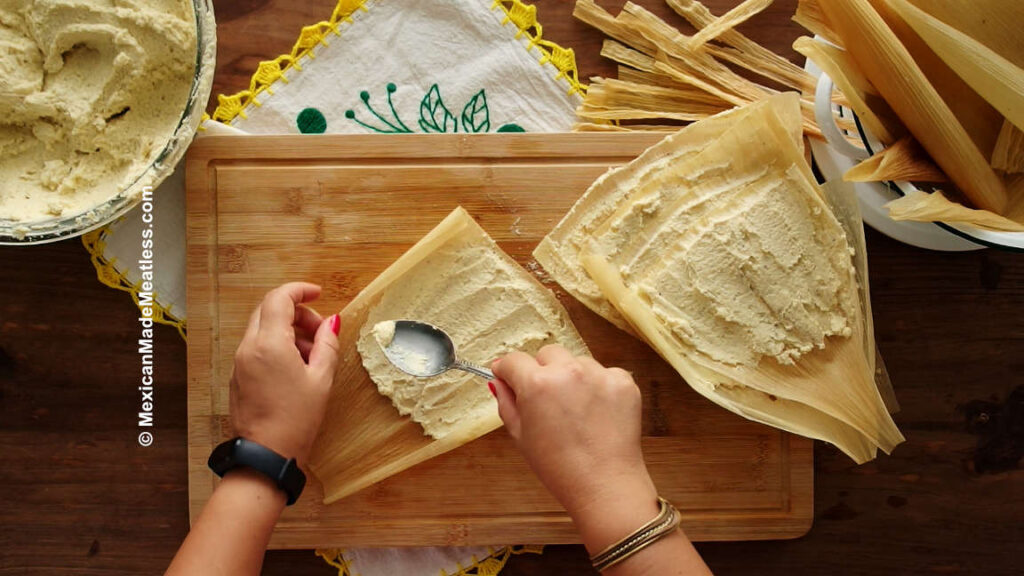
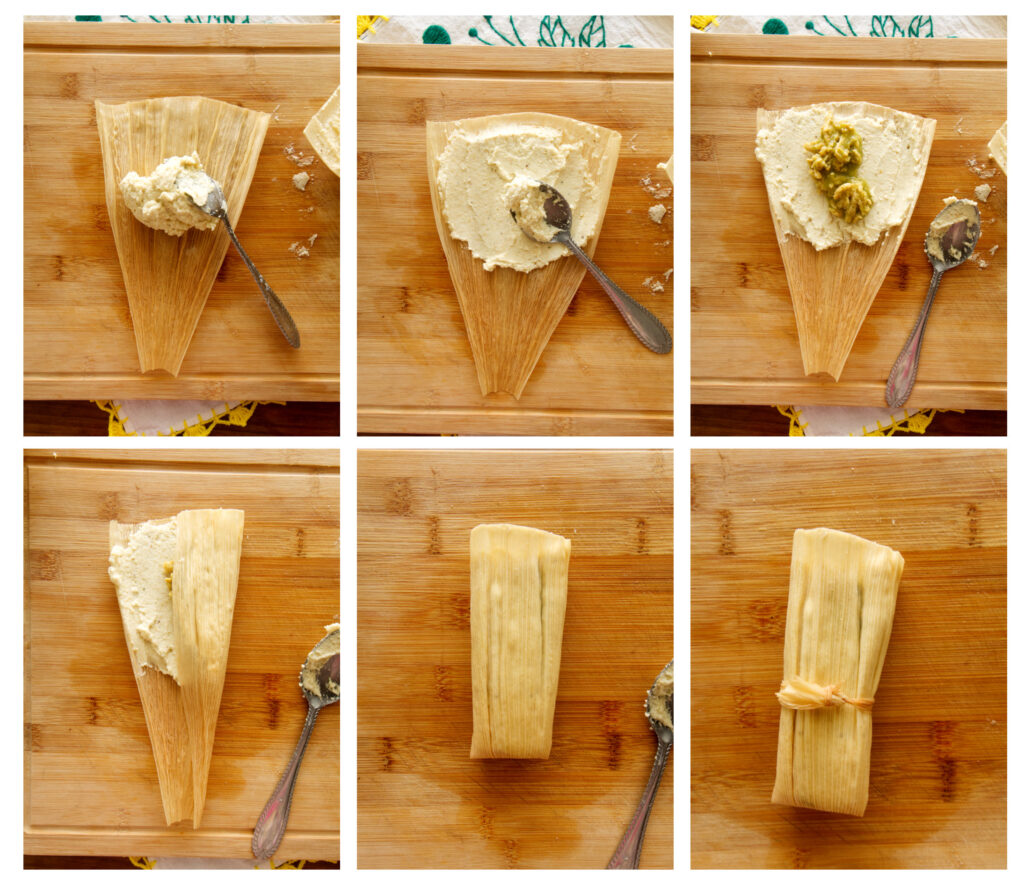
Once your corn husks are soaked and drained, you’re ready for the next step, spreading masa on the husks. If you haven’t made your masa yet, my Masa for Tamales without Lard recipe is a good place to start. From there it’s on to folding your tamales and, if you don’t have a tamalera, steaming them without a steamer.
This is also the stage where a lot of home cooks host a tamalada, a tamale-making gathering with family, so soaked husks are exactly what you need on hand before everyone sits down together. It’s a tradition that shows up a lot around the holidays too, especially Christmas and Día de los Muertos.
How to Store Prepped Corn Husks
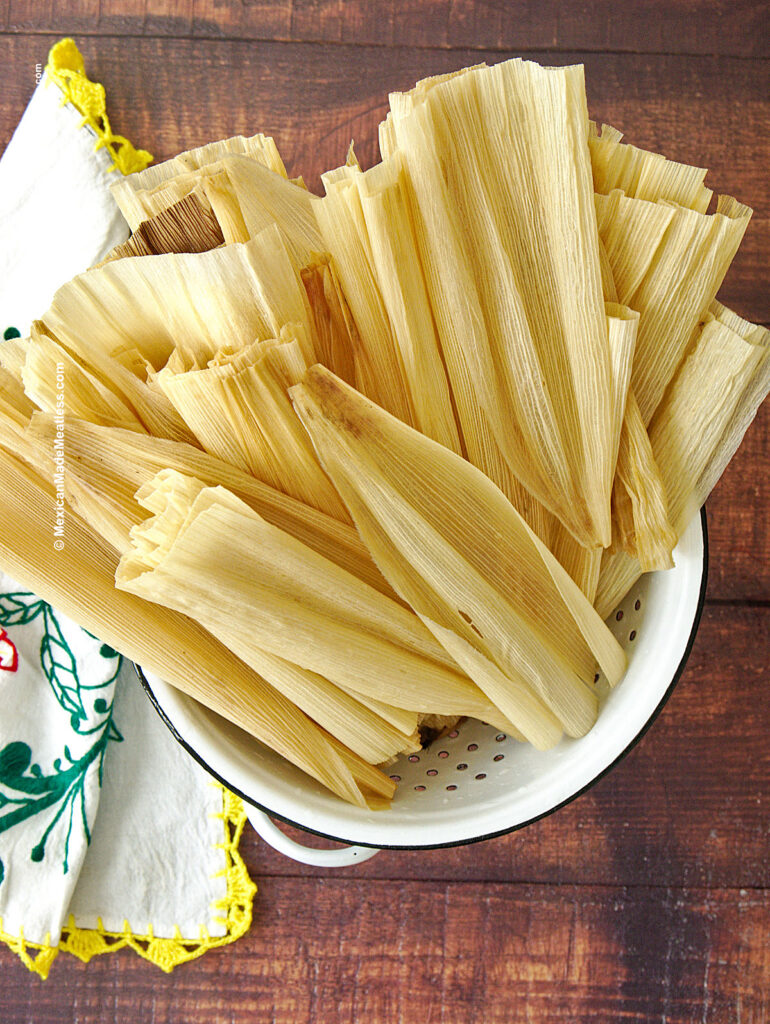
Corn husks freeze well, so it’s fine to soak more than you need for one batch. Shake off the excess water, let them drain in a colander, then pack them into freezer-safe bags. They’ll keep for a few months in the freezer.
If you’re using them within a few days, the refrigerator works too. Just make sure they’re well-drained first so they don’t get slimy or start to spoil.
Unsoaked, dried corn husks don’t need refrigeration at all. Store the unopened pack in your pantry and they’ll keep indefinitely until you’re ready to use them.
Corn Husks FAQ
Can I use artificial or store-bought corn husks instead of real ones?
Some cooks do use artificial corn husks. I haven’t personally tested them, so I can’t say how they compare, but if you go that route, know they won’t soften or behave exactly the way real dried corn husks do.
Are corn husks edible?
No. Corn husks are only for wrapping and steaming the tamal. Once it’s cooked, the husk is peeled away and discarded, it’s never eaten.
How do you dry corn husks quickly after soaking?
If you need to speed things up, pat them down with a clean kitchen towel or paper towels right after draining. This removes the extra surface water without drying out the husk itself, which is what you want before spreading masa.
Can you soak corn husks too long?
Not really. Corn husks can sit in water for several hours or even overnight without a problem. What matters more is draining them well before use so excess water doesn’t thin out your masa.
What if I don’t have enough corn husks?
Save any torn, cracked, or too-small husks from sorting instead of tossing them, they still soften with soaking and work fine for lining the pot or tying tamales closed, so nothing goes to waste.
Black Spots on Corn Husks Safe to Eat
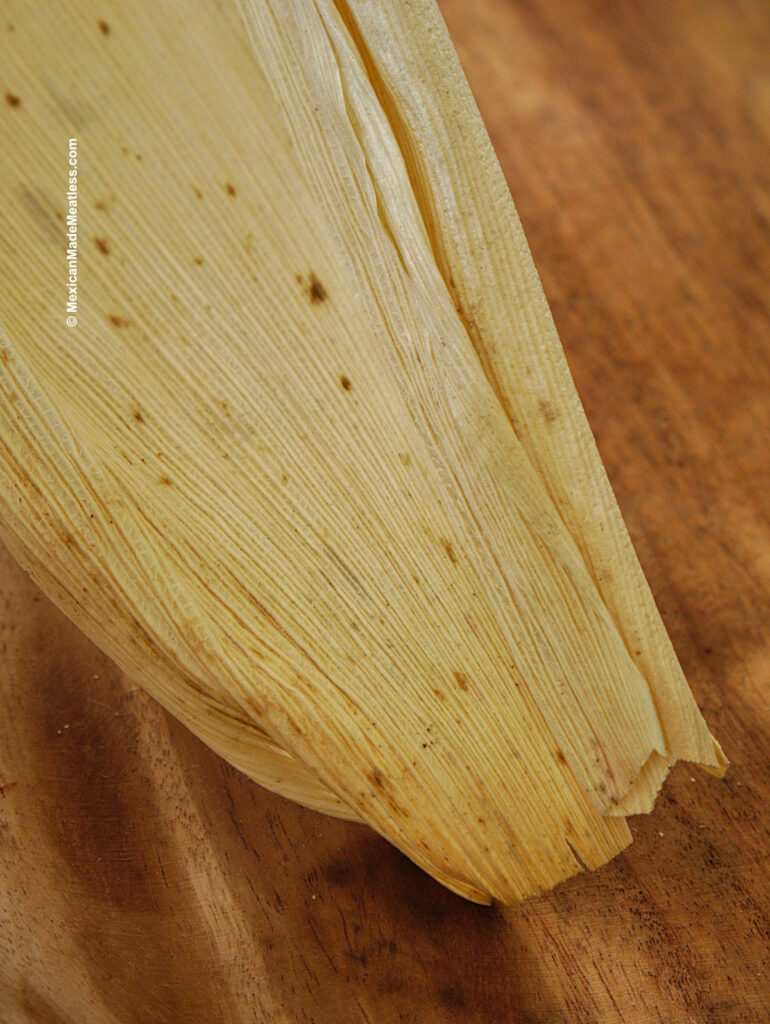
If you’re talking about fresh corn husks you want to make sure you toss out any that may have black spots on them. This could be a sign of mold. Don’t risk it!
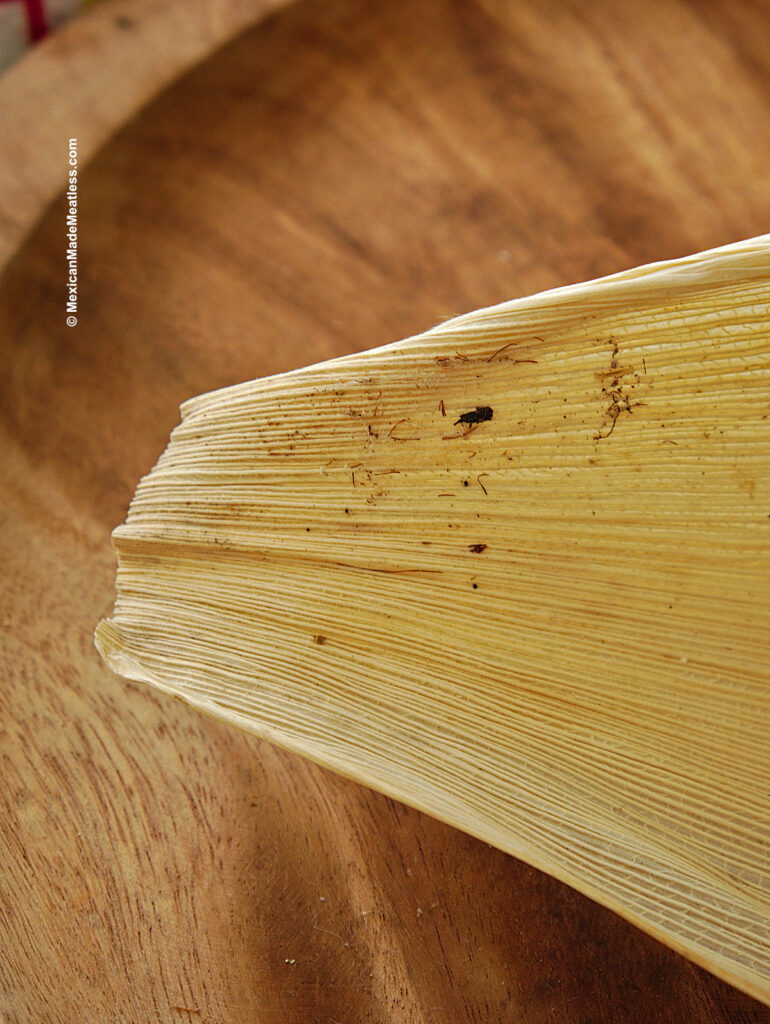
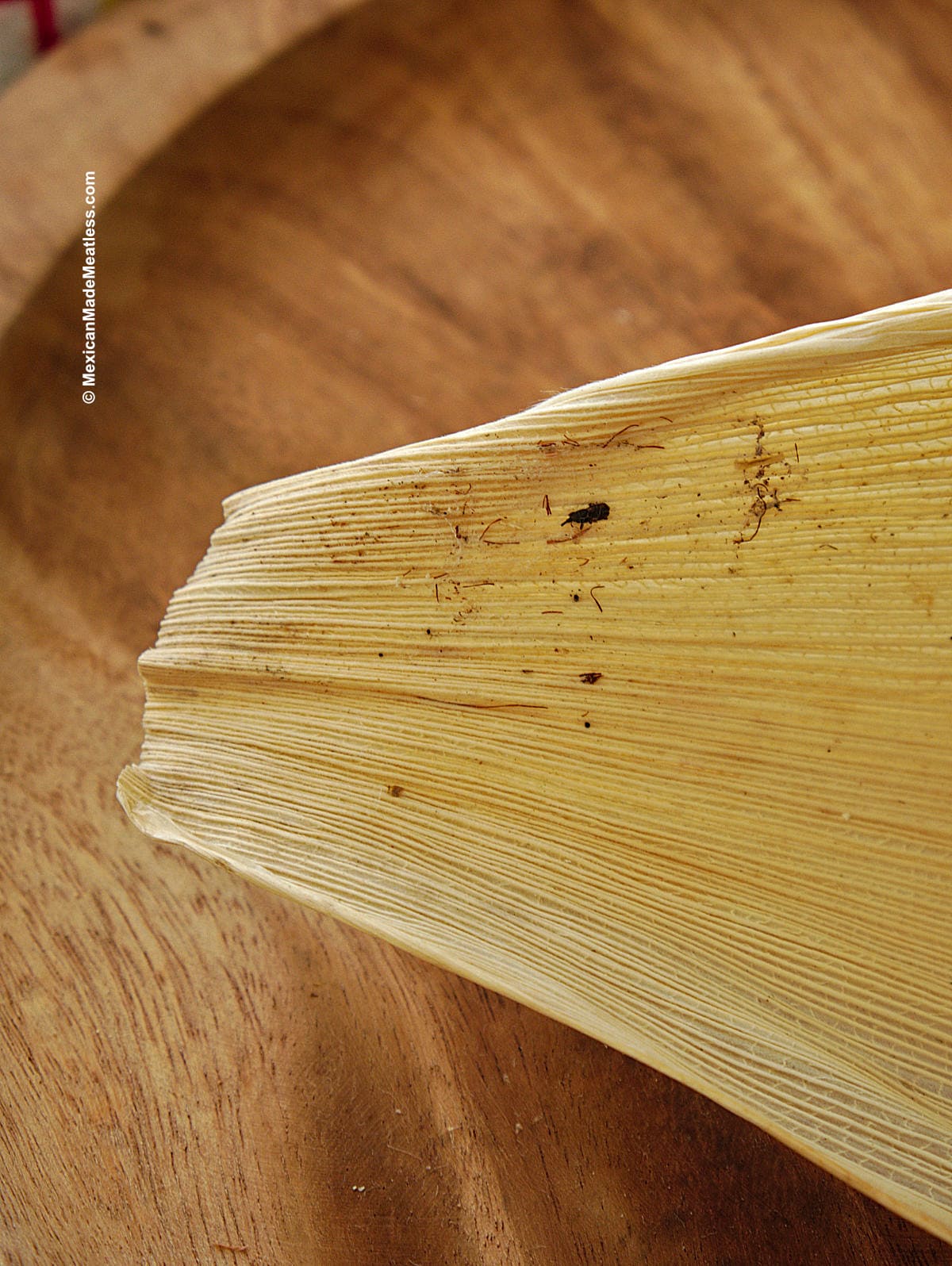
Some dried husks will have small brown spots splattered on them. These are safe to use. Just take a good look to make sure it’s not mold. If so then toss those out and grab a new pack.
If you don’t want to use the safe ones for stuffing, you can always save them to line the bottom of the steamer basket.
Discolored husks are fine too, that’s just appearance, not a sign of mold.
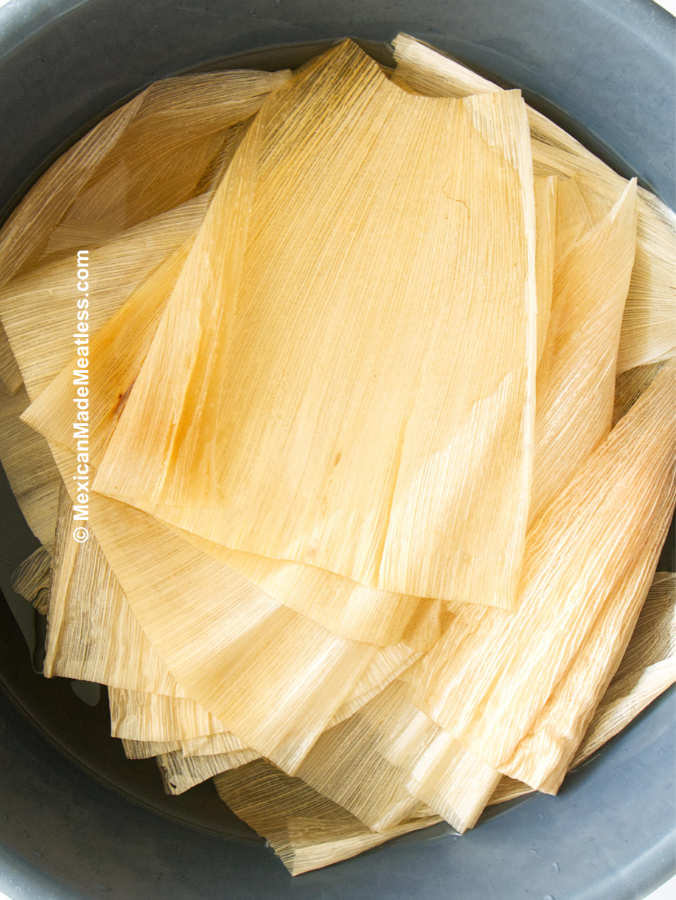
How Long to Soak Corn Husk for Tamales
Now we need to soak corn husks for at least 45 minutes, or until soft and pliable. Some people will leave the sorted corn husks soaking in a clean sink overnight. I don’t do this, but that’s another option if you’d like.
The longer you let them soak up the water, the more hydrated they’ll be and the more easily they’ll bend and fold.
This is what we want so we can fold our tamales without cracking or ripping husks and masa dough and the filling spilling all over the place.
As I previously mentioned, while the corn husks are soaking I make the filling — if I haven’t done so the night before, if I have then I’ll move on to making the masa.
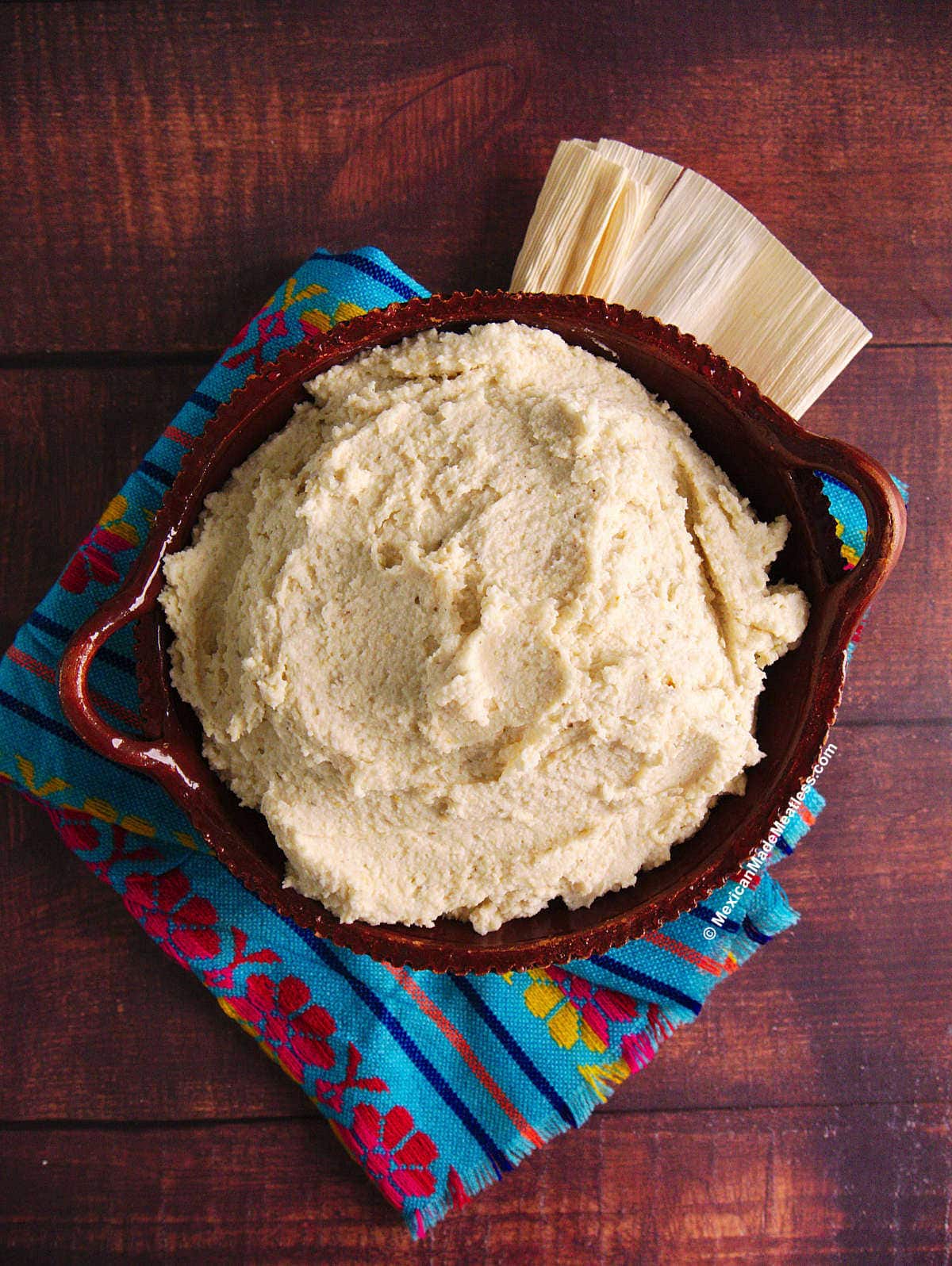
I’ve already published my recipe for my easy Masa for Tamales without Lard, do check that out.

Do Fresh Corn Husks and Banana Leaves Need to Soak?
A banana leaf used for making tamales does not need to be soaked. It does however need to be slightly warmed and softened on a griddle to make it pliable for folding the tamales. Additionally the hard stems need to be removed and discarded.
But you can buy frozen banana leaves which are all ready to use and it’s usually just a matter of spreading the masa, adding the filling and folding.
Fresh husks don’t technically need to be soaked either. If you get the corn super fresh, the husks will be moist and bend easily. If your ears of corn are older and drier I highly suggest you soak in warm water too.
You would only need to soak fresh corn husks for about 30 minutes, or until pliable.
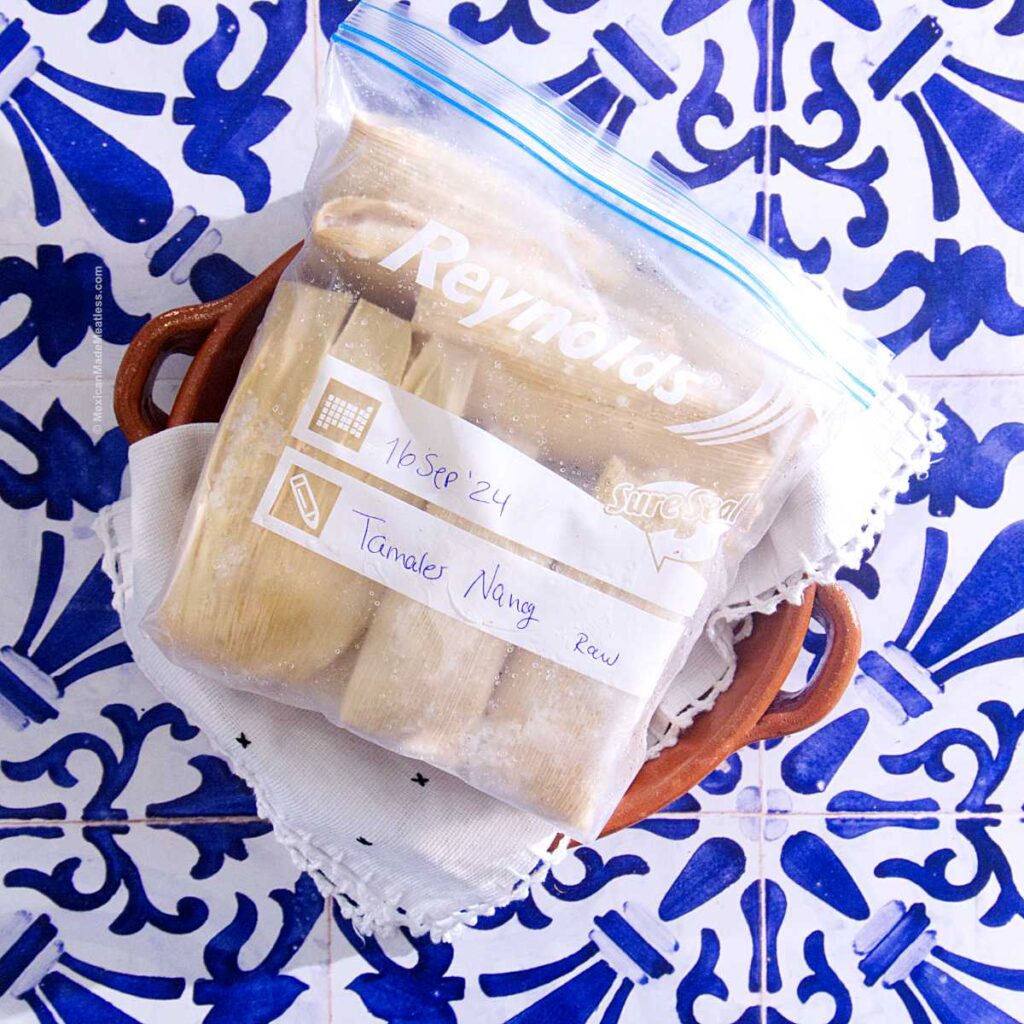
Can You Freeze Corn Husks
Yes you can. Actually corn husks freeze quite well.
Any leftover hydrated corn husks can be stored in the freezer. Shake off as much of the excess water, allow to drain in a colander, then place in freezer safe bags.
Corn husks will keep for a few months in the freezer.
You can also store leftover hydrated husks in the refrigerator. Make sure to remove excess water and prevent them from spoiling. They’ll keep fresh for a few days.
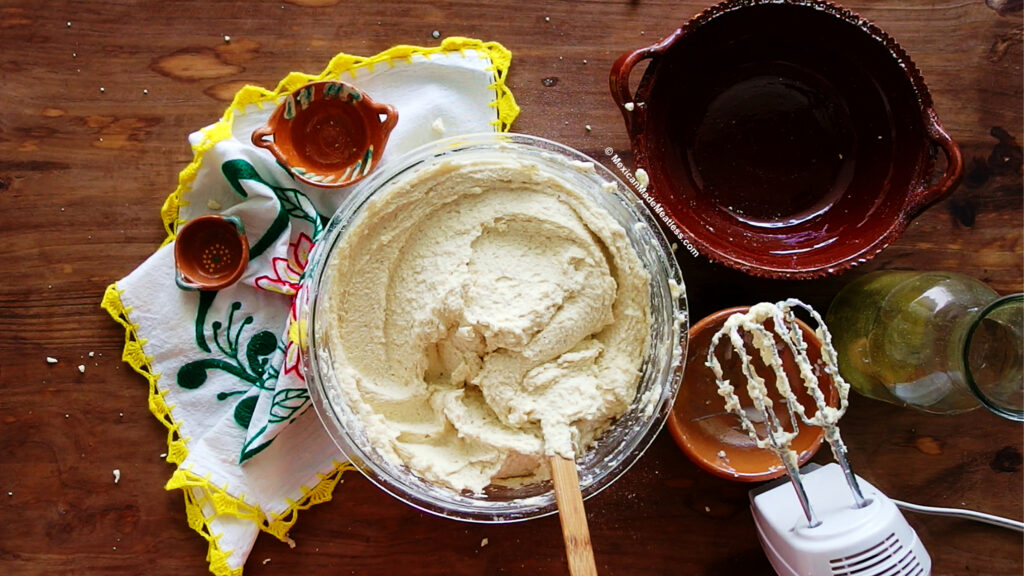
More Tamales Making Tips
Make sure you read through all of the helpful tamales making tips in my series. If I haven’t answered one of your questions don’t hesitate to reach out.
- Masa For Tamales | No Lard Recipe
- The Masa Float Test for Tamales
- How to Spread Masa on Corn Husks for Tamales
- How to Fold Tamales
- How to Steam Tamales without a Steamer
- How Long Does It Take to Cook Tamales on the Stove?
- How Long do Tamales Last
- How to Store Tamales
- What to Eat with Tamales | 24 Tamales Side Dishes

Gracias
I’m so happy you stopped by. If you have any questions or want to let me know how you liked this recipe, do leave a comment. Muchas gracias, I appreciate you!
How to Prepare Corn Husks for Tamales
Video
Equipment
- hot water
- clean kitchen sink or a large container
- colander
Ingredients
- 1 pack dried corn husks
Instructions
- Sort through the corn husks to remove any corn silk, dirt or debris that may be on the husks.

- Keep corn husks that are whole, not cracked in the middle and not too badly damaged. Also make sure that the long sides of the corn husk aren’t damaged either.

- Place the corn husks in a sink or large colander and thoroughly rinse under warm water. Make sure you are separating the corn husks and really getting running water through them all.

- Next you’re going to fill your sink with hot water and place the dried corn husks in it.
- Make sure you move them around and that there’s enough water to properly hydrate all sides of the corn husks. Or you can always place a large bowl or pot on top of the husks to push them down.
- Soak corn husks for at least 45 minutes, until soft and pliable. But you can also leave soaking until you're ready to use them the same day.
- Once the husks are soft and pliable then you can drain them. By this time too you should have the fillings and the masa ready to use.

Recipe Notes & Pro Tips
Nutrition
Click here to get a copy of my tamales cookbook!
(Please notice that this article contains Amazon affiliate links, which may earn us a small commission if you make a purchase through them. Your support helps us continue to provide valuable content.)
(Please notice that this article contains Amazon affiliate links, which may earn us a small commission if you make a purchase through them. Your support helps us continue to provide valuable content.)

Nancy Lopez is a Mexican-born published cookbook author and recipe developer with 20+ years of cooking experience. Raised in the U.S. and now living in North-Central Mexico, she creates authentic vegan and vegetarian Mexican recipes rooted in tradition and tested for real home kitchens. Read more…