Sweet Tamales (Pineapple Tamales Recipe)
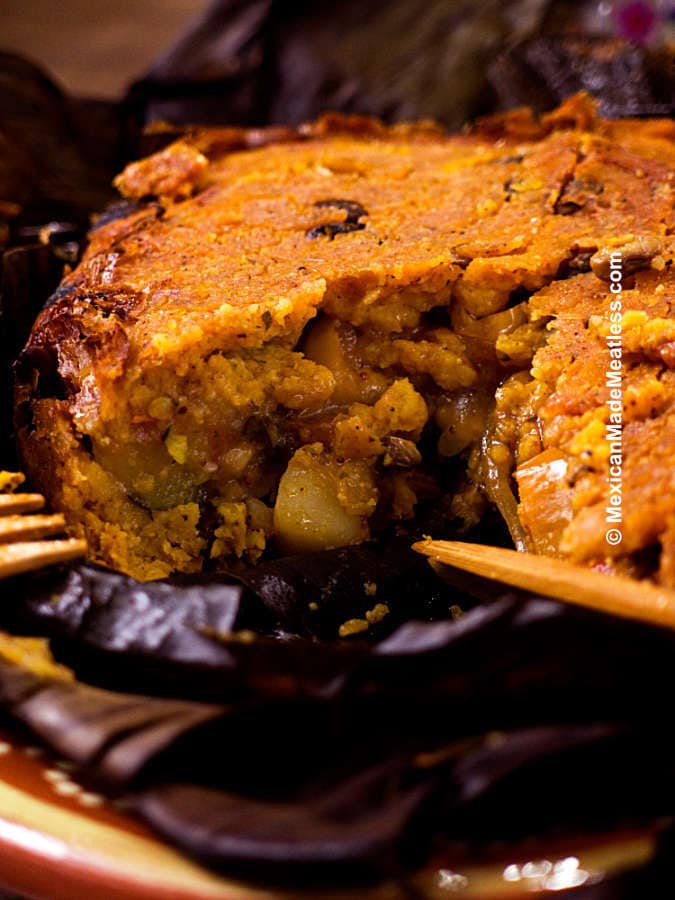
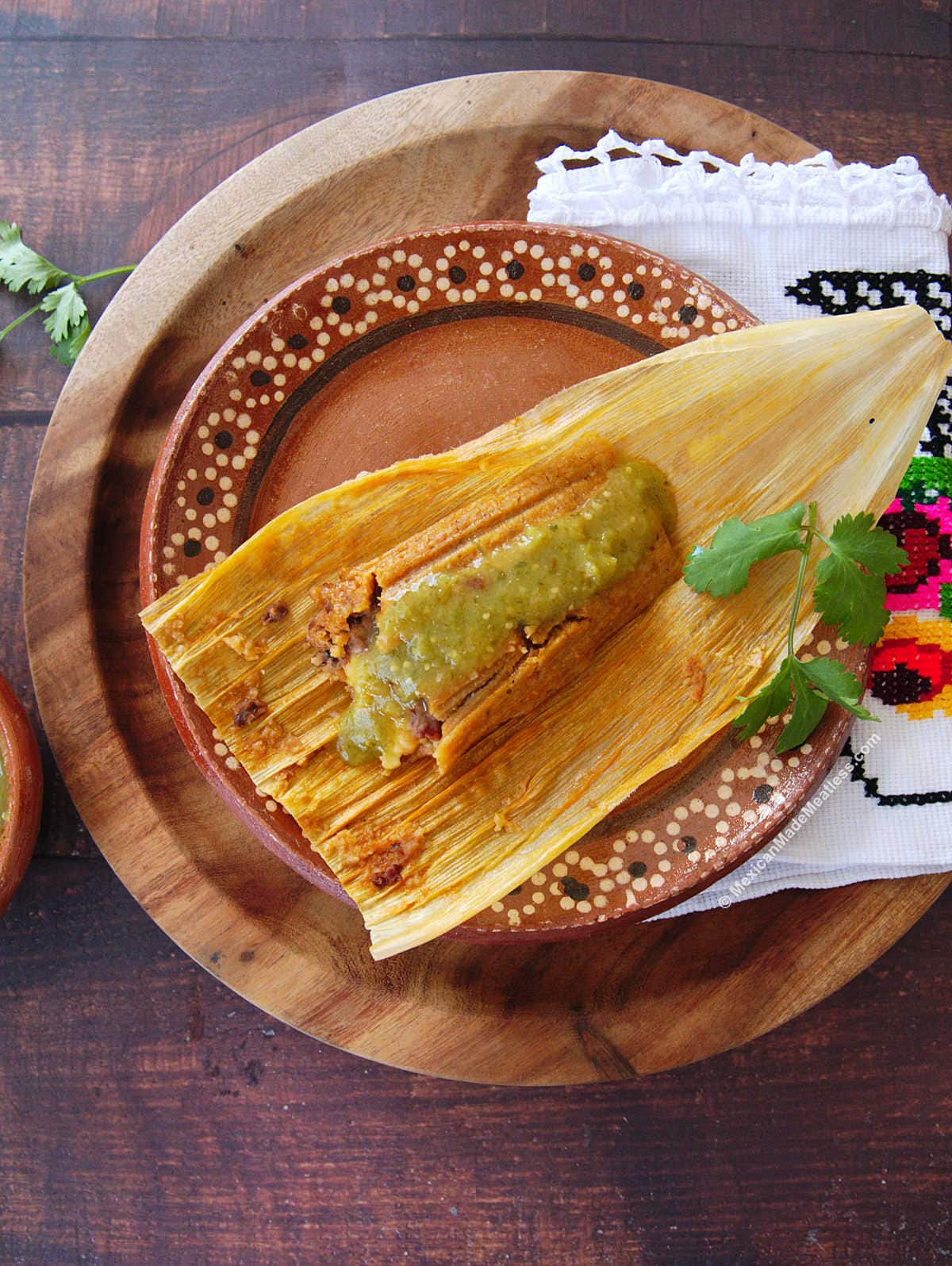
Mexican sweet tamales are a must have for your Christmas or special occasion fiesta. These are sweet pineapple tamales meets a piña colada cocktail. The flavors are incredibly delicious and just the dessert tamales you need to serve your fiesta guests.
Sweet Tamales
Typically when Mexicans think of sweet tamales a bright pink colored masa with raisins throughout it is what pops into their minds.
But amigos tamales dulces, or sweet tamales, are way more than those pink ones!
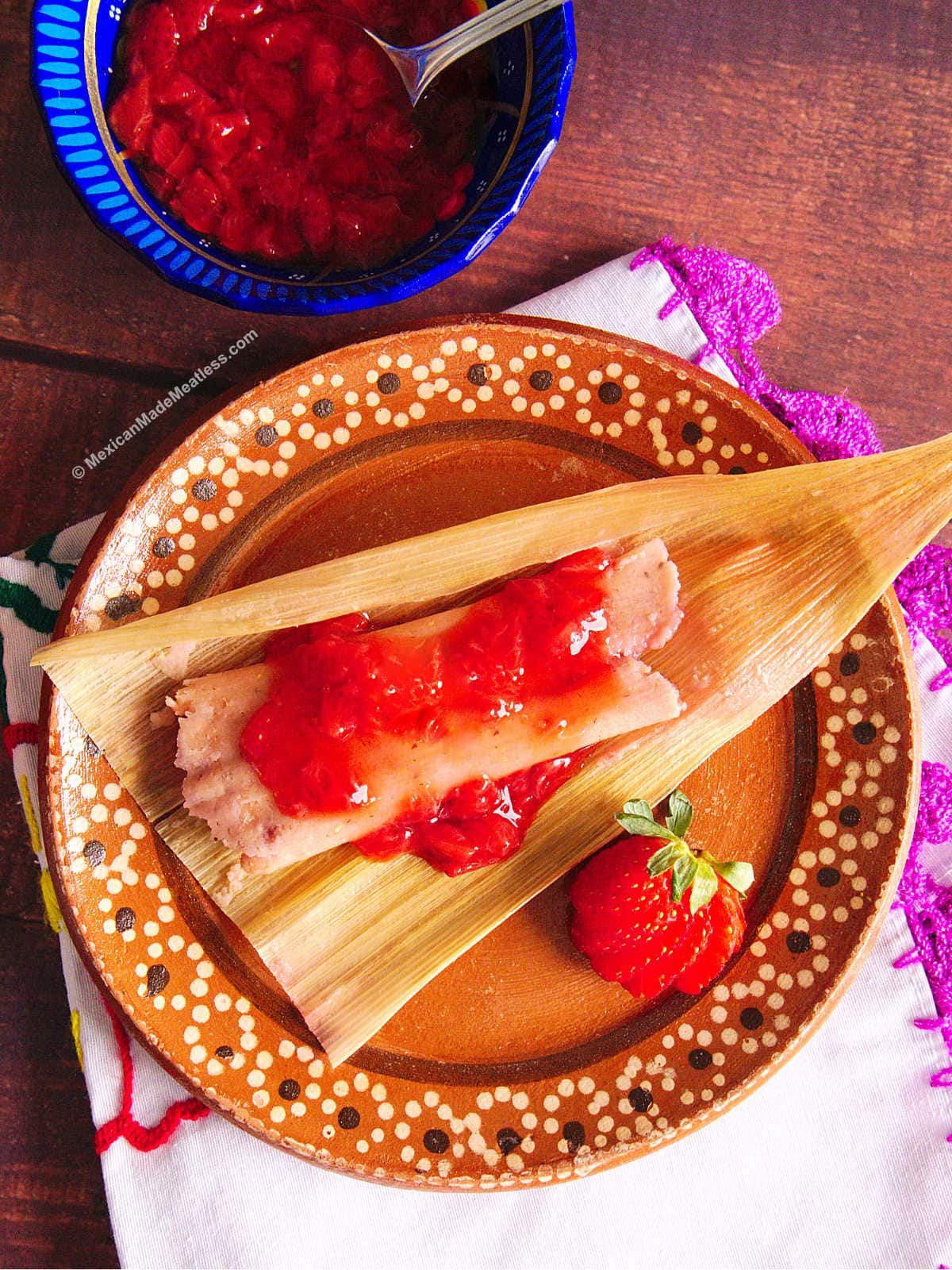
One of my favorite sweet tamales are strawberry tamales drizzled with strawberry jam and whipped cream.
There are so many delicious variations to these sweet masa pockets. Some are traditional and there’s also lots of new modern takes on them. Like have you seen the Gansito stuffed ones? It’s insane how creative people have gotten.
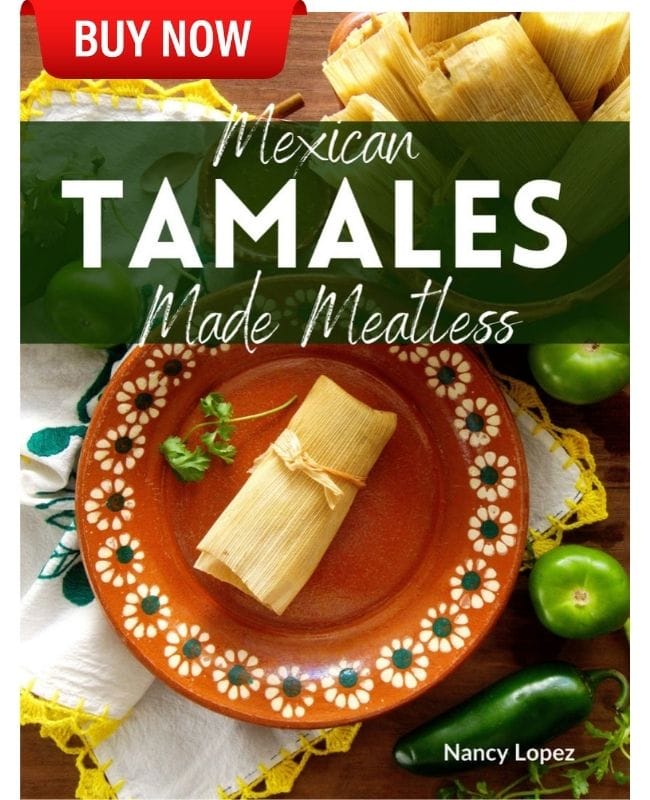
In my Mexican Tamales Made Meatless Cookbook I share 5 different sweet tamales recipes. Do check out the book, you’re going to love all the sweet and savory tamales, plus all the tips and additional recipes to turn you into a tamales making pro!
Sweet tamales are wonderful and easy to make Mexican desserts, specially when served with a warm cup of atole or champurrado or a cup of coffee. Delicious!
Pineapple Tamales | Tamales Dulces de Piña
One of the more commonly know tamales dulces are the ones made with piña or pineapple as it translates to in English.
Typically chopped pineapple chunks are mixed into the masa. Many people use butter instead of lard or shortening to make the masa. Also instead of the savory broth, pineapple juice or milk are used in the masa.
Most people use canned pineapple instead of fresh pineapple. They’ll also use the pineapple syrup to flavor and sweeten the tamales.
I make my sweet tamales differently and you’ll see that my sweet pineapple tamales recipe is quite different than all others…trust me you’ll love these!
Varieties of Sweet Tamales
Pineapple aren’t the only flavor for sweet tamales, there are lots of varieties of tamales with a sweet touch.
Some people also make tamales de cajeta which is like a Mexican equivalent of dulce de leche, there’s people that sweet raisin tamales (usually a pink color) mixed with nuts or fruits. I’ve also seen people make sweet pumpkin tamales stuffed with cream cheese.
Piña Colada Cocktail Meets Tamales
When I set out to make my own pineapple tamales I wanted to take it a step further and give them an extra special touch.
I was inspired to create these sweet tamales by the popular cocktail piña colada. Well everything minus the rum!
The results are truly delicious and if you’ve got a sweet tooth you’re going to love these tamales.
I used not only chopped pineapple but coconut oil instead of shortening, coconut milk and pineapple juice for stronger flavor. Also into the sweet masa corn dough I mixed in some shredded coconut.
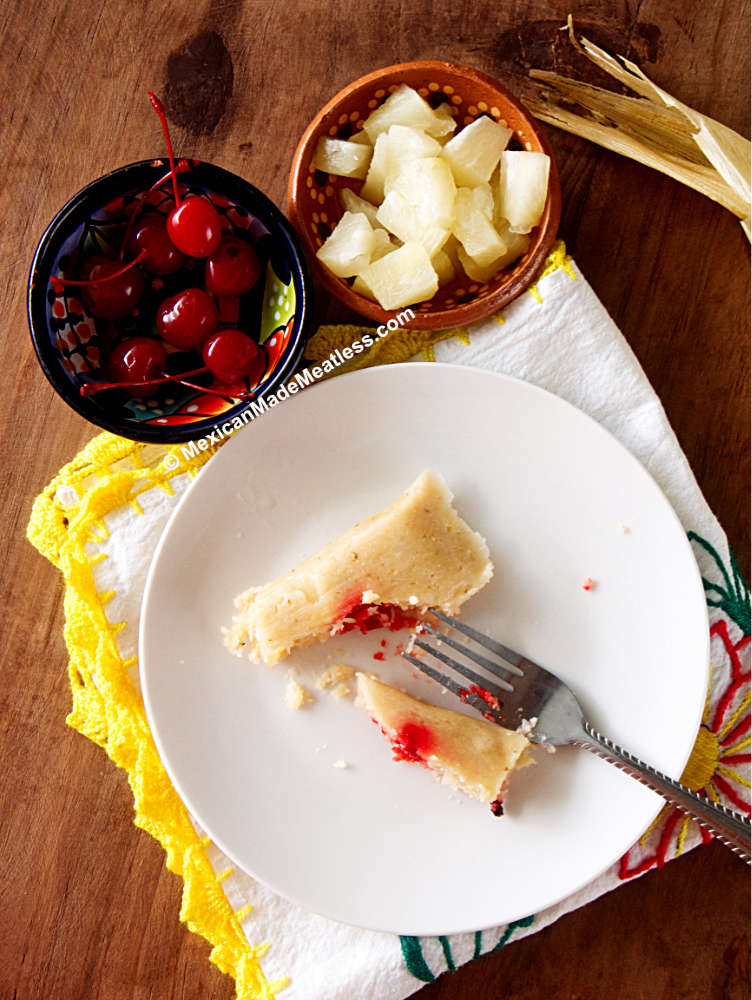
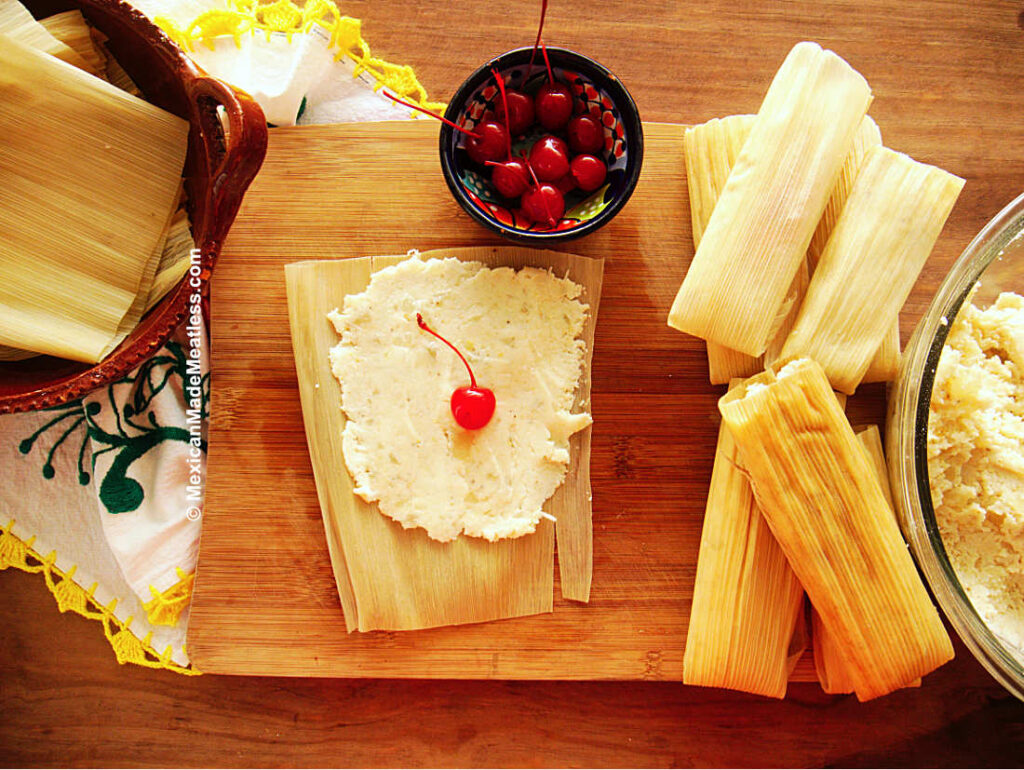
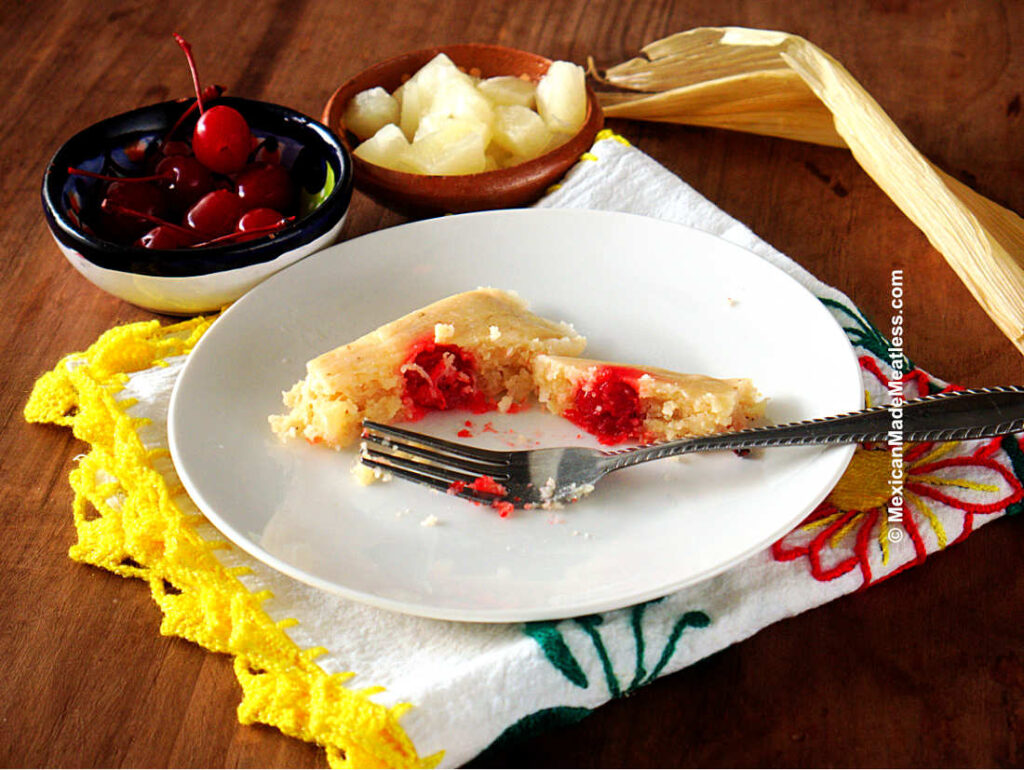
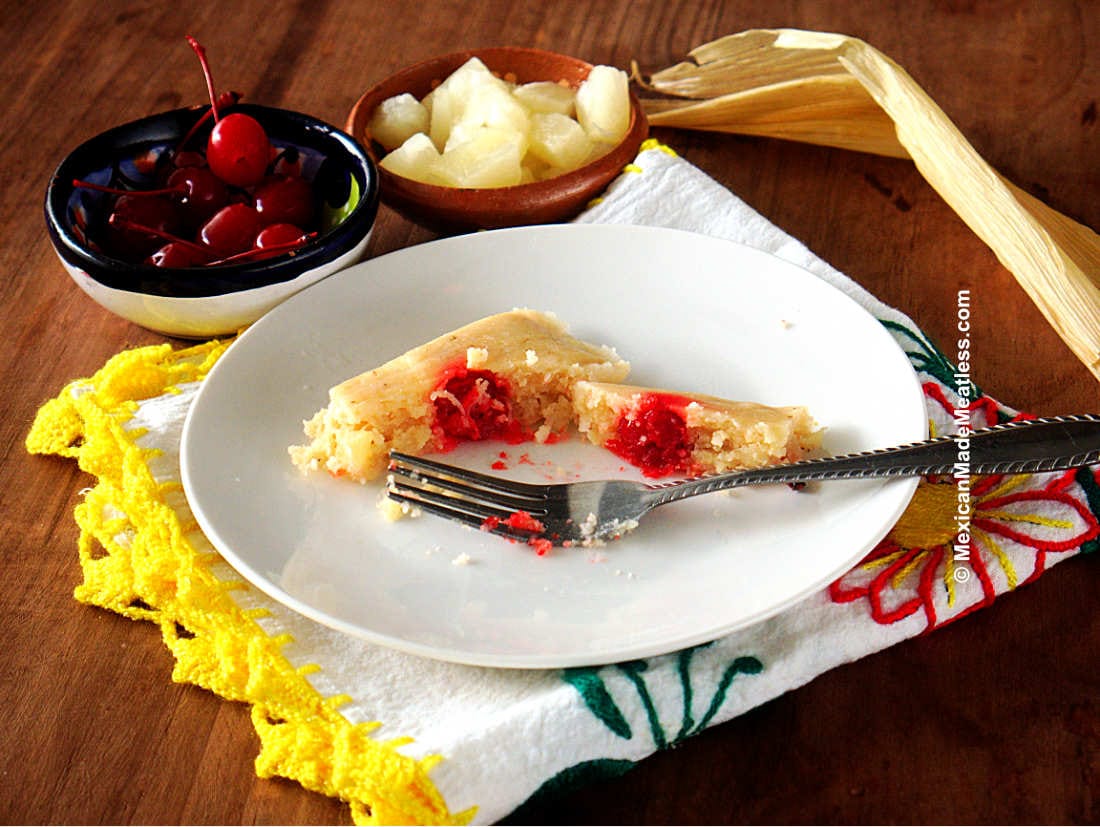
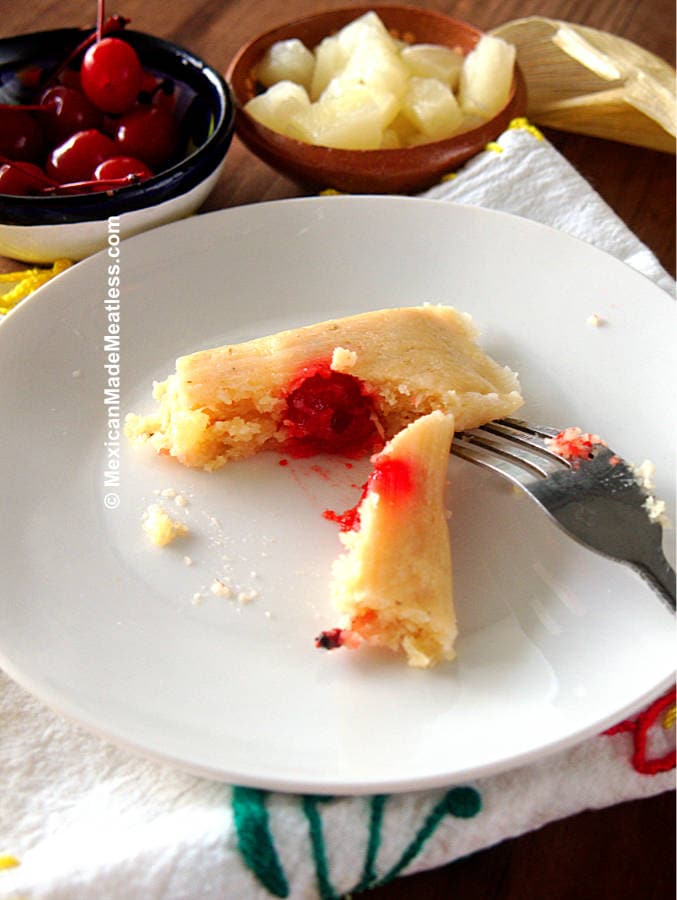
To finish off the tamales there’s a maraschino cherry in the center.
You can use or skip the cherry, but it adds a nice touch. Also be aware that these types of cherries aren’t generally vegan so make sure that you’re using a vegan brand if you want vegan tamales.
Pineapple Tamales Ingredients
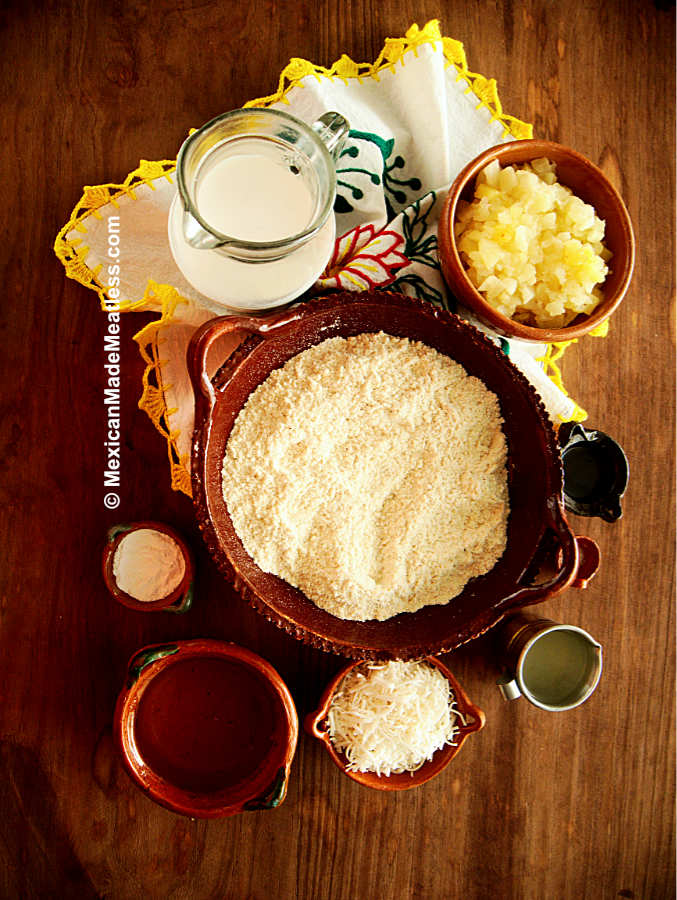
This sweet tamales recipe has a few more ingredients than the popular pink colored ones. But they’re still super easy to make and you can find the ingredients easily all year round too.
- Masa: You can use either fresh masa from the tortilleria or use masa harina, make sure it’s the one to make tamales.
- Sugar: I used unrefined sugar you can use brown sugar too just be aware that it may give the tamales a slight brown color.
- Baking powder
- Sea salt
- Coconut oil (measured melted)
- Pineapple juice: Either fresh or from the canned pineapple
- Coconut milk
- Canned pineapple: Use the one in pineapple juice not syrup for better results. Or you can also use fresh pineapple too.
- Shredded coconut
- Maraschino cherries
- Corn husks
Please note that the masa harina, or corn masa, if very different than corn flour. The results won’t be the same, so please try to use masa harina. I always use the one that says for tamales. You can find it at the Mexican grocery store or on Amazon too.
For sweet tamales in Mexico they’re always made with corn husks instead of banana leaves.
Some people like to use food coloring on their sweet tamales. I personally don’t, but if you’d like you can add a few drops of yellow color to the masa dough. You could also add a half teaspoon of ground cinnamon if you’d like to add that flavor too.
How to Make Pineapple Tamales
When it comes to tamales most people are intimidated, but please don’t be. You can see in my cookbook and recipes just how easy it really is to make tamales. These dulce ones are no exception!
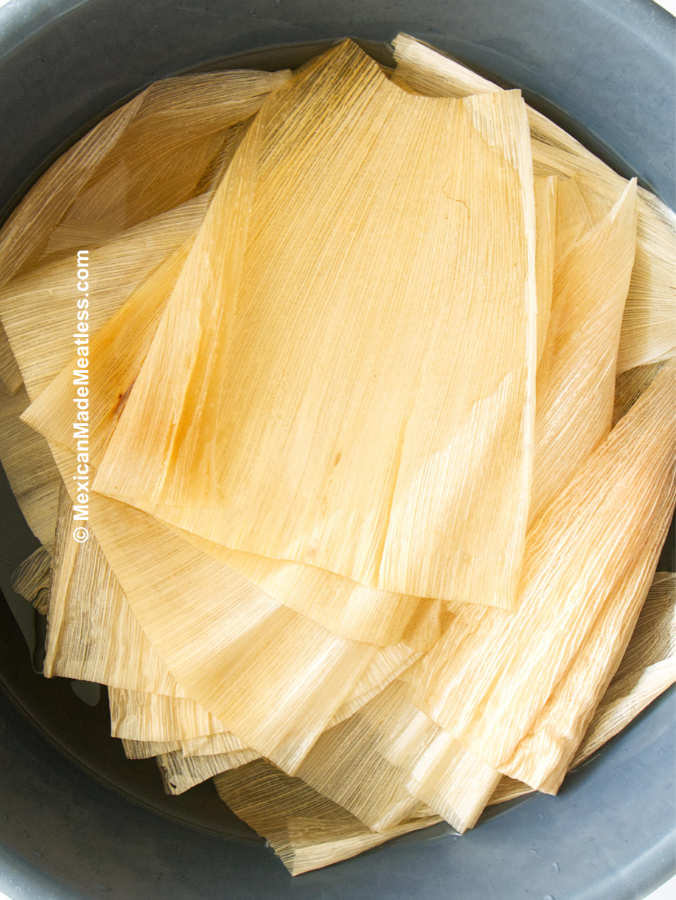
Before you begin sort through, properly rinse and soak corn husks. You can place them in the sink or in a large bowl of hot water. Set aside for a couple of hours to hydrate while the masa is prepared.
Depending on how fresh the corn husks are, they may require more or less soaking time to fully hydrate. They need to be very flexible. Another thing you could do is leave them soaking in a clean kitchen sink with warm water from the night before.
Make The Sweet Masa
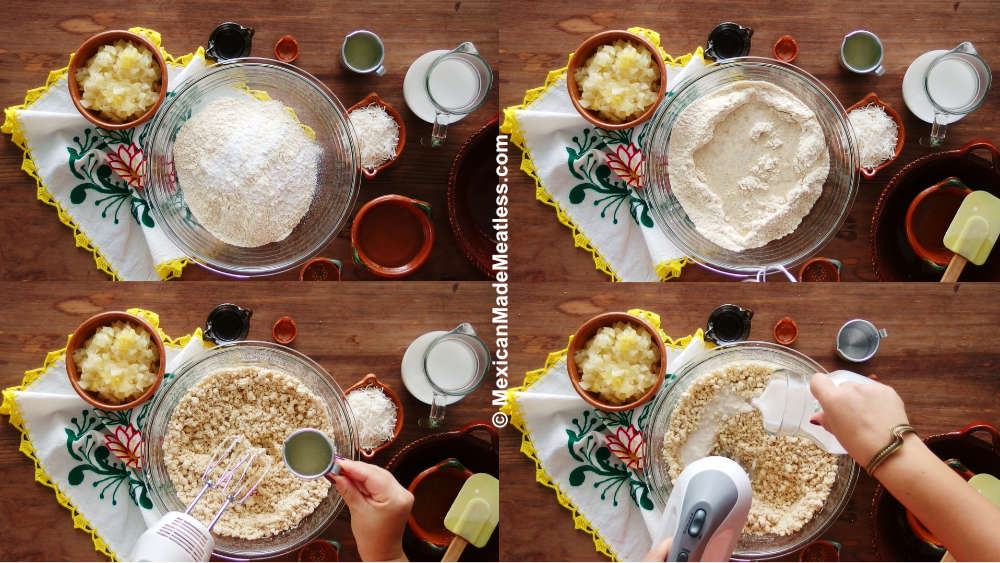
To start off we mix all of the dry ingredients in a large bowl using an electric mixer or with a wooden spoon. You could also mix everything in a bowl of a stand mixer. It’s up to you.
Then the coconut oil is mixed in until coarse crumbs are achieved. Next the pineapple juice (if you’re using food dye add it now too) is drizzled into the masa and mixed until well combined again.
Lastly the coconut milk in added little by little until we have a perfectly smooth and hydrated masa harina. If it still feels very dry you can add a little bit more of coconut milk or pineapple juice.
Add the Pineapple and Shredded Coconut
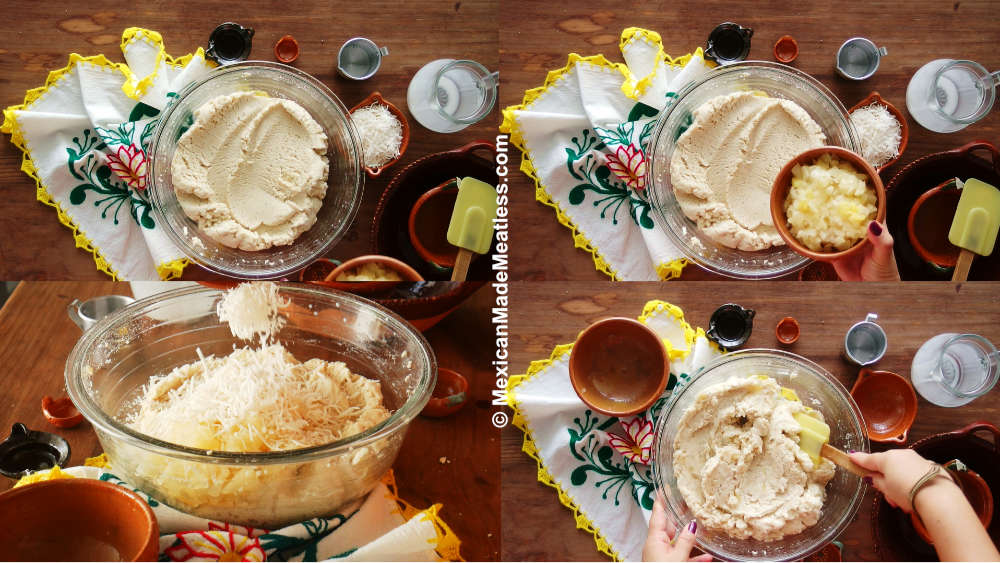
Once the masa is well combined then we can begin building the flavor. We do so by adding the chopped pineapple then the shredded coconut and mixing until well combined.
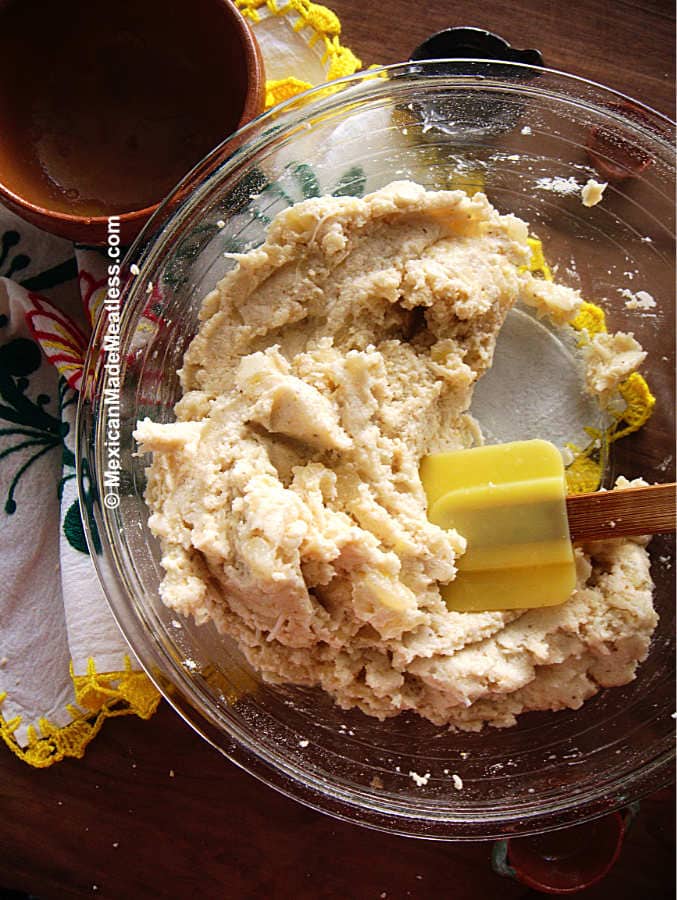
At this point we want to taste the masa and make sure that it doesn’t need more of anything else or a bit more hydration. Though do keep in mind that this masa isn’t going to need to be as wet as the savory tamales masa.
The Float Test
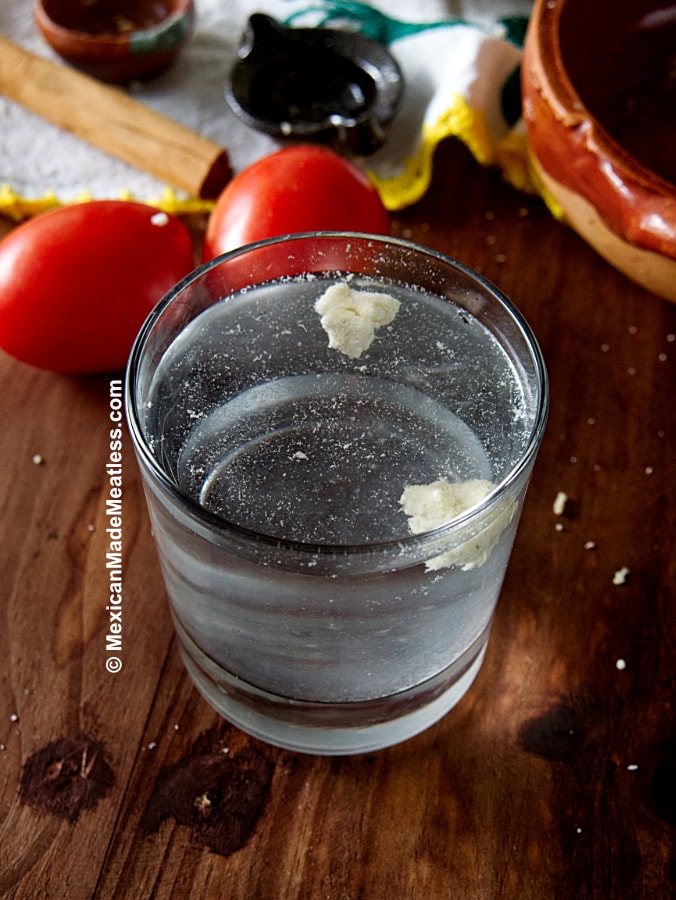
Once you’ve finished mixing in all of the ingredients we can do the tamale dough float test. This is done to make sure that the masa and tamales will be light and airy. You can do this if you’d like or skip it.
To do so grab small dollop of the masa or batter and drop it into a small glass of water. If it floats then it’s ready for the next step. If not then you can whip a little longer and test again.
Spread The Masa on Corn Husks
Now that the corn husks have hydrated remove them from the water and set to drain inside of a colander.
The next step is to spread your prepared masa on the hydrated and drained corn husks.
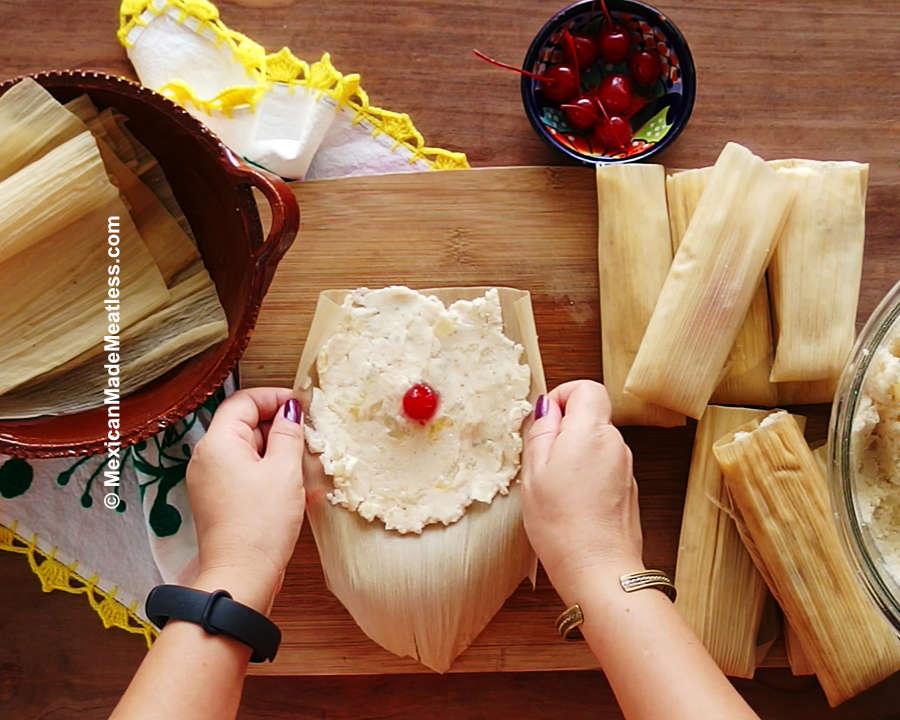
Take one corn husk, shake off any access water from soaking, lay it on a flat surface with the smooth side up and rough edged side down. The long sides of the corn husk should be at the bottom. See the image below for sample.
Grab a few tablespoons of the masa and begin to spread it over the top wide part of the corn husk. Make sure to leave space above and a little on the sides.
Stuff and Fold The Tamales
Next you want to grab a cherry and place it in the center of the dough. Then tuck one side of the husk towards the center, then bring the other side in as well. Fold the remaining bottom long side of the husk up and your set!
(Watch the video for a visual guide on this step.)
Steam The Tamales
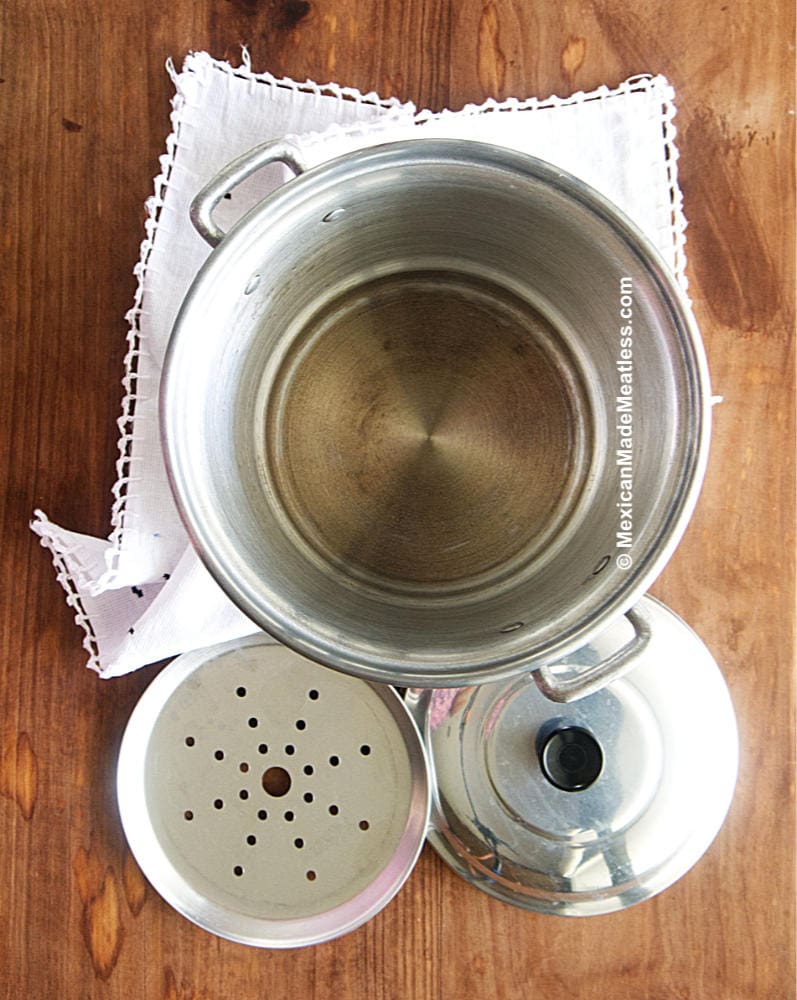
Next you’ll need add hot water to your steamer pot or a traditional tamalera. Assemble the little lid that comes for staking the tamales on it and lay some hydrated corn husks on the little lid or shelf.
Then start arranging the tamales inside. You want them standing up with the wide side up and not to crowd them. Next cover the tamales with more hydrated leftover cornhusks or with a dampened kitchen towel.
Set on stove on medium-high heat until the pot comes to boil, then lower the heat and steam for 1 1/2 hours.
How to Cook Tamales without a Steamer or Tamalera
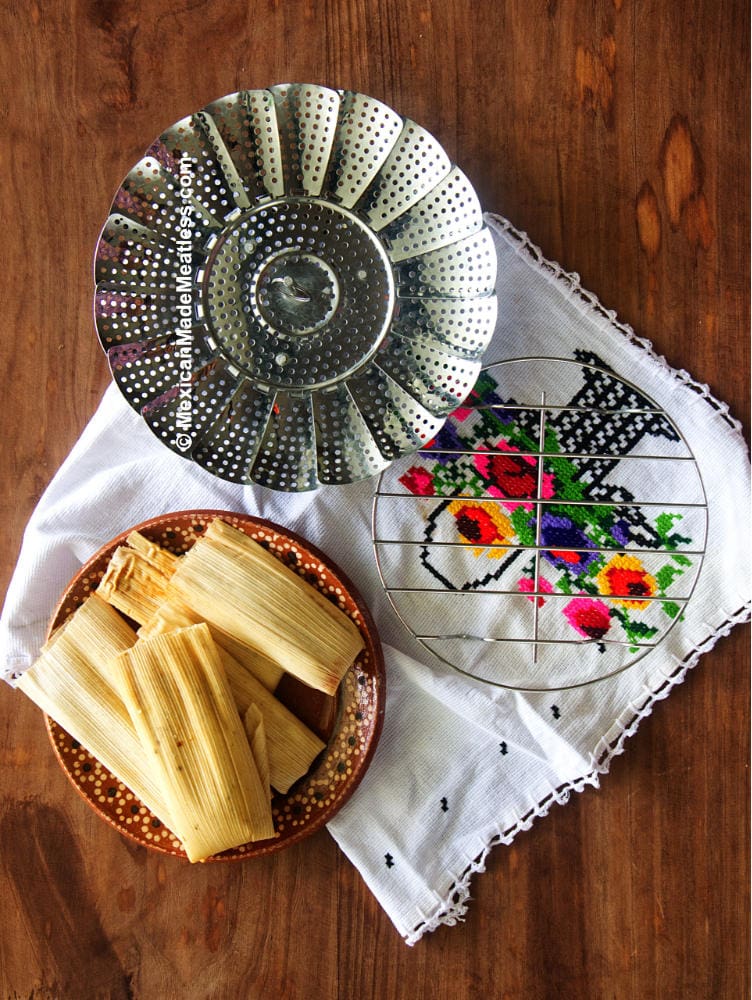
For those that don’t own traditional tamal steamers, don’t worry you can still steam tamales with the same great results.
The first method you can use is by placing a collapsible metal vegetable steamer basket in a large pot. I use this method all the time both in regular pots or even my Instant Pot.
So you add enough hot water to the pot, but it shouldn’t overflow into the steamer basket. You don’t want excess water to turn your tamales into mush.
You can place corn husks to on top of the steamer rack if you’d like. Then arrange the tamales the same way as in the tamalera. Cover tamales with a damp towel, or extra corn husks or aluminum foil and steam. Then steam just like in a tamalera.
Read this article for more information, How Long Does It Take to Cook Tamales on the Stove?.
Instant Pot Tamales Instructions
If you want a quicker method of steaming your tamales then use your electric pressure cooker like an Instant Pot.
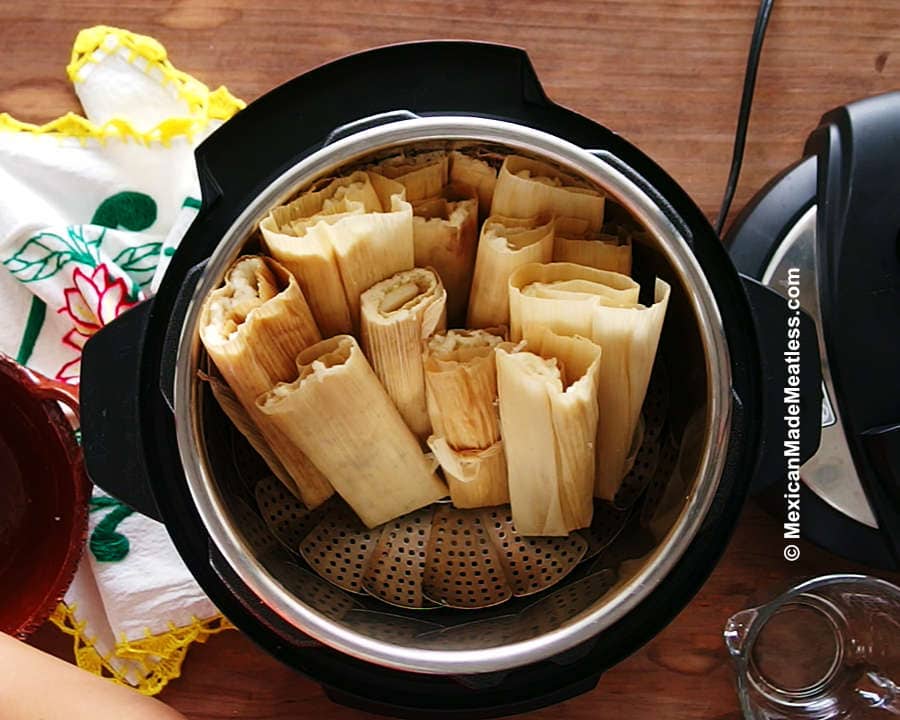
I use my 6qt Instant Pot all the time and it can fit anywhere from 18 to 24 tamales inside. The amount will depend on how large or small your tamales are. But just like as in the tamalera you don’t want to overcrowd the tamales, give them space to expand.
When using the Instant Pot I also like to use my metal vegetable steamer basket. So what I do is add enough water to the pot for it to come just under the steamer basket — we don’t want it to be flowing in there. Then I arrange the tamales just like in the tamalera.
The lid is placed on the Instant Pot, valve is set to Sealing and then I choose Pressure Cook and set it to Low Pressure and set the time for 35 minutes.
Then all that needs to be done is wait for the Instant Pot to come to pressure then the clock to start counting down.
Allow the cooking time to finish then let the IP naturally release for 10 minutes. Then carefully move the valve to Venting and release all the remaining pressure. Carefully open the lid facing away from your face. Let the tamales sit 5 minutes then carefully remove to serve.
How to Serve Sweet Tamales
These tamales can be served as a dessert. But you could really enjoy them on their own with a nice warm drink.
If you want at drink to accompany them you could do an atole or even a ponche navideño. Maybe a shot of rum just to pull it all together.
Read this article to see all the different ways to serve tamales.
Tamales are a traditional dish served for Mexican Independence Day, Dia de Muertos, Christmas, New Years and other special occasions.
Additionally on Tree Kings Day, or Dia de los Reyes Magos, which is on January 6th a special bread called rosca de reyes is eaten. Inside this bread are hidden plastic baby Jesus and whom ever gets one has to make tamales on el Dia de La Candelaria, which falls on February 2nd of every year.
So the lucky people that didn’t get the baby Jesus get treated to tamales again.
How to Store Leftovers
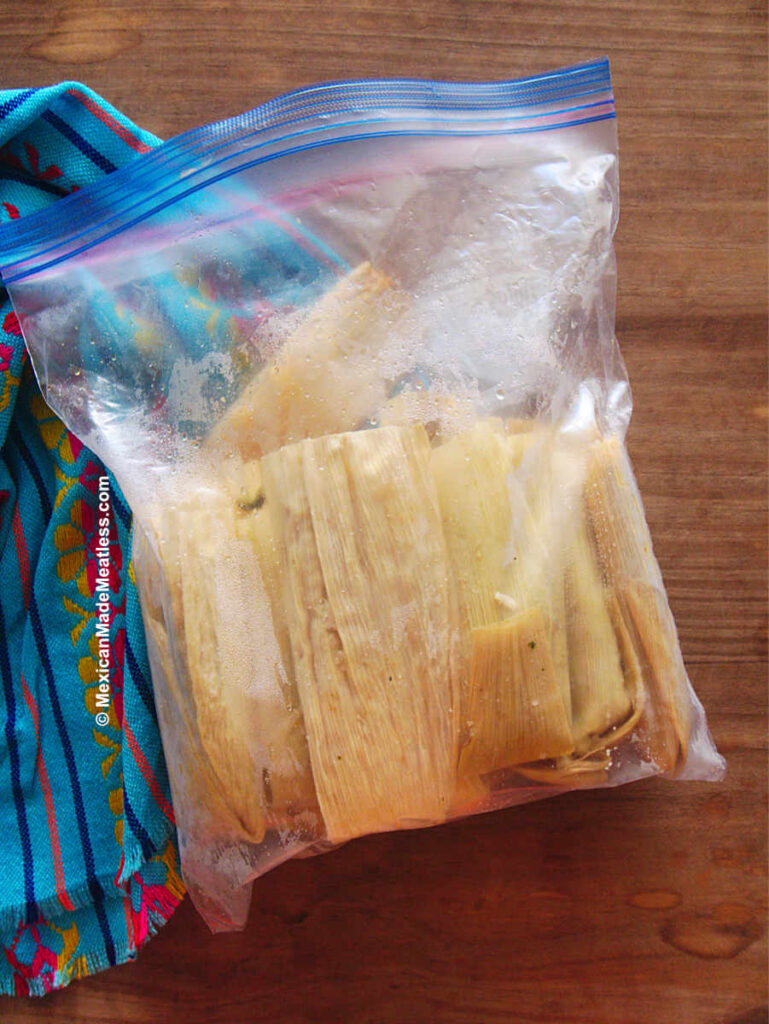
Store any leftovers in the refrigerator — allow them to come to room temperature before doing so.
You can also store them in the freezer after cooling, use an airtight container like a Ziploc bag.
For more details on the proper way to store tamales please read this article, How to Store Tamales.
You may also want to read How Long do Tamales Last.
Easy Sweet Vegan Tamales
Ok amigos, below is the fully written recipe. Please don’t hesitate to reach out with any of your tamales making questions.
I think you’re going to love these easy to make sweet and delicious tamales. Double the batch to have lots to share with your amigos and family. Enjoy!
HELP US RATE THIS RECIPE
Please make sure to leave a comment and a star rating if you make the recipe, it’s a huge help for my blog. Gracias!
Sweet Tamales | Pineapple Tamales (Piña Colada Flavor)
Ingredients
Ingredients
- 1 lb masa harina for tamales
- ½ cup sugar
- 1 teaspoon baking powder
- pinch of sea salt
- ¾ cups coconut oil I used it in liquid state
- ½ cup pineapple juice from the can of pineapples
- 1 cup coconut milk
- 1 ½ chopped pineapple I used canned
- ½ cup shredded coconut dry coconut
- 25 maraschino cherries vegan brand and optional
- 25 corn husks
Instructions
Instructions
- Soak the corn husks in hot water and set aside until ready to use. In a very large mixing bowl combine the masa harina, sugar, baking powder and sea salt. Then add the coconut oil and mix until well incorporated, you’ll end up with a crumbly mix.

- Next mix in the pineapple juice, then little by little the coconut milk until you have a smooth masa. If needed add more coconut milk to help you achieve the smooth, spreadable masa mixture. Next fold in the chopped pineapple and the shredded coconut, mix until well combined.

- Drain the corn husks and shake off an excess water.

- Spread the masa onto the corn husks — you don’t have to go all the way to the sides with this masa since it’s a bit thicker. Add the cherry to the center, if using.

- Fill the tamalera, steamer pot or instant pot with enough hot water to reach right below the steamer basket. Layer drained corn husks around the steamer shelf or basket then arrange the tamales placing them standing up into your steamer pot, cover with corn husks and steam.
- Steam for 1 ½ to 2 hours or cook in the Instant Pot for 35 minutes on low pressure and natural release for 10 minutes before carefully removing from the pot.

Recipe Notes & Pro Tips
Nutrition
*I make a small commission from Amazon when you purchase through the links below. The commissions help fund new and free recipes for you. Gracias!*

Nancy Lopez is a Mexican-born published cookbook author and recipe developer with 20+ years of cooking experience. Raised in the U.S. and now living in North-Central Mexico, she creates authentic vegan and vegetarian Mexican recipes rooted in tradition and tested for real home kitchens. Read more…