36 Mexican Fruit You Need to Try (Exotic and Ordinary)
I love tasting new fruits, don’t you? Mexico is a lush country with an extensive variety of fruits. From the exotic tropical guanabana, to the familiar mango, Mexico has it all. Explore this comprehensive guide of Mexican fruits and discover all the delicious flavors waiting to be savored.
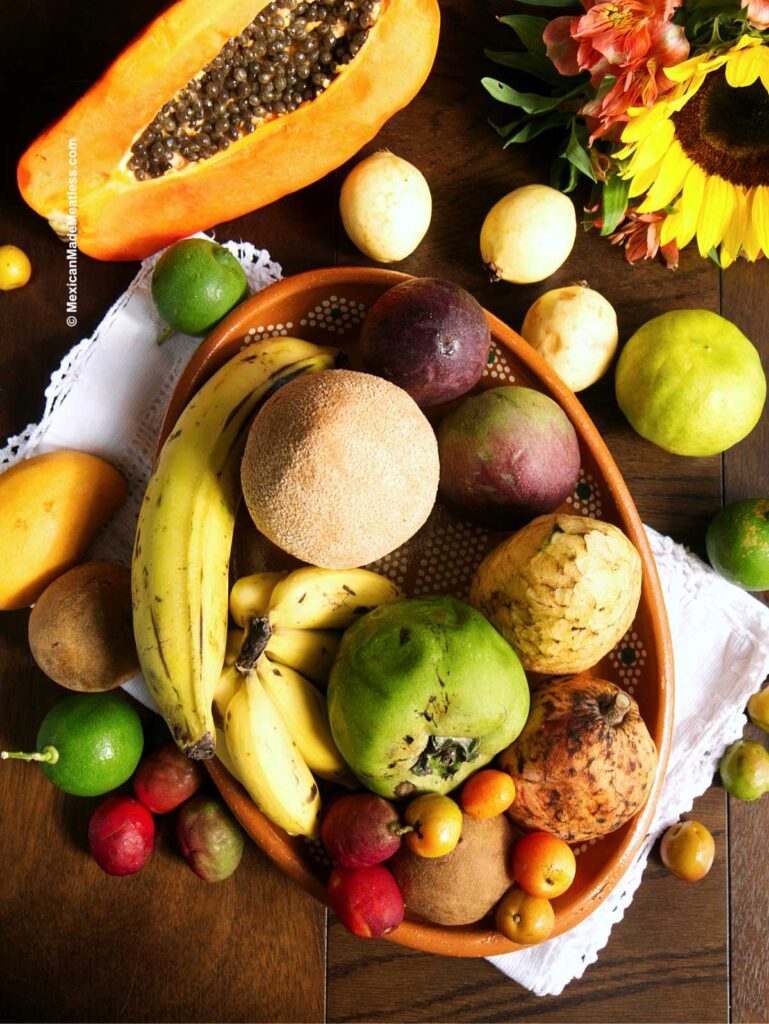
Amigos please note that at least otherwise stated, don’t eat the seeds or peels!
Mexican Fruits
Mexico is blessed to be a land of rich biodiversity, which means that there’s a colorful array of fruits that are not only delicious but also integral to its culinary heritage.
From the lush tropical regions of the Yucatan Peninsula to the fertile valleys of central Mexico, the country’s diverse climates nurture a wide variety of fruits, each with its own unique flavors and textures.
Yes, Mexico also has many of the same classic fruits available all over the World, but I’m not going to focus too much on those. This list focuses on fruits native to Mexico and also those brought to Mexico from foreign lands by the conquistadores and immigrants.
Getting to savor all these fresh, juicy, tart and sweet fruits has been one of the best parts of moving back to Mexico.
Ok amigos, after you review this list of names and pictures of Mexican fruits do leave me a comment letting me know which of these fruits you’ve tried and which you’d love to taste one day.
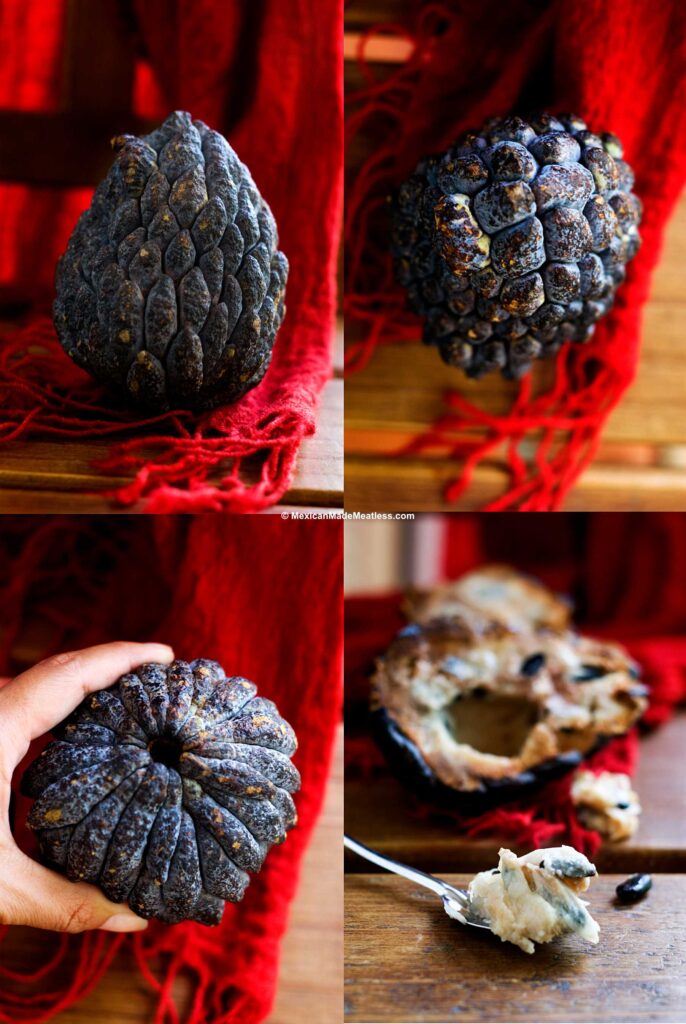
Saramuyo or Sugar Apple or Sweetsops
In Spanish this is called a saramuyo and in English it is known as a sugar apple or sweetsop or custard apple. This fruit is part of the Annona family and they are all similar to each other. It is native to Mexico and parts of the Caribbean.
Once ripened the outer skin is thick and rough, looks like scales, and should feel soft when squeezed a bit. The inside is a creamy flesh with lots of hard black seeds that should be discarded. The taste is sweet and a bit like a mix of pear and hints of tropical fruit flavors like pineapple, mango and even vanilla. When very ripe it can have hints of tanginess to it. The texture is creamy but can also have some slight graininess.
My personal preference is to eat saramuyo chilled, it helps bring out the delicious sweetness and creaminess out more. It’s commonly eaten on it’s own or made into agua fresca or ice cream.
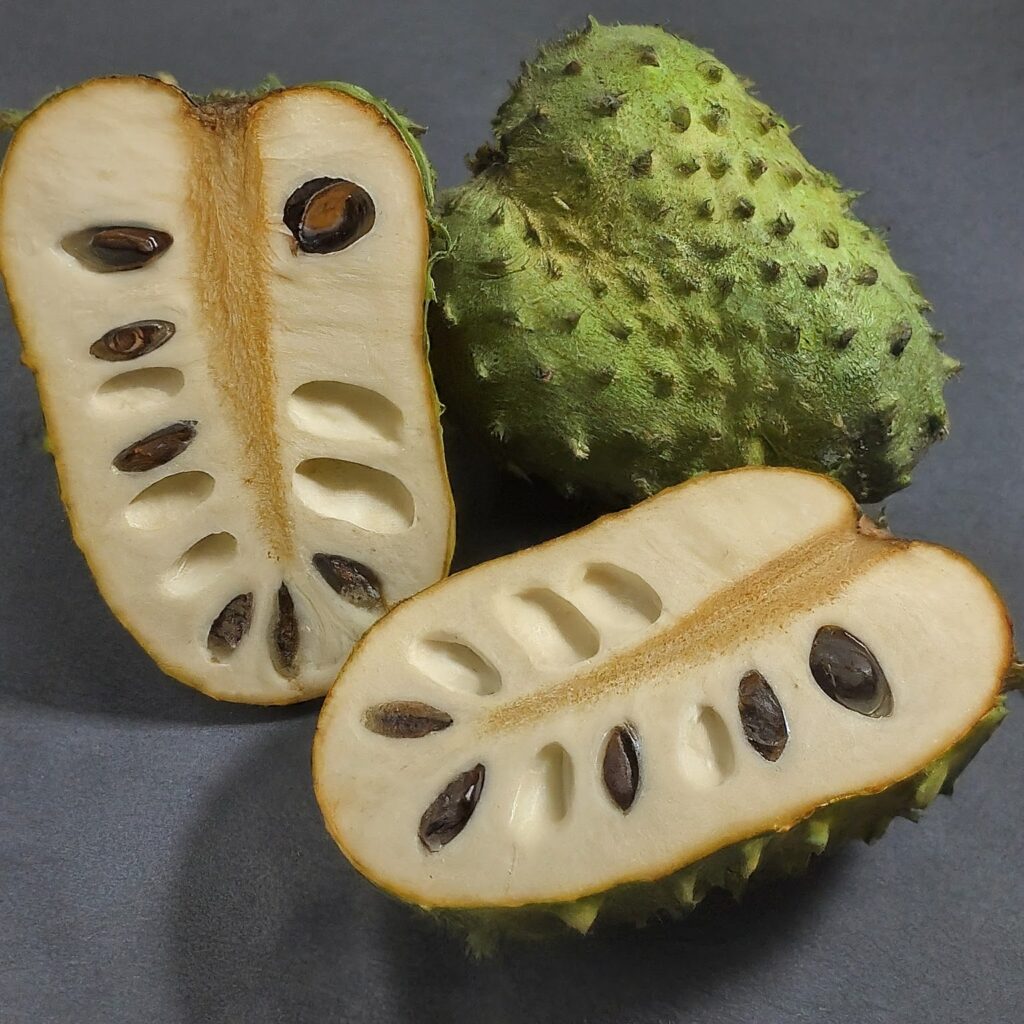
Guanábana or Soursop or Custard Apple
This is another fruit in the Annona family. It’s a large green fruit with little soft spikes on the peel. Inside it has a creamy white flesh with large hard inedible seeds. The texture is creamy like a custard hence the name custard apple.
The flavor is unique and to me tastes like a combination of strawberry hits of pineapple and slight notes of citrus. In Mexico guanabana is commonly eaten fresh (cold is best) or made into agua fresca or juices and the pulp is often made into paletas or ice cream.
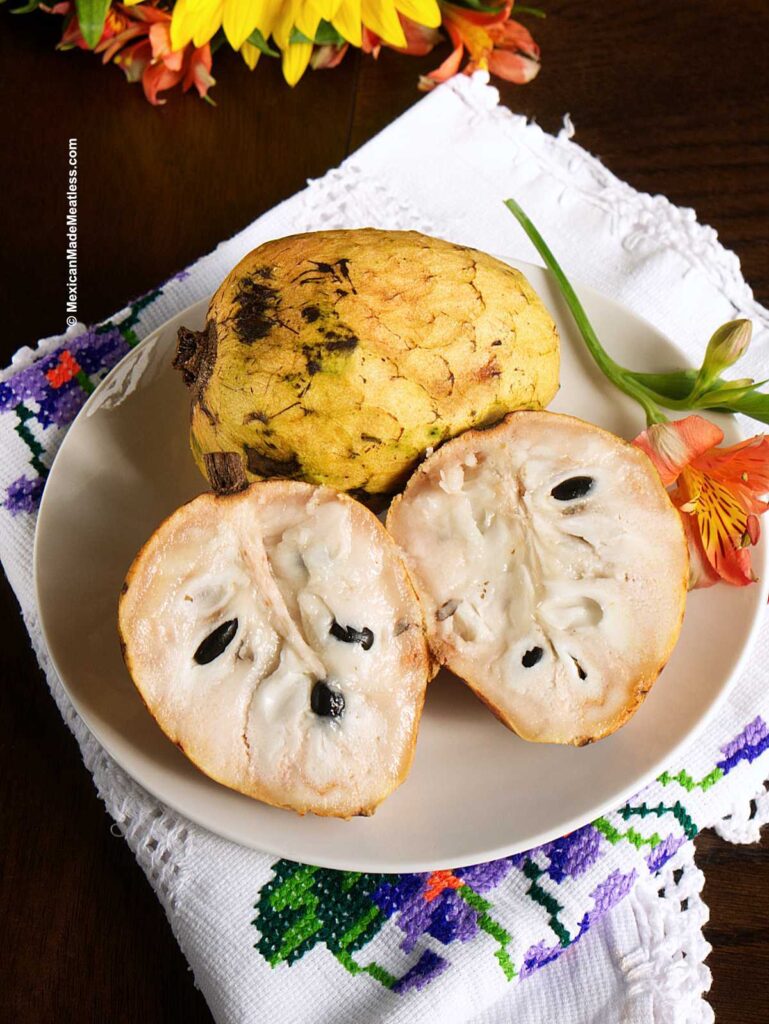
Cherimoya or Chirimoya
Locally here in Campeche this fruit is called Annona but in other parts of the country it’s called chirimoya. As you can see in the similarities it’s related to saramuyo and guanabana fruits. Cherimoya has soft skin that has a scale pattern resembling other fruits in the Annona family. These fruits are round and almost heart-shaped.
The inside is white with a slight yellowish tone and the flesh is creamy and melts in your mouth. The texture is soft and can also have a slight graininess occasionally. The seeds are large, hard and black and are not edible. This fruit is delicious eaten fresh and chilled. It’s also made into agua fresca or popsicles and ice cream.
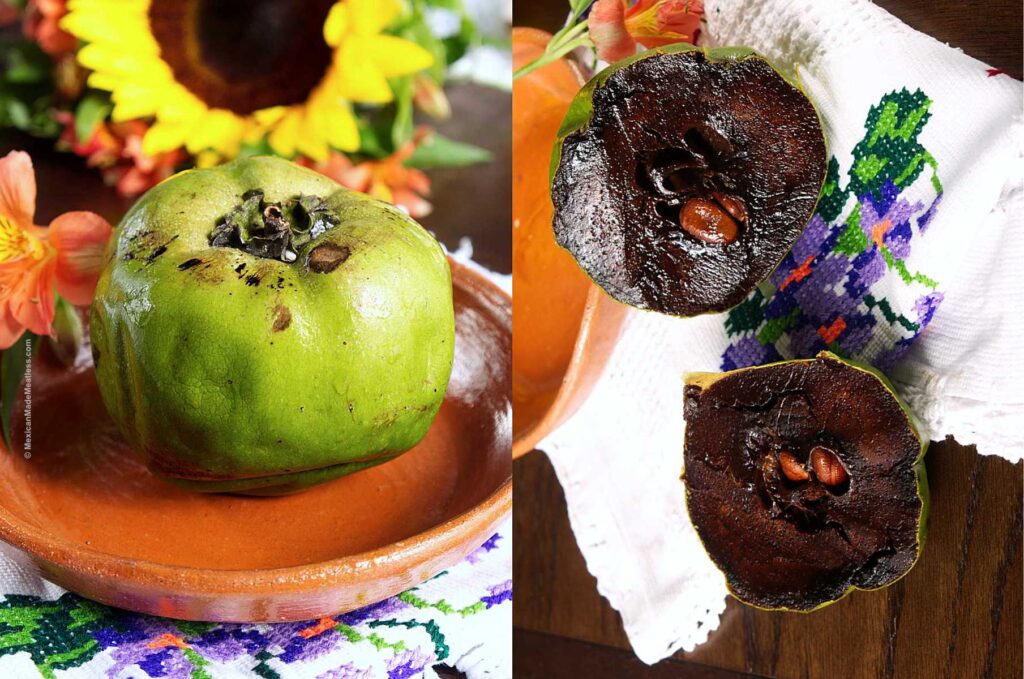
Sapote Negro
Sapote negro or a black sapote is a small fruit in the same family as persimmon. This delicious fruit is native to Mexico and Central America. Other names for this exotic fruit are chocolate persimmon or chocolate pudding fruit.
It has thin dark green skin and ready to eat when it’s very soft to the touch and the skin is wrinkled. The inside is smooth and creamy and taste is reminiscent of chocolate pudding but quite unique. It must be fully ripened for it to become sweet otherwise unripe it can have some bitter flavors.
Sapote negro is enjoyed fresh or can be made into licuados (milkshakes) or other desserts. It’s delicious and definitely worth a try at least once.
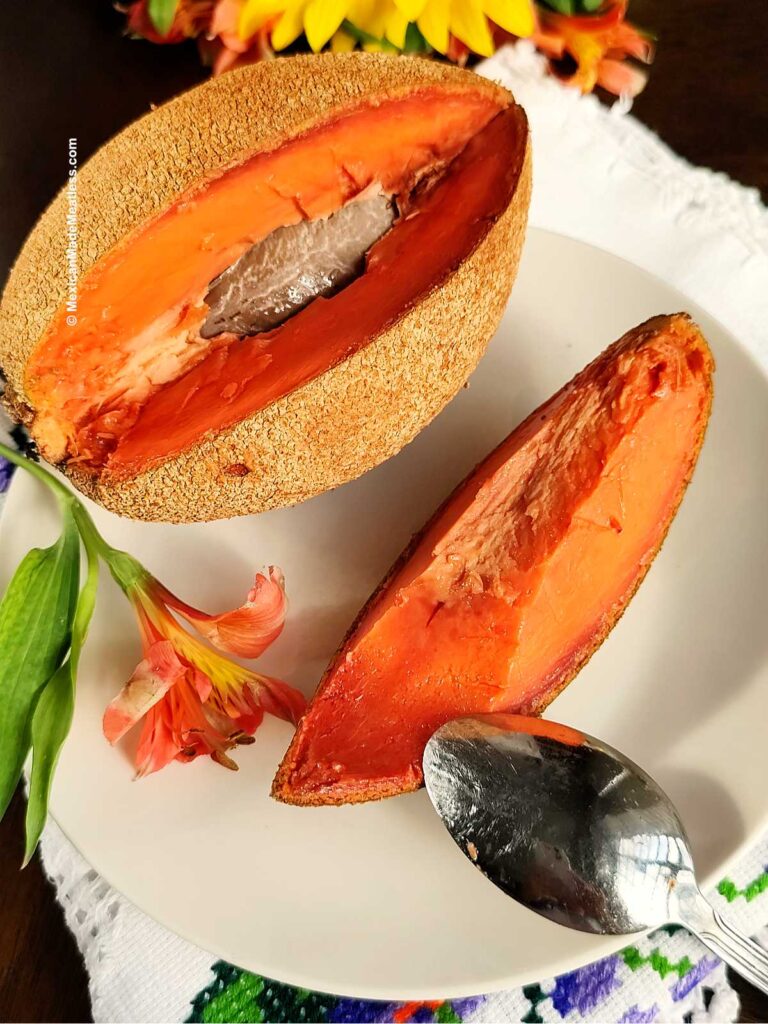
Mamey Sapote
This bright orange fruit is part of the Sapotaceae family but it’s not related to the aforementioned sapote negro. The word sapote comes from the Nahuatl tzapotl which refers to sphere shaped fruits with large seeds.
Mamey sapote It’s an oblong shape with a light brownish-yellow colored peel that’s quite stiff and firm. The peel is rough in texture but the inside reveals a vibrant orange color flesh that has a smooth texture similar to cooked sweet potato. It’s has a large and long dark seed.
If you love really sweet fruits then mamey is for you. To me the strong sweet flavor tastes similar to a mix of dark brown sugar with pumpkin and aftertones of cantaloupe. It’s quite unique tasting.
Mamey sapote can be eaten fresh or it’s quite commonly made into milkshakes, agua fresca, desserts, and candied. The oil in the large seed is extracted to make all sorts of beauty products.
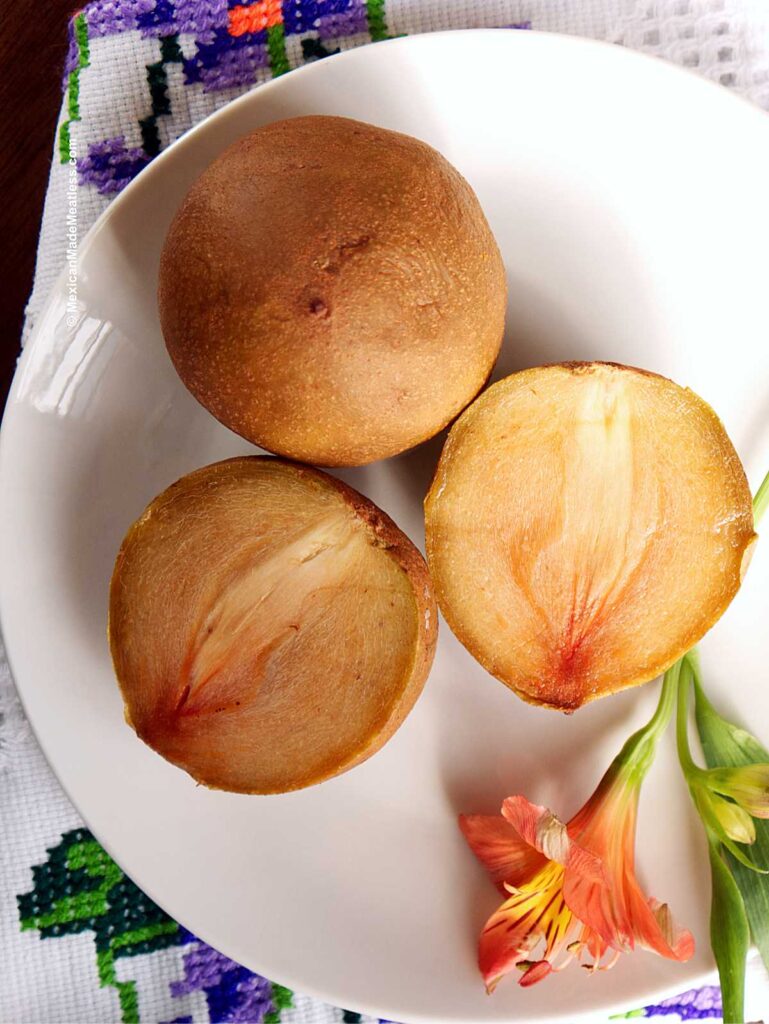
Chicozapote or Sapodilla
This is another fruit in the same family as the mamey sapote and it’s a native fruit to Mexico, Central America and parts of the Caribbean. The Spanish later spread it to the Philippines and from there across other parts of Asia.
Another name for chicozapote is sapodilla and this is the fruit that grows on the chicle tree or gum tree where chewing gum comes from. Chicozapote is a tropical fruit with a rough, brown skin and sweet, grainy flesh.
It’s very sweet and has flavors similar pear and dark brown sugar, the seeds should not be consumed. It’s often eaten fresh or used to make desserts, jams, and beverages.
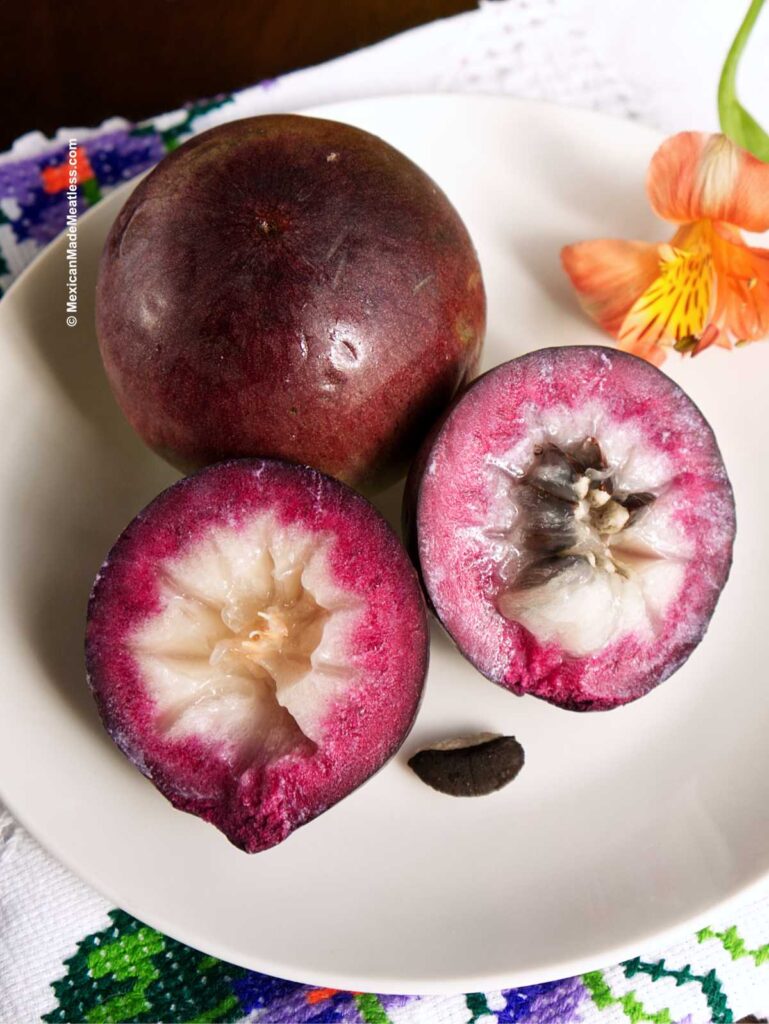
Caimito or Star Apple
This is one of my most favorite fruits! It’s round and small and has either a shiny dark green or dark purple thin skin. Caimito originated in the Isthmus of Panama then later spread across parts of Central and Southern America as well as Mexico.
They should feel soft and a bit mushy when ripened and ready to eat. Caimito should be carefully sliced in half crosswise and when you hit the center you’ll feel the hard seeds, now you can twist it to pull the two halves apart. A little bit of white resin-like liquid will seep from the skin and this is quite sticky and you should try to avoid getting it into contact with the fruit.
The inside flesh of caimito is dark purple like a plum on the outer ring and the inner part is creamy, juicy white and holds the seeds in the center. The taste of the white part is sweet but like a creamy sweetness to it that reminds me of lychee. And the purple is a bite like dry slight touch astringent. Seeds should not be eaten. Typically caimito is eaten fresh (I like it chilled).
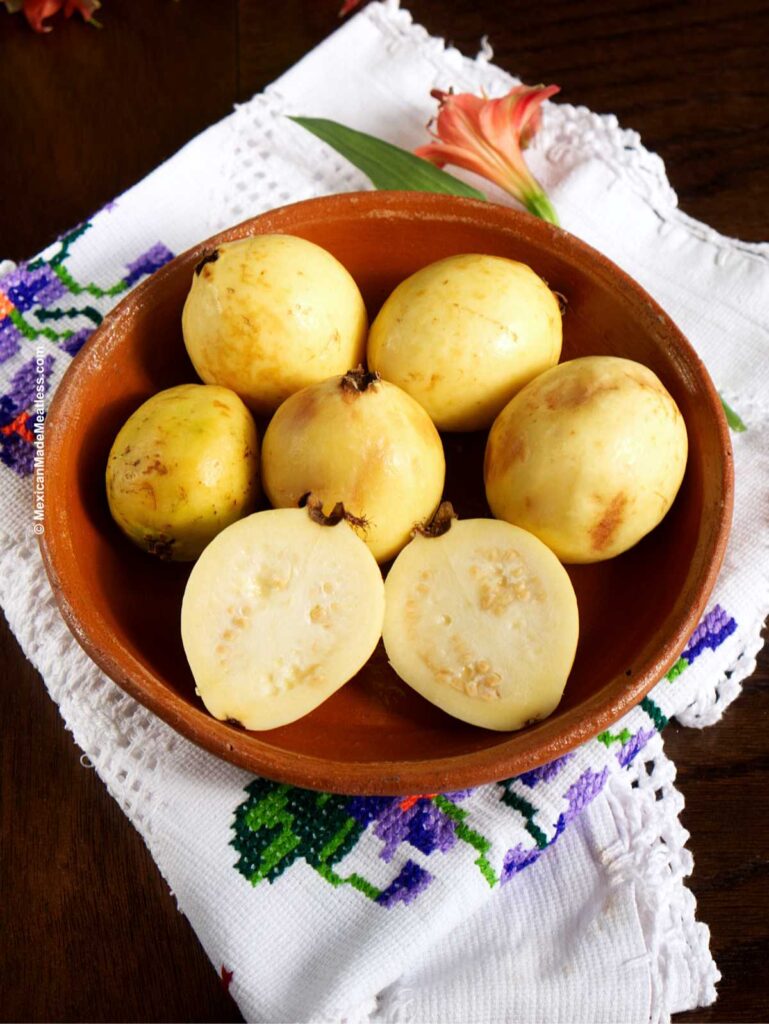
Guayaba or Guava
Guavas are small, round fruits with a fragrant aroma and sweet-tart flavor and they originated in Mexico, Central America and parts of the Caribbean.
Mexican guayabas can have peels colored in light yellow or green. They are firm and only soften a little when fully ripe. Their skin is very thin, the flesh inside is creamier and can be light yellow or pink. Guavas have lots of hard seeds that are completely edible.
They can be eaten fresh, in atoles, juices or agua fresca, made into desserts or used for making jams. Another popular use in Mexico is making ate de guayaba which is a jellied paste that’s used in Mexican candies and pastries – it’s also delicious paired with cheese and bolillo.
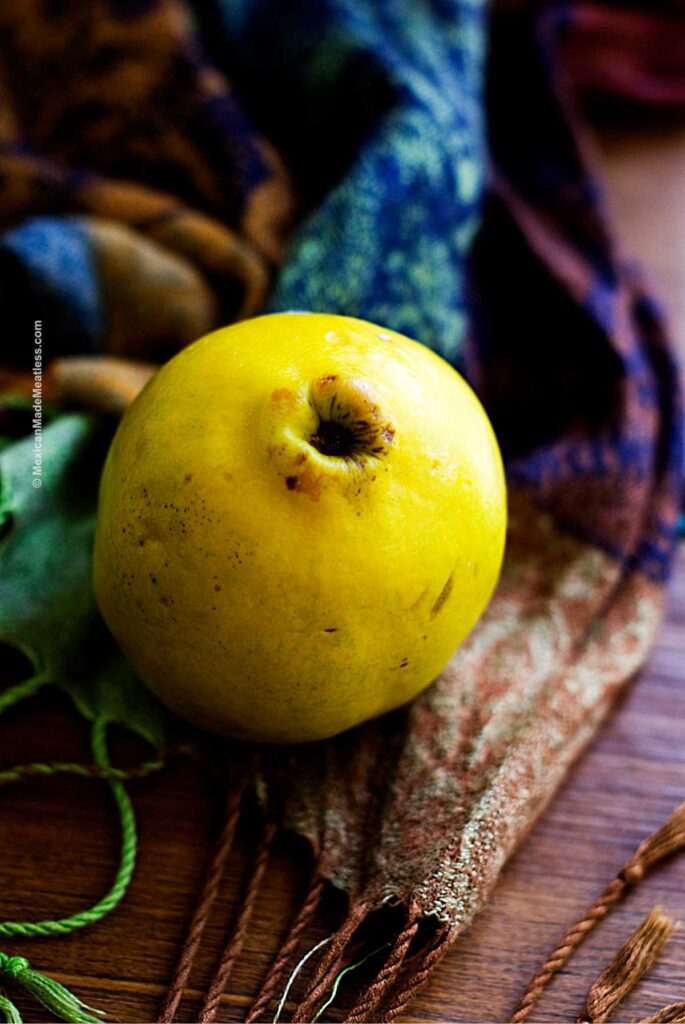
Membrillo or Quince Fruit
Membrillo is a firm yellow fruit that has an intense and pleasant fruity smell. Quince is in the same fruit family as apples and pears but unlike those two it is usually cooked first before being eaten. This fruit is native to Iran, Turkey and Greece but has been grown in Western up to Northern Mexico since the 17th Century.
Due to the high pectin content in quince fruit it is usually made into jams, jelly, or sweet paste called membrillo or dulce de membrillo or ate. Additionally agua fresca, liqueur, wine and cognac may be made from quince. Sometimes it’s just poached with aromatic spices and enjoyed as a dessert.
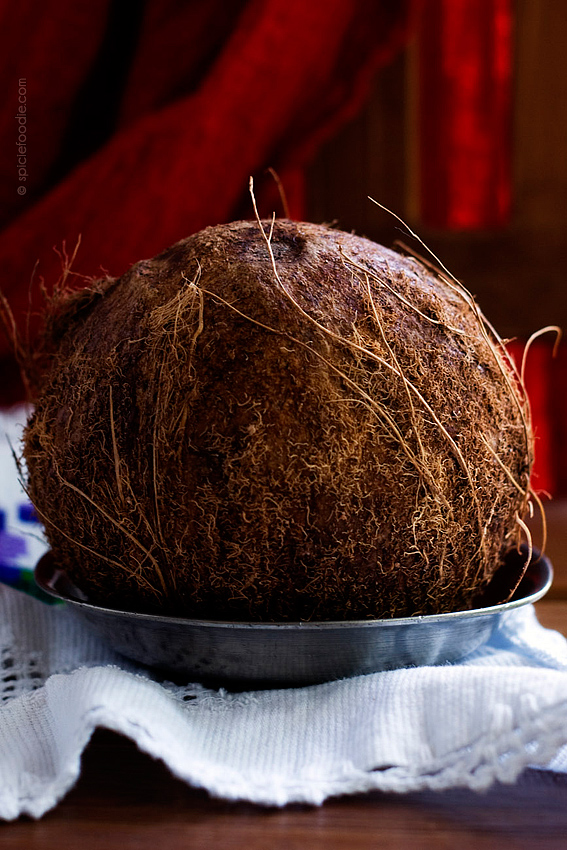
Coco or Coconut
Pictured here is a mature brown coconut but have you ever seen the young green ones? The taste between is a little different, with the brown being more intense coconut flavor. Additionally the coconut meat in mature coconuts is thick and hard and more difficult to peel away from the coconut shell. Whereas the young coconut flesh is creamy, has a jelly-like texture and can easily be scraped away from the shell.
Both are incredibly delicious a for most of you you’ll only have access to the mature one at your local grocery store. But when you travel to Mexico for a tropical vacation you’ll find the young ones everywhere. Oh and if you ever have the chance do try a sprouted coconut.
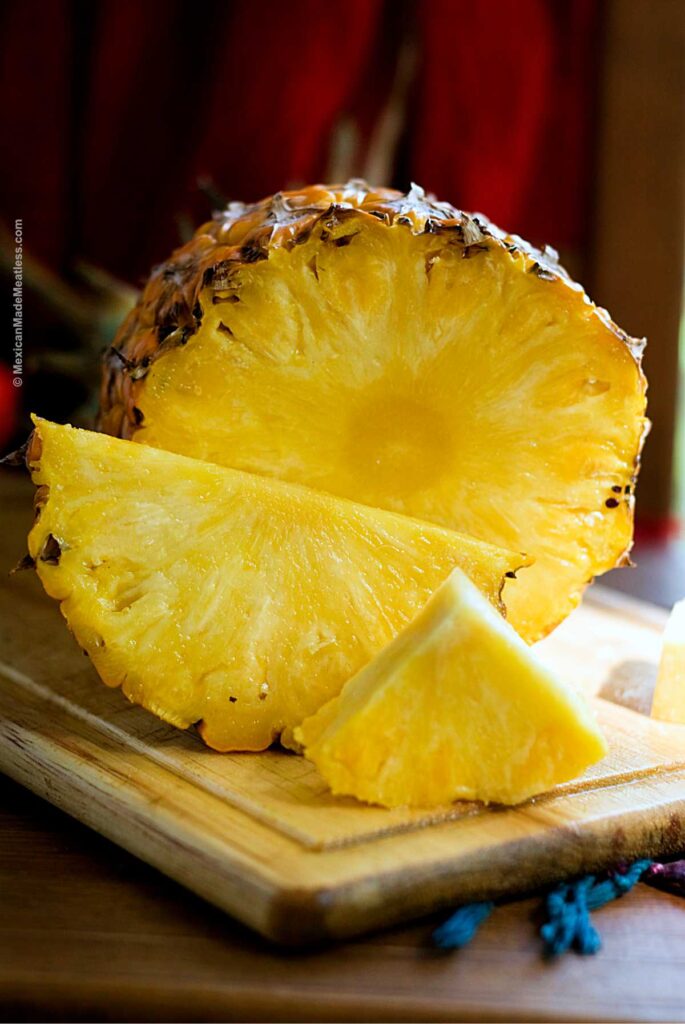
Piña or Pineapple
The Mexican variety of pineapple is out of this world delicious! They are much sweeter and juicer and more vibrant colored than the ones available in the US and Europe. I swear even if you’re not a fan, munching on one of these golden, juicy beauties will quickly turn you into one — a fan not a pineapple.
Pineapples are native to South American then spread up to Mexico and beyond. In Mexico pineapple is eaten fresh, made into agua fresca, popsicles, ice cream, salsa, and even fermented into an alcoholic drink called tepache.
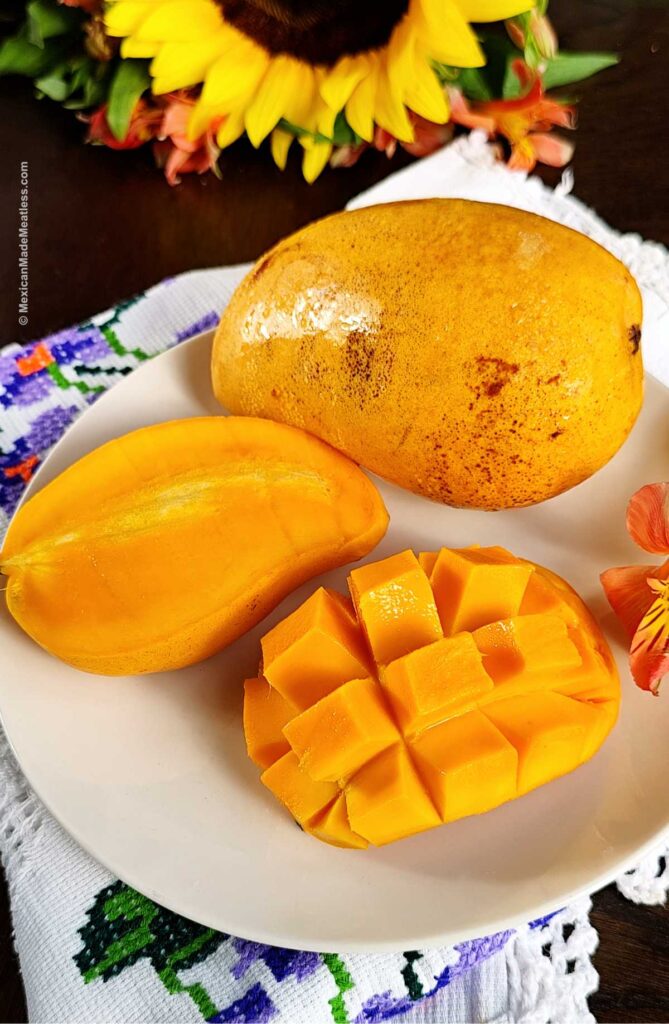
Mango
Mangos are native to India and Southeast Asia but where brought to Mexico by the Conquistadores. They brought some the “Manila” variety and over time new varieties have sprung up. Mangoes are such a popular fruit in Mexico that it’s believed the average Mexican eats about 28lbs a year!
Mexico is one of the top 5 mango producers of the world and good thing because we use them in everything from snacks, drinks, paletas, ice cream, desserts, salsas and marinades. While mostly eaten when fully ripened and sweet and juicy, here in the Yucatan Peninsula you’ll often see green unripe mangoes sprinkled with chile on sale at the mercados.
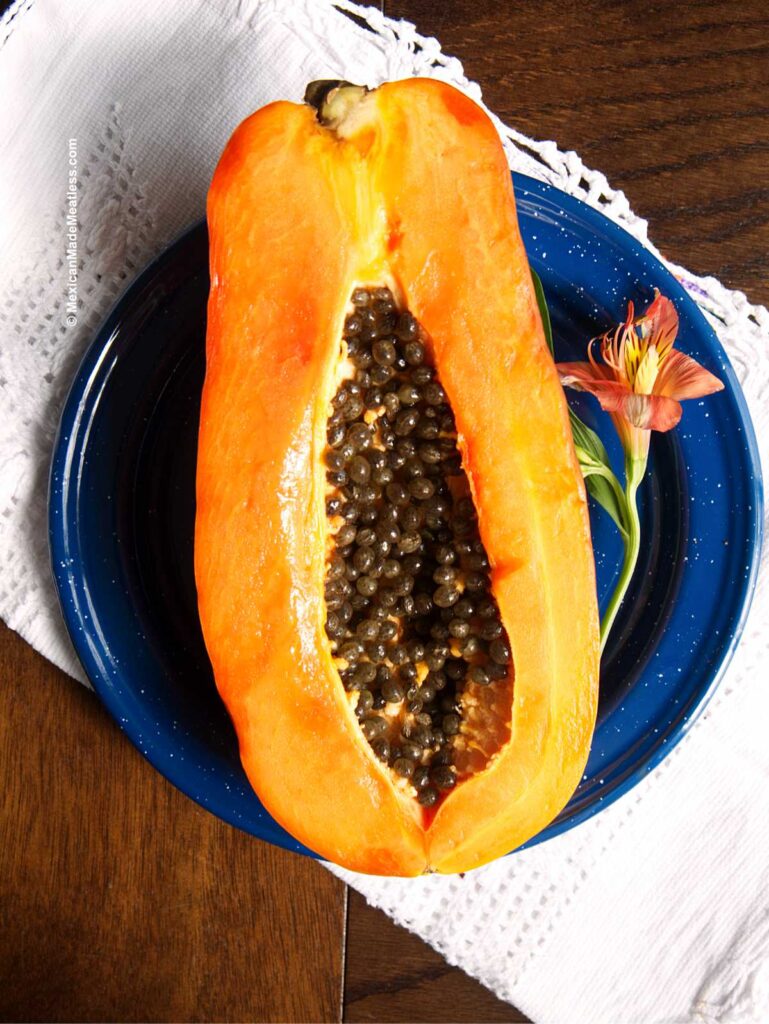
Papaya
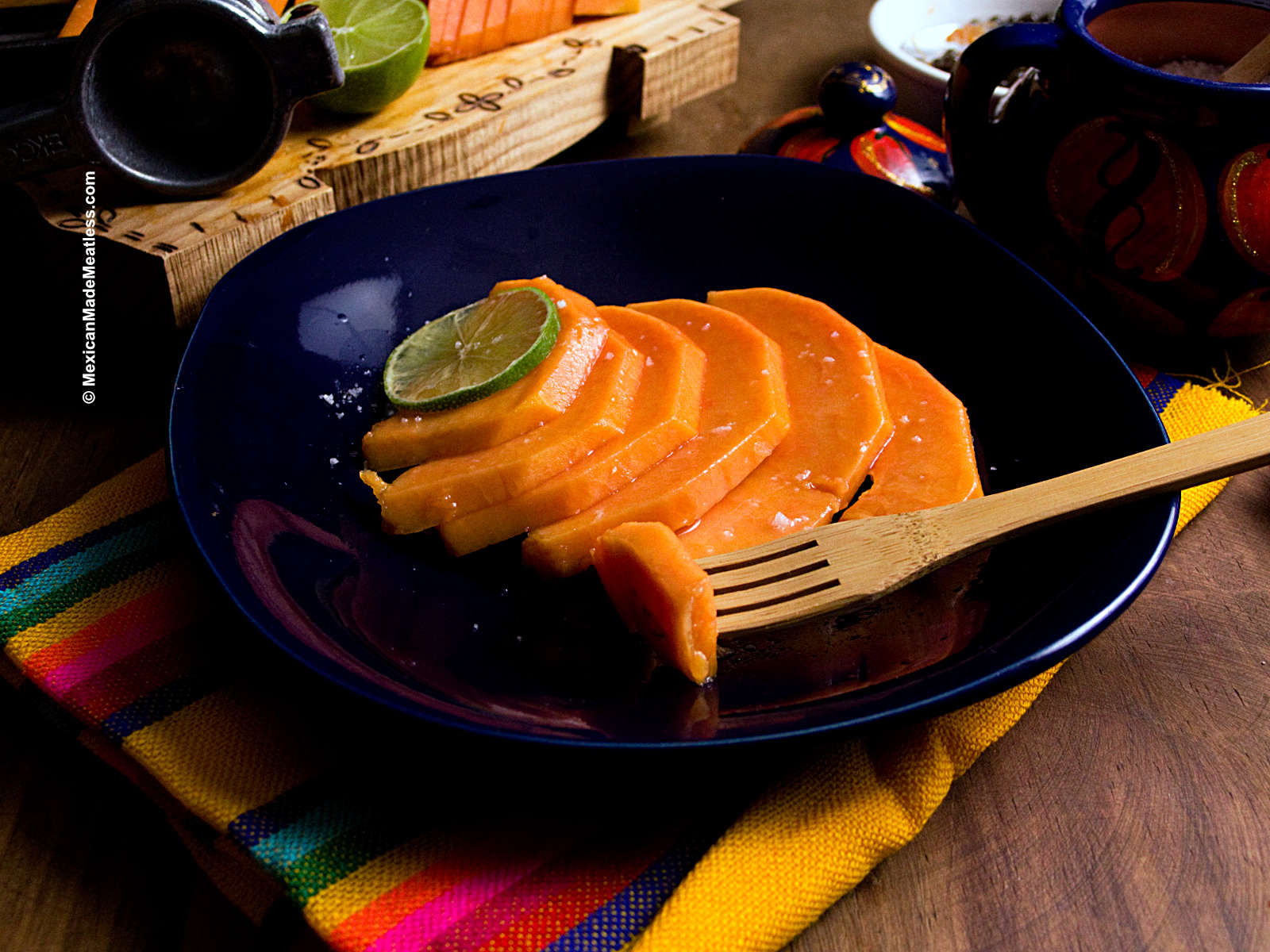
Papaya is one of the more popular fruits in Mexico. This type of papaya cultivar is called a maradol or Mexican papaya. The peel is orange and very thin and the fruit inside is tender and in the middle is a hollowed out space full of edible small black seeds. It can be eaten fresh, made into agua fresca, or candied.
Mexican papaya is sweeter than the smaller Hawaiian variety you may be familiar with. The fruit has a strong somewhat musky smell to it but don’t let that fool you from the its juicy, sweet taste that will remind you of coconut, pineapple and tropical flavors. The seeds are quite spicy like horseradish and can be dried and ground to use like pepper or fresh in salad dressings.
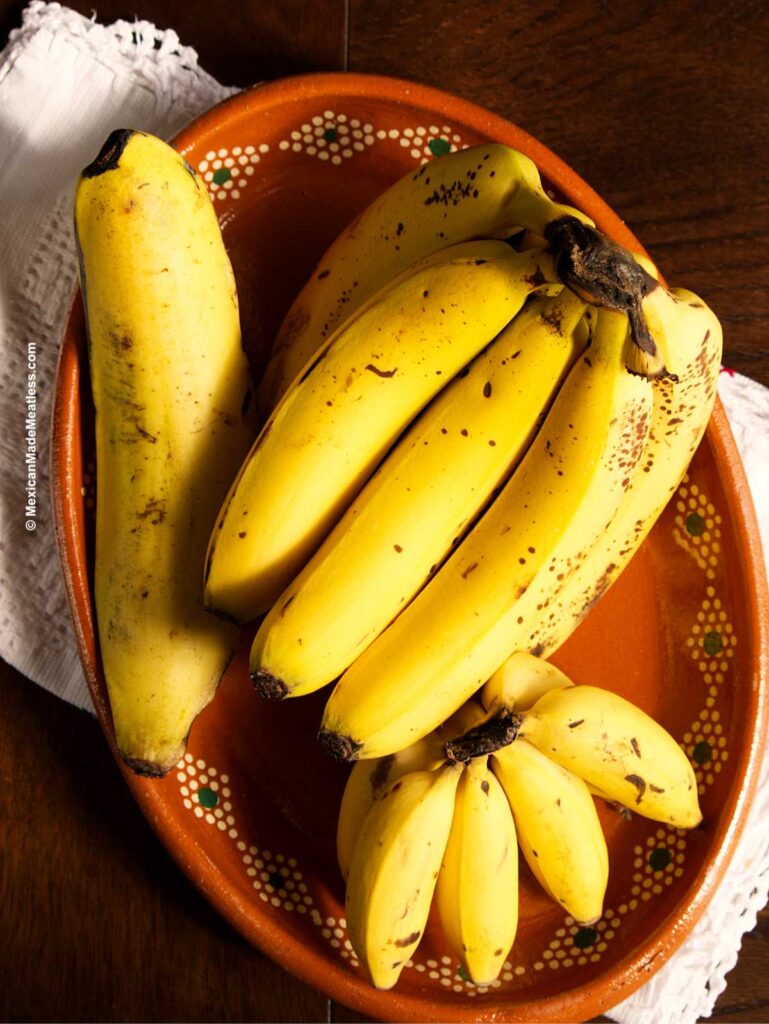
Platono and Platano Macho (Bananas and Plantains)
In Mexico you will find a variety of bananas, but did you know that bananas come from Southeast Asia? I always thought they were from the Carribean, go figure!
Pictured above is a plantain, which is like a bigger and thicker skinned banana that has a firm texture and isn’t sweet when raw. Before eating, plantains are first boiled or fried then used in countless dishes. Next we have the regular banana everyone is so familiar with, then we have the mini bananas called platano Manzano. The small bananas are sweeter and have a thinner peel than your standard banana. They can be yellow or red, the red ones taste like raspberries and banana.
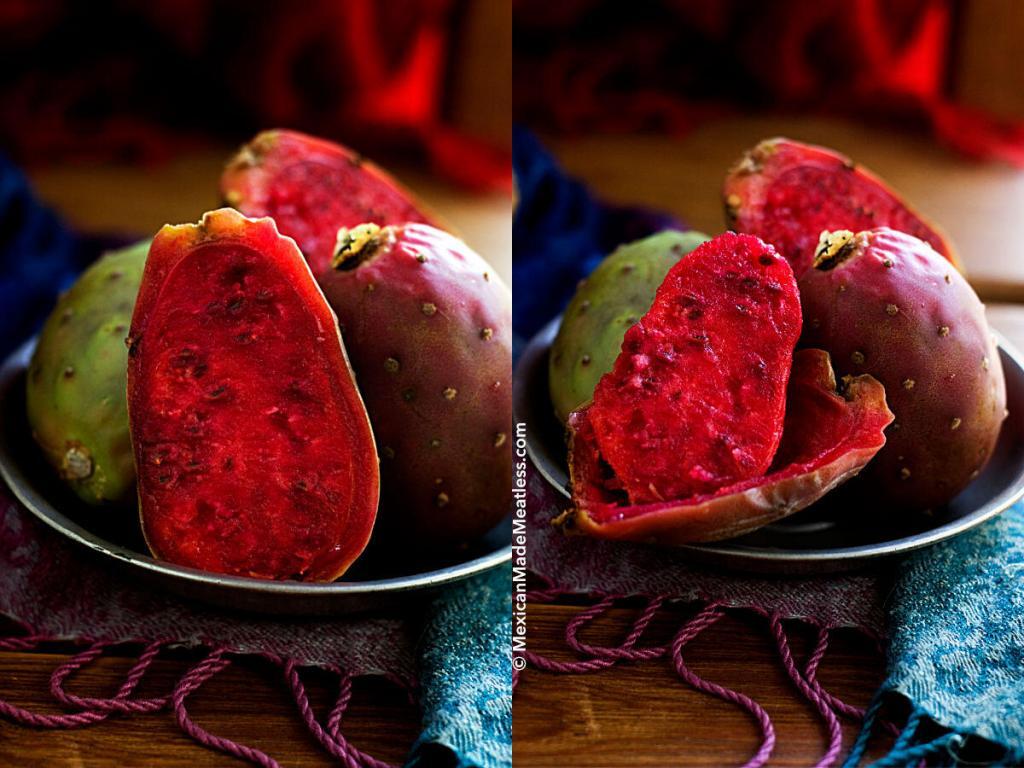
Tunas or Prickly Pear Fruit
This fruit grows on (paddle) cactus and has to gently be picked off so that none of the thorns pierce the skin. When you find them in markets the thorns have already been removed so it’s just a matter of peeling off the skin and enjoying the fruit inside.
Tunas can be red, yellow, orange, green, or white. I’ve always just eaten the fresh fruit but it can also be blended into drinks or used in making jelly and candies.
The taste is very unique and you simply must give it a taste yourself. The fruit is not too sweet but it is juicy and hydrating. The seeds are very hard but they can be chewed (if you have teeth of steel) or swallowed or spit out.
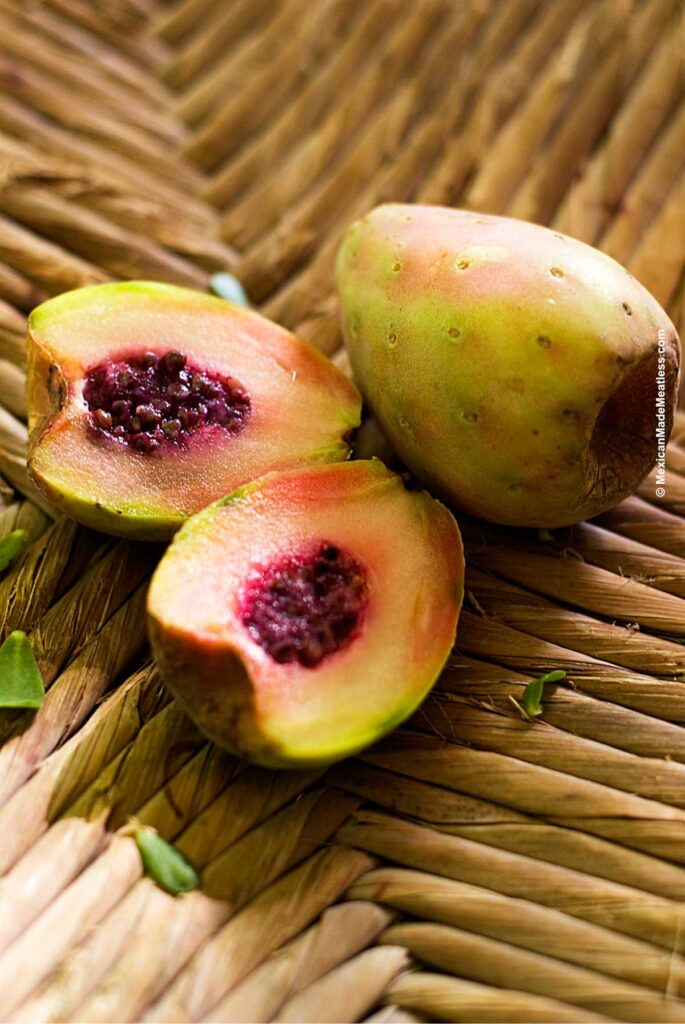
Xoconostle
Xoconostle is another cactus fruit and this one grows on the nopal or cactus paddles but it’s quite different in taste. Typically they are smaller than tunas and are slightly more elongated in shape. Just like tunas these too have small spines on the outside flesh.
When sliced open the flesh is firm and all of the edible seeds are concentrated in the middle. But unlike tunas, xoconostle are not sweet but rather sour tasty. They can be made into agua fresca or cooked and used in making salsas.
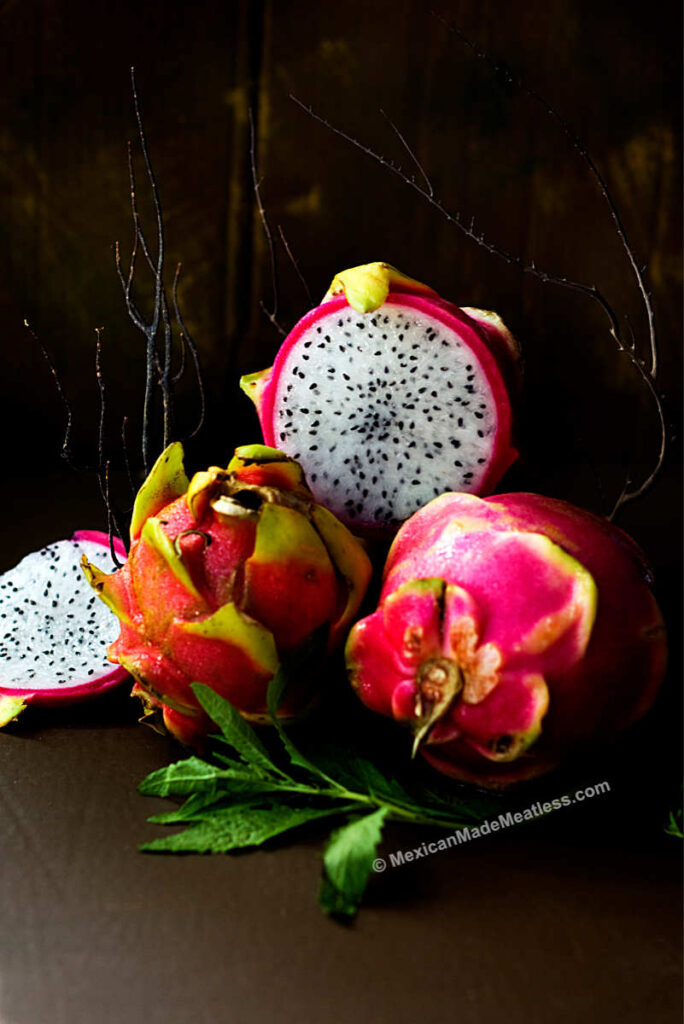
Pitahaya or Pitaya or Dragon Fruit
Pitahaya are known in English as dragon fruit. They are native to Mexico, Central America and some parts of South America. Like tunas these too grow on cactuses, just a different type.
Pitaya is about the size of a softball but shaped more oblong. The skin is smooth and somewhat leathery and it has long, soft scales growing from it. The peel can be a vibrant pink or yellow and the fruit inside can be white or magenta and all are speckled with tiny edible black seeds.
It has a mildly sweet flavor and is commonly eaten fresh or blended into agua fresca or smoothies and juices. When eating try to avoid the peel because it has an astringent taste to it. Watch this video to learn how to properly peel them.
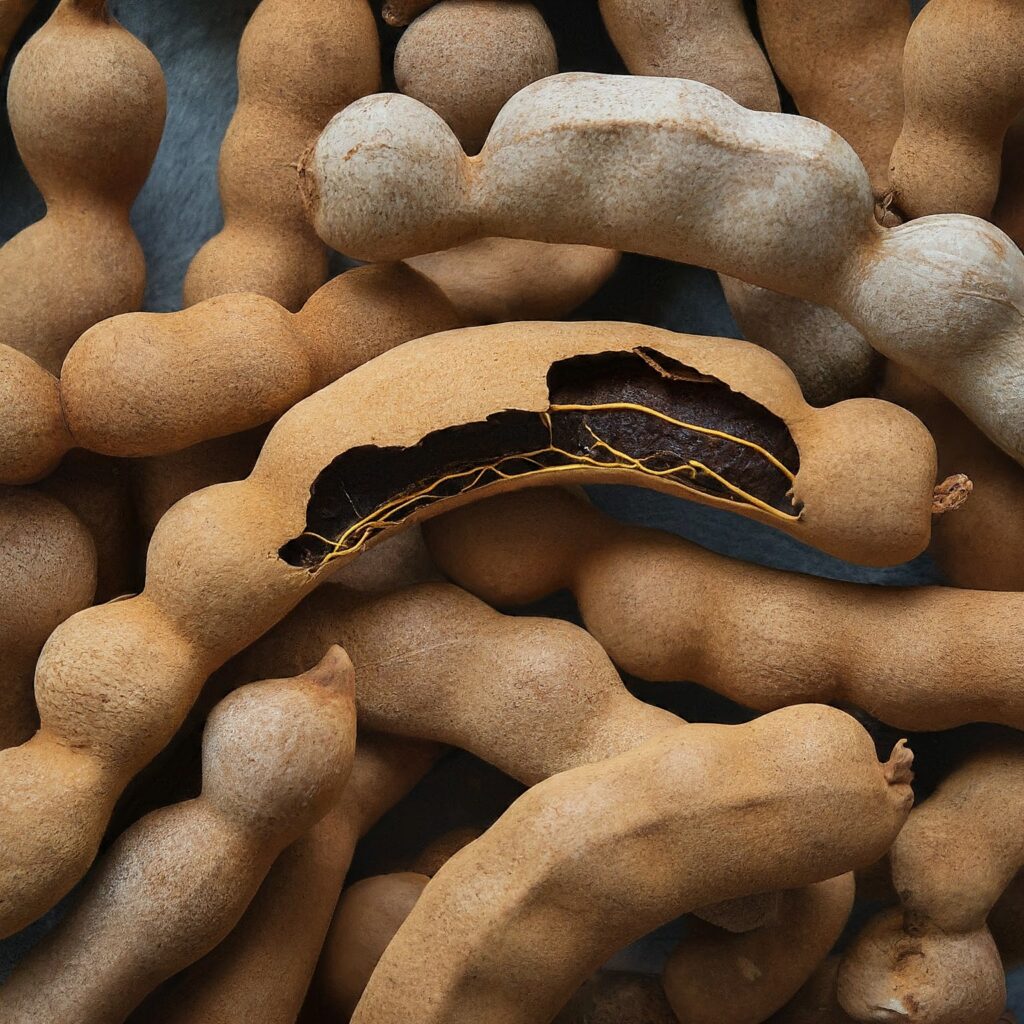
Tamarindo or Tamarind
Tamarind is native to India, Africa and the Middle East but was brought to Mexico during colonial times. The pods grow on trees and are are long, brown, and somewhat curved, with a hard outer shell that reveals the shape of the thick dark seeds.
Inside a tamarindo has dark brown, sticky pulp that surrounds the hard seeds and fibrous strands. This fruit is tangy and tart and a little sweet. In Mexico it’s used for making agua fresca, paletas, jelly, sauces and countless candies.
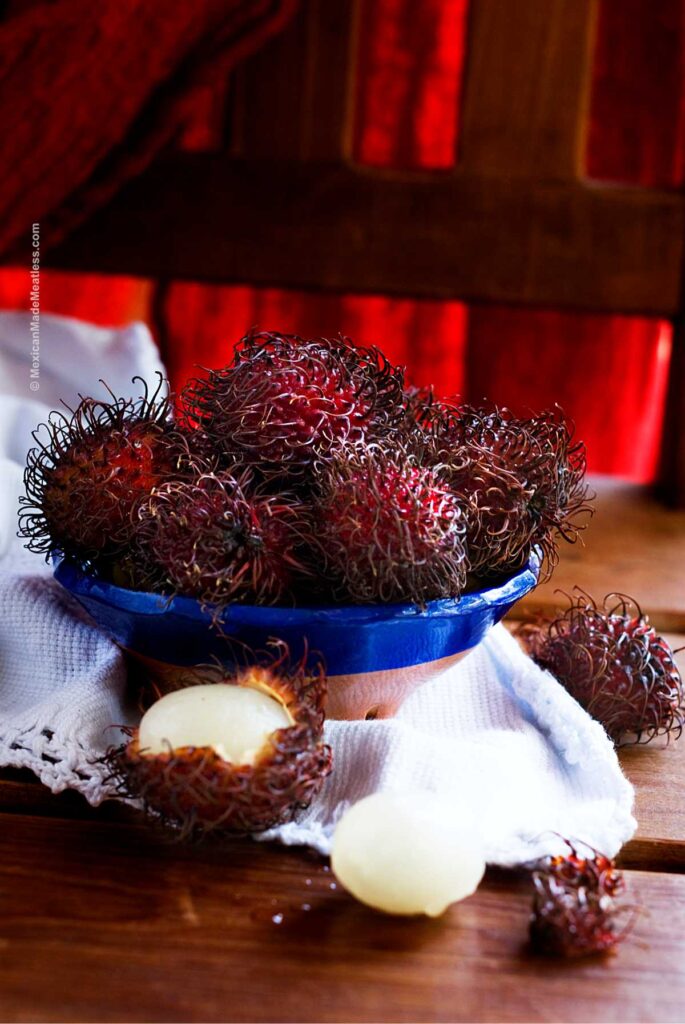
Rambutan
Rambutan are red with softly spiny peel and are native to Indonesia and Malaysia. After a little research I found that rambutan was brought to Mexico in the 1960s and is grown in Chiapas in south-east Mexico. These juicy fruits have quickly become popular across Mexico.
Rambutan taste quite similar to lychee: juicy, sweet with a slight floral taste. To eat you carefully slice off the spiny shell and open it to remove the squishy fruit. You can either cut away the fruit flesh or put it in your mouth and eat until you get to the hard seed – but do not eat the seed, both it and the peel should be discarded.
My favorite way to enjoy rambutan is just fresh but occasionally you’ll see rambutan agua fresca on offer.
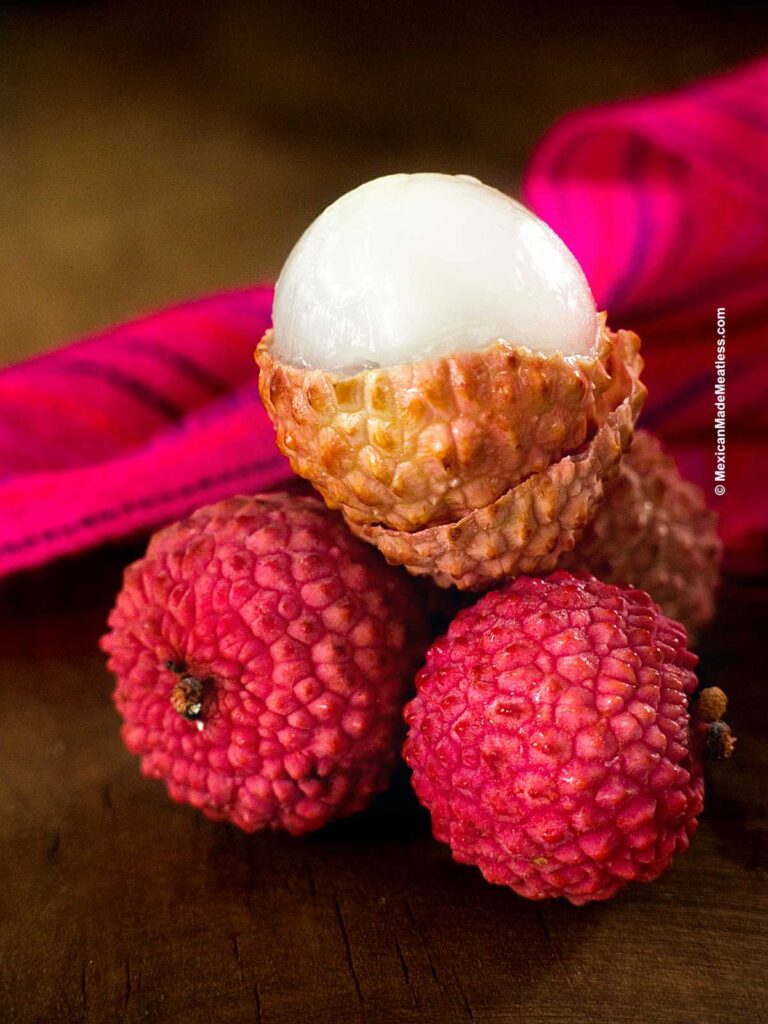
Lychee
Lychee are native to Asia, or China to be more specific. They have a somewhat thin pink skin that is bumpy but very easy to peel away. Just like a rambutan, you can either use your (clean) fingernail or a knife to make an incision and remove the skin. Again the same white squishy, shiny and smooth center is revealed. The flavor is very sweet and of course there are those floral scents and tastes. The seed of lychee is different than the rambutan, this one is a dark brown and very hard and completely smooth.
Here in Mexico on the rare chances that you find fresh lychee it’s best to either just peel and pop into your mouth, or some people also like to make agua frescas with them. I prefer to just eaten them fresh to really enjoy their flavor without any other distracting ones.
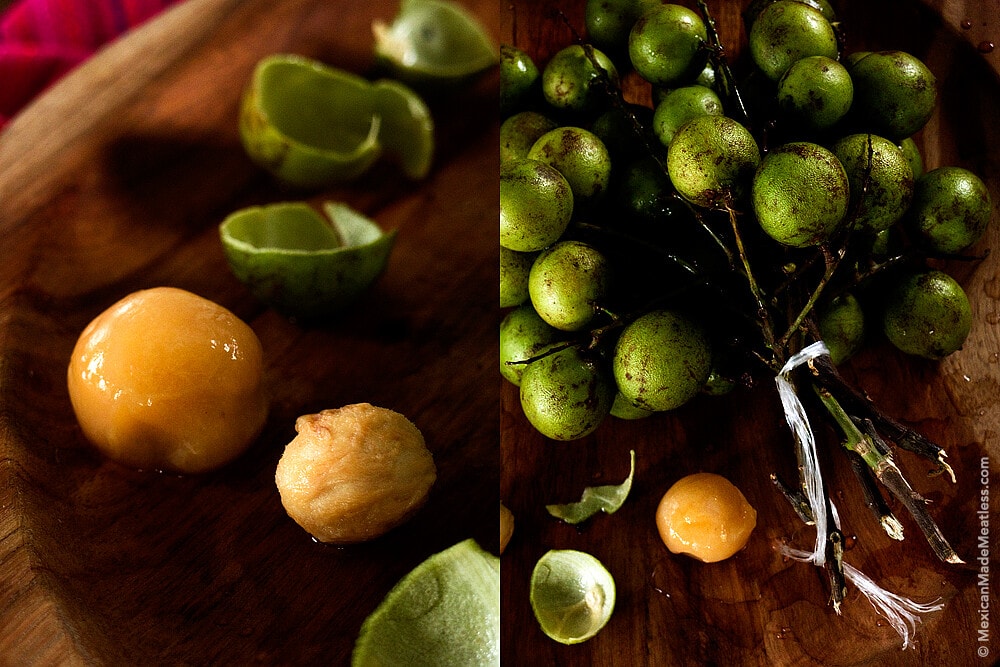
Huaya
Huaya (or guayas) are native to Southern Mexico and other parts of Central America and the Caribbean. This exotic Mexican fruit is a relative of both lychee and rambutan fruits. They have a tough green peel that cand be cut or pulled away to reveal a sweet and juicy flesh quite similar to lychee and rambutan.
It’s most commonly eaten fresh and you’ll also see it sold coated with chamoy or chile powder.
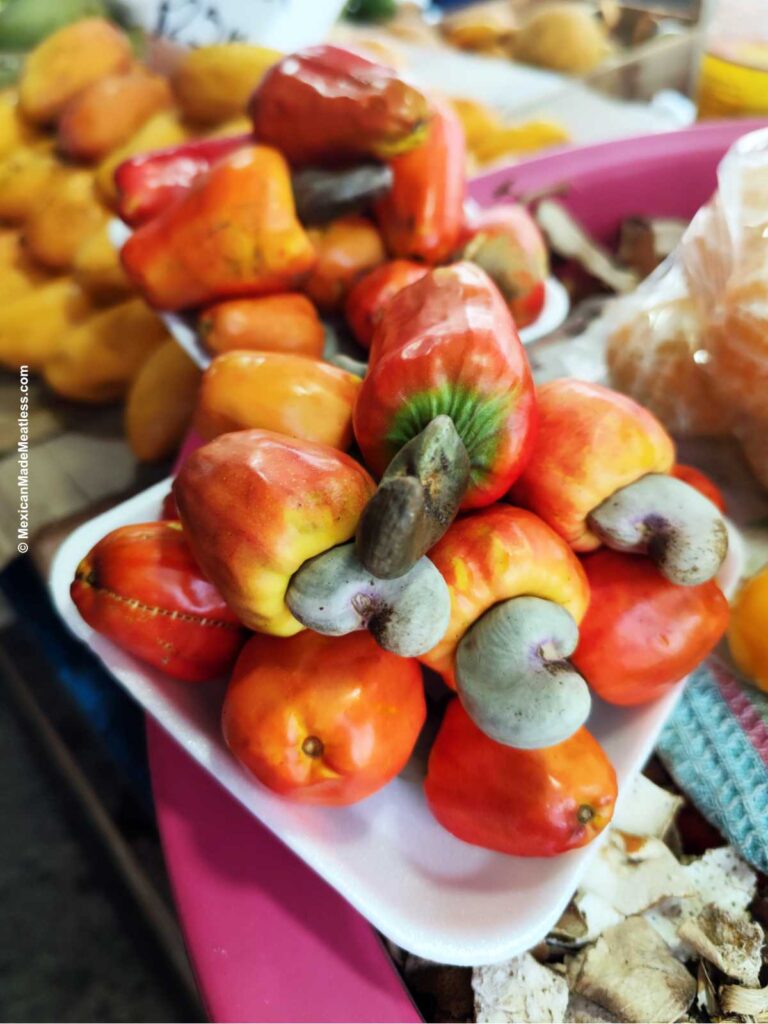
Marañon Fruit or Cashew Apple or Cashew Fruit
Marañon fruit is a native fruit to Brasil that is grows in the Southern Mexican states of Campeche, Yucatan and Tabasco. The fruit is small and has a fruity and sweet smell but the taste is sour and astringent. Here in Campeche it is commonly made into an agua fresca.
The top part of the marañon fruit is a raw cashew seed that must be roasted before consuming. Funny enough in Mexico we call the seed “nuez de la india” or nut from Indian. The main purpose of growing this fruit is for the seed not the actual fruit.
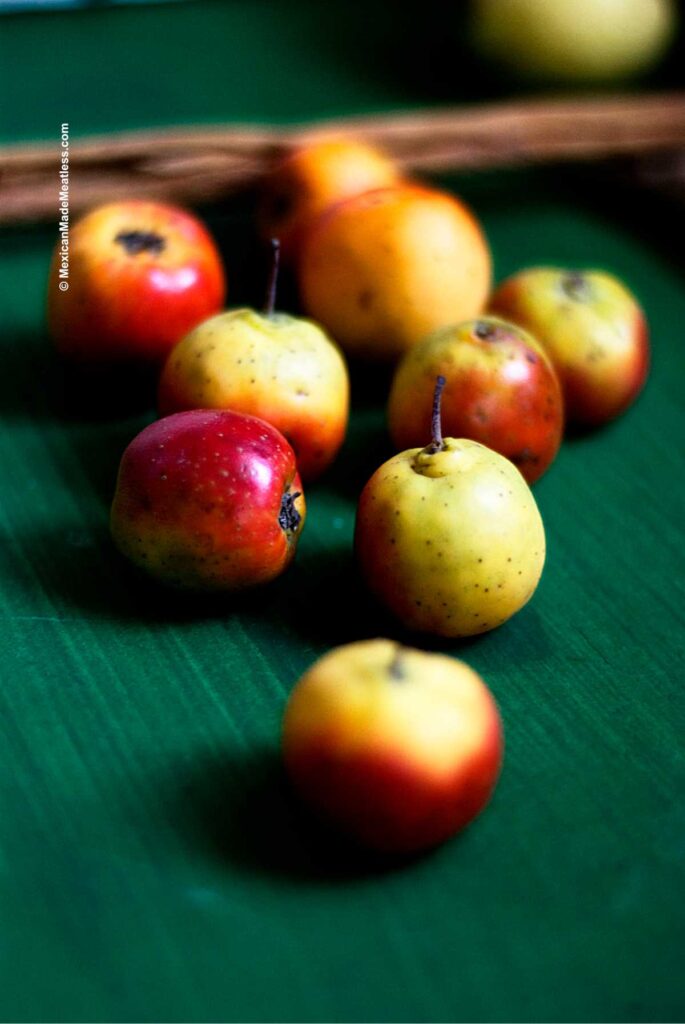
Tejocote or Mexican hawthorn
Tejocote is a small, yellow-orange fruit with a crisp texture and sweet and slight tart flavor that looks similar to a crabapple. It’s commonly used in traditional Mexican dishes like ponche (fruit punch), and it’s also used to make preserves and candies.
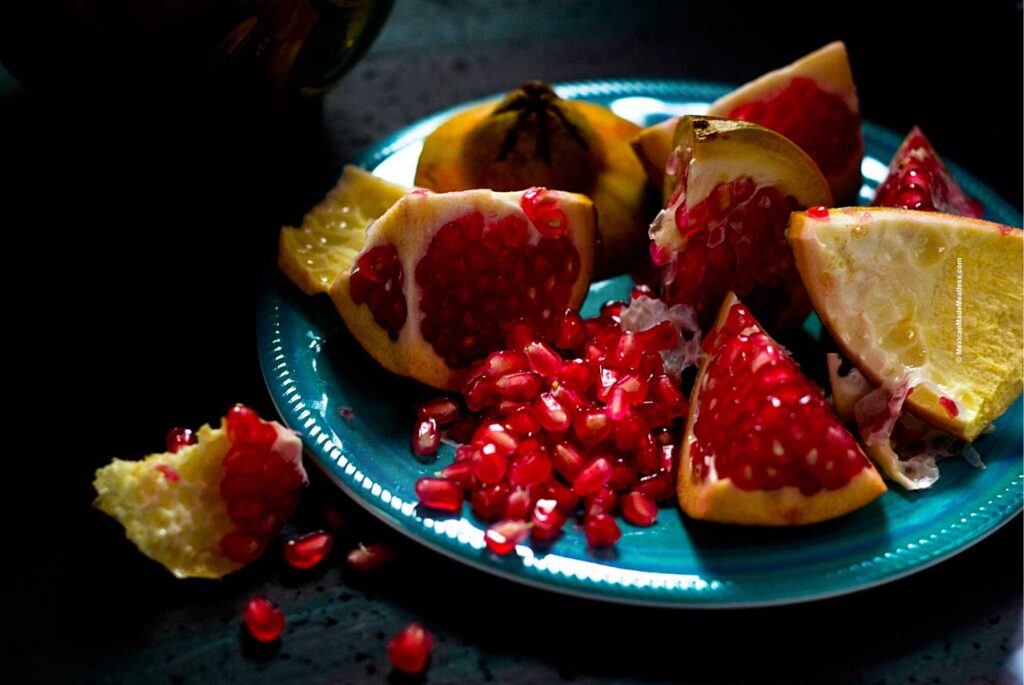
Granada or Pomegranate
Pomegranate is originally from Iran and Northern India, but it’s become a part of Mexican cuisine like our famous chiles en nogada. It has a tough outer skin and inside filled with edible seeds (that look like small jewels) surrounded by a ruby-colored pulp.
Every bite is a little explosion of a delightful flavor that’s a perfect balance of sweet and tart, with hints of berries, citrus, and floral notes. Pomegranate arils are versatile, enjoyed on their own as a snack, added to dishes for bursts of flavor, or pressed into juice for refreshing beverages and sauces.
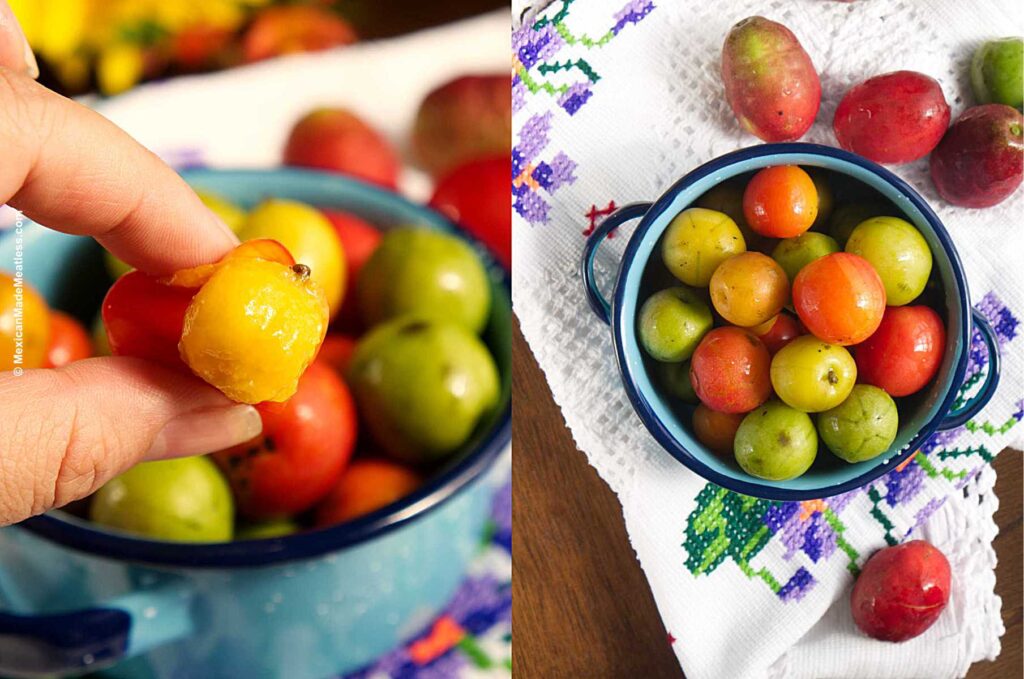
Ciruela or Plum
In Mexico we have several varieties of plums, these tiny plums are what I most commonly see in the Yucatan Peninsula during the spring months. The first variety is a tiny, round, smooth and shinny skin plum that’s incredibly juicy inside but it’s mostly seed. They can be green and more tart, or yellow and red when fully ripened. The flavor it fruity and sweet and similar to other plums but yet somehow different.


Jocote or Ciruela Roja or Hog Plum
This small fruit is shaped like a grape tomato, and has a tougher skin the flesh is more fibrous. It’s sweet, juicy and has like a starchy plum taste. The seed is quite large and takes up most of the fruit. They can be green but those tend to be sour and eaten with chile locally. There’s also dark red colored ones which are ripe and sweeter.
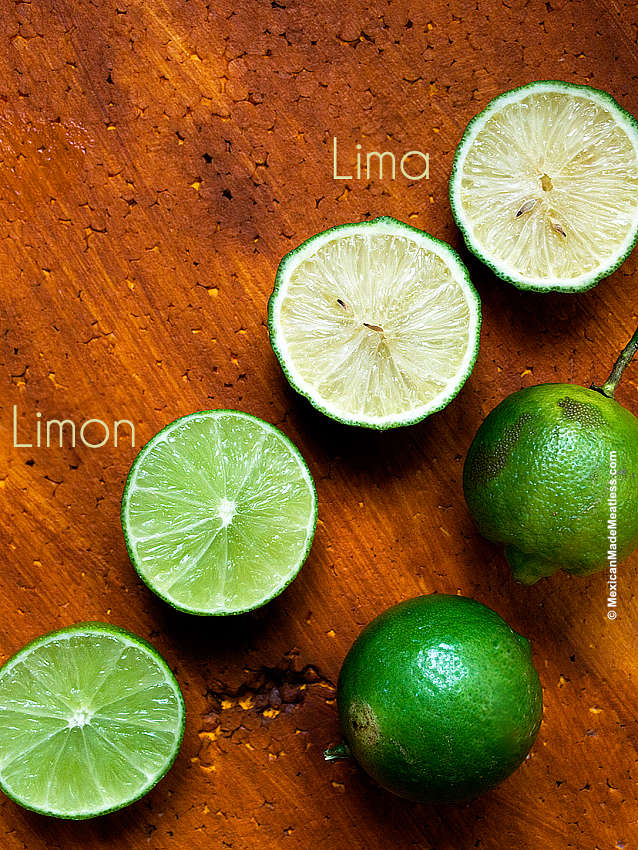
Lima, Limon and Chinalima
Mexican limon is what in English is called limes, and they are small and green and taste sweeter than a yellow lemon. In addition to the limes we have a similar fruit called lima which is a sweeter and more floral tasting citrus fruit.
Limes and limas can be used the same: to make agua frescas, marinates, sauces, to drizzle over fruit or juiced and used in desserts.
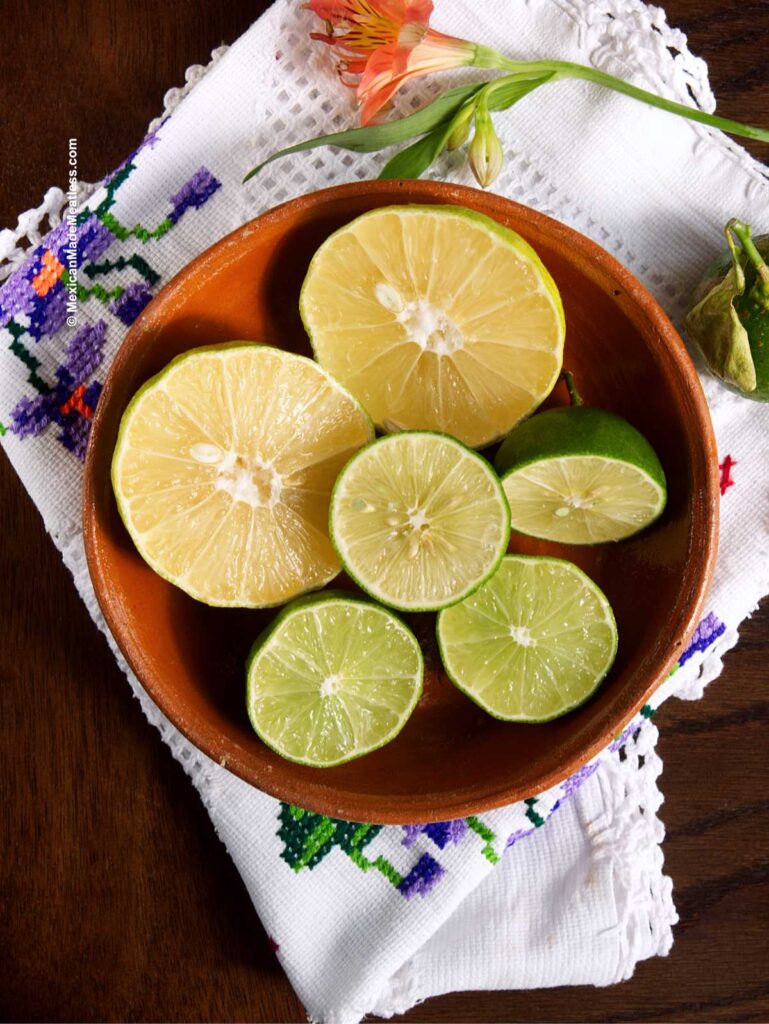
The larger citrus fruit in the bowl above is called “chinalima” here in Campeche. It looks like a giant lime and has the same tough citrus skin but can be green or more of a yellow green color. Much like a lima, this citrus too has sweet and floral tones and smells. The taste is a bit like orange blossoms.
My suegro told me it’s just eaten fresh and I quiet enjoyed it.

Naranja Agria or Sour Orange
This citrus is a commonly used ingredient in the Yucatan Peninsula. The peel is a deep green and it has a rough texture. It has a strong, aromatic smell that has both citrus and floral notes.
Its flavor is between sour, slightly bitter, and floral, making it a bold contrast to the usual orange. It’s not typically eaten straight but added to regional recipes for marinates, pickled onions and pork dishes.
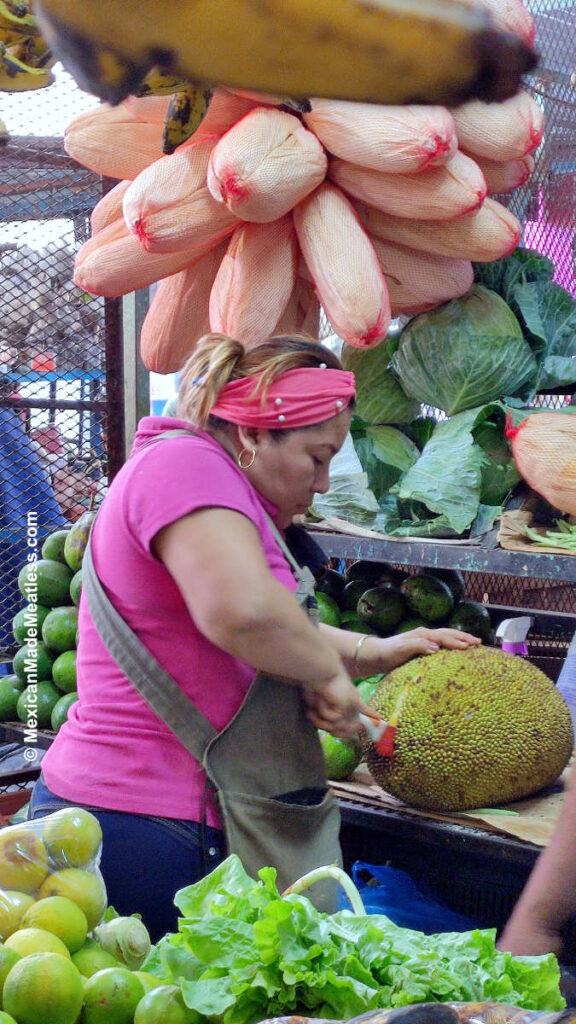
Yaca or Jackfruit
Jackfruit is native to India but somehow found it’s way to Mexico. It varies in sizes but it generally a very large (one fruit alone can be up to 80lbs!) and heavy fruit with spiky and fragrant exterior. The inside fruit when ripe is golden-yellow and has small pods that are soft and have a custard-like flesh.
Jackfruit is smells sweet and tastes like sweet tropical fruits. I taste hints of mango, pineapple, and banana – but weirdly so, sometimes it even smells and tastes like chewing gum. Fresh young jackfruit is incredibly delicious. It can be eaten fresh or used for making desserts.
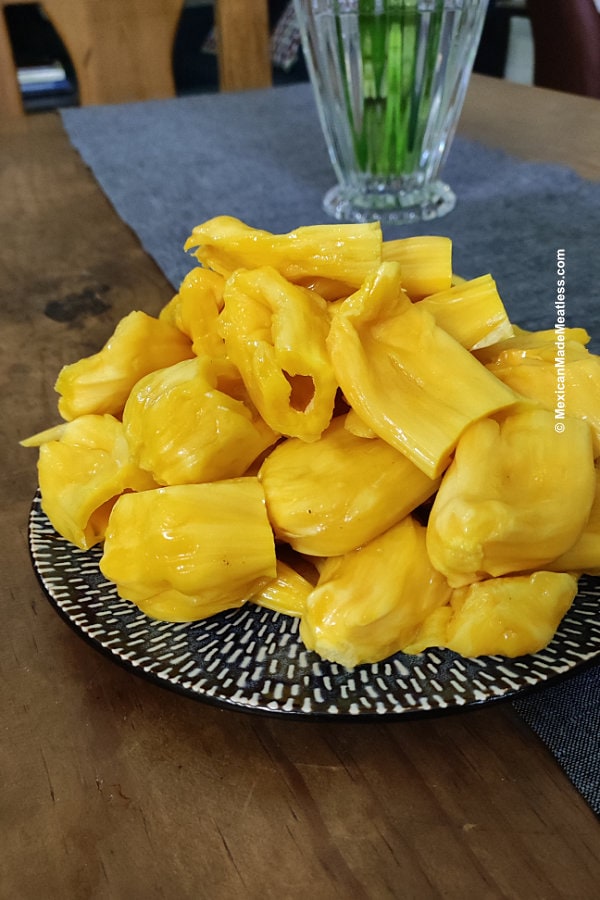
Once matured or preserved in brine jackfruit is commonly used as a meat substitute in meatless dishes like carnitas, tamales and tacos. But this is only in the vegan Mexican community, as a whole jackfruit hasn’t completely caught on across the central and northern parts of Mexico.

Maracuyá or Passion Fruit
Native to South America and thrives in warm climates like Oaxaca, Chiapas, and coastal regions. The peel is tough, wrinkly, and can be either purple or yellow. The of fragrant jelly-like pulp is dotted with small edible seeds.
The flavor is tangy, sweet and tart, and has floral tone. It’s often made into agua fresca, sorbets, and other desserts.

Nance
Small yellow fruit with a very distinct smell and flavor — often used in nanche en almíbar or fermented drinks.
Capulin or Mexican Cherry
A wild cherry native to Mexico, slightly tart and often eaten fresh or used in sweets and liqueurs.
Ciriote or Geiger Tree Fruit
Ciriote are small orange fruits that grow on the Geiger tree. It’s found along the coasts, the tree is more widely known for its vibrant orange-red flowers.
The fruit has a mildly sweet, slightly musky flavor when ripe. In the Yucatan it’s foraged and enjoyed as a snack but most often made into preserves and drinks. You won’t fine it sold in markets but will find the trees all over Yucatan and Campeche.
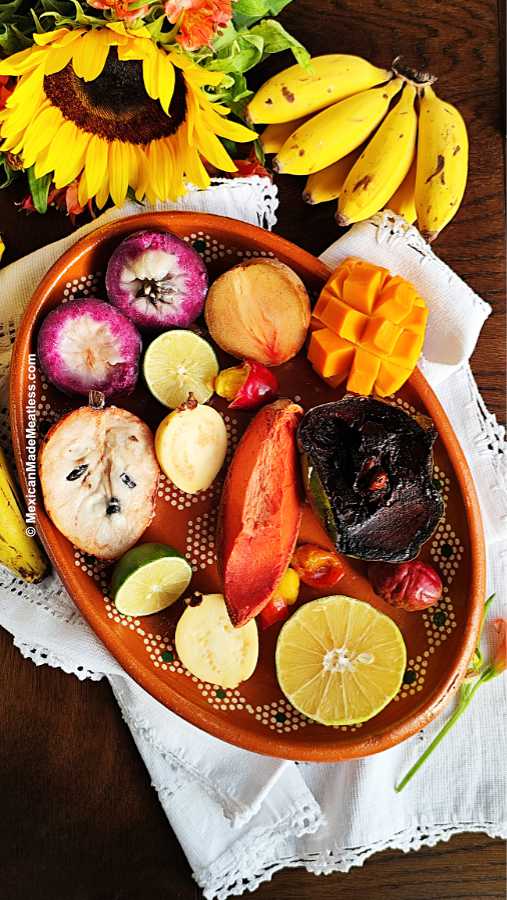
More to Come
Ok amigos that’s all the fruits I have for you for now and as new ones come into season I will be adding them, so make sure to come back and check now and then.
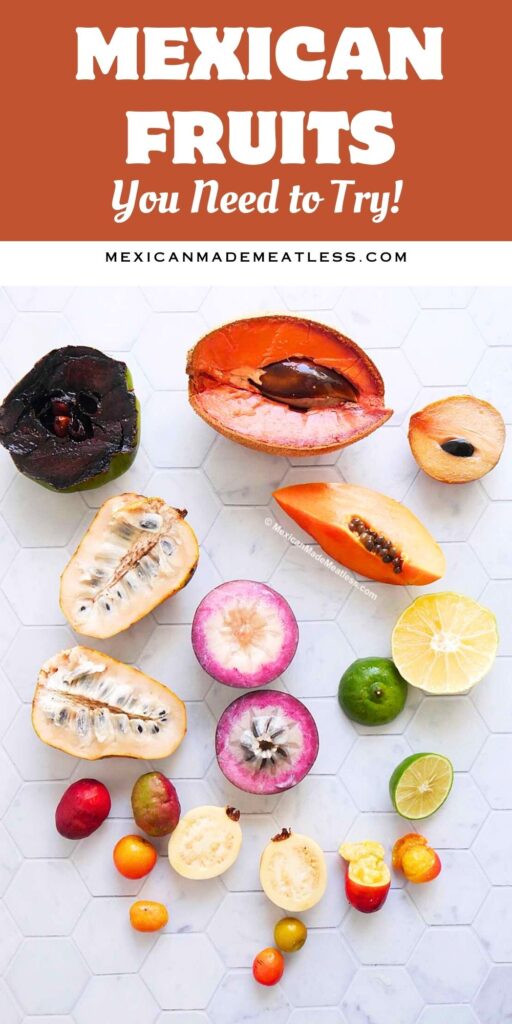
Pin This Mexican Fruit Guide for Later!
Gracias
I’m so happy you stopped by. If you have any questions or want to let me know how you liked this recipe, do leave a comment. Muchas gracias, I appreciate you!

Nancy Lopez is a Mexican-born published cookbook author and recipe developer with 20+ years of cooking experience. Raised in the U.S. and now living in North-Central Mexico, she creates authentic vegan and vegetarian Mexican recipes rooted in tradition and tested for real home kitchens. Read more…