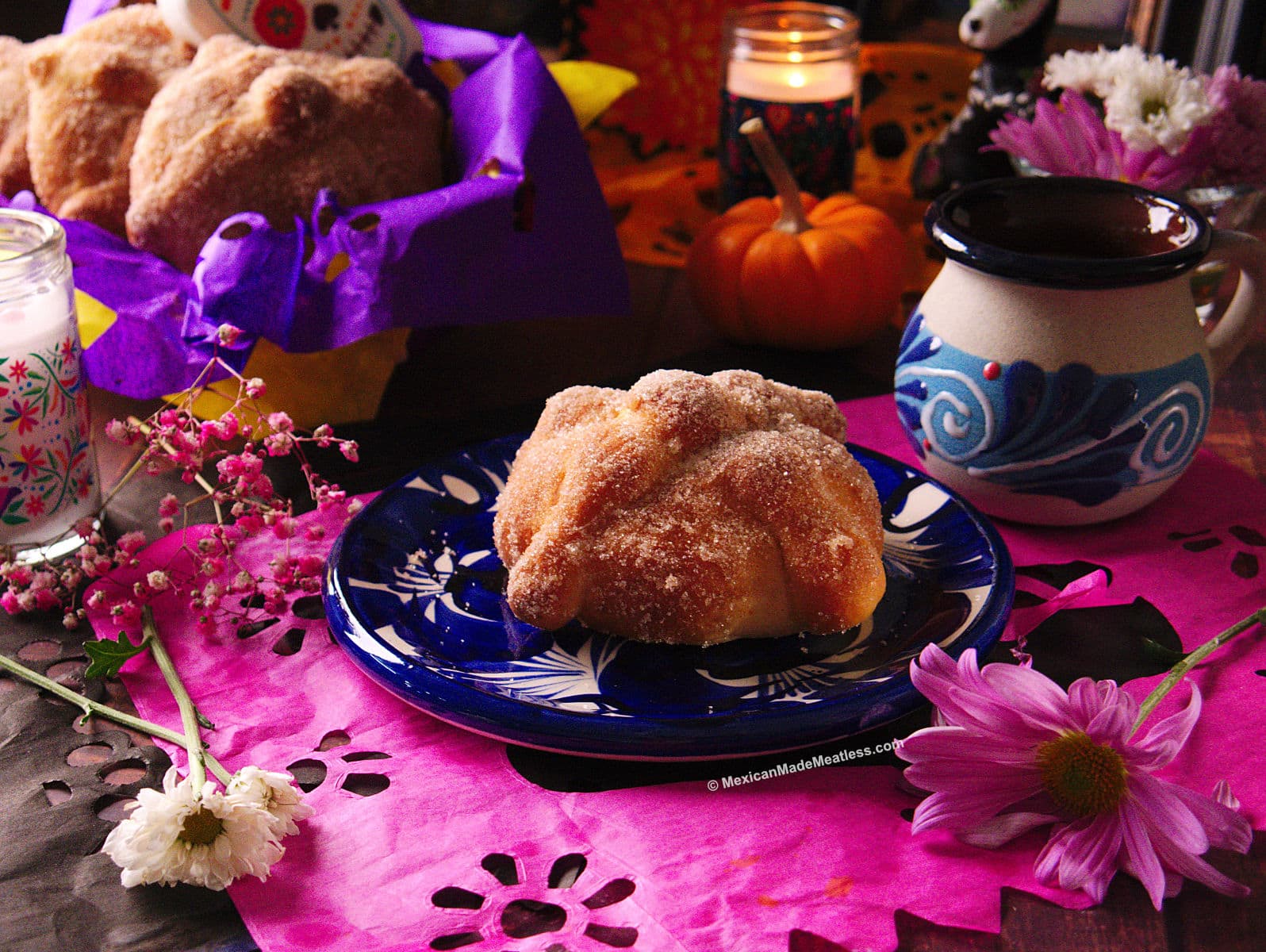
The BEST Vegan Pan De Muerto Recipe
Pan de muerto or Day of The Dead bread is a traditional Mexican bread served for Día de Los Muertos. This recipe is eggless and dairy free, it's a 100% vegan pan de muerto recipe and the taste is delightfully sweet, soft, airy and fluffy with hints of orange flavor. It's simply a must try!
Servings: 6 servings
Calories: 362kcal
Equipment
- digital food scale
- stand mixer
- baking sheet
- baking paper
- pastry brush
Ingredients
- 250 grams All Purpose Flour 8.80oz or 2 1/4 cups
- 5 grams Active Dry Yeast 7/8ths Tablespoon or .30oz
- 75 grams Cane Sugar 1/3 cup or 2.65oz
- 100 ml Lukewarm Soy Milk* or 1/2 cup or 3.60 fluid oz
- 1 Tablespoon Orange Zest from one medium orange
- 3 grams salt 1 teaspoon
- 45 grams Vegan Butter** or 1.60oz
- 3 Tablespoon Aquafaba**
- 1 teaspoon Orange Blossom Water or esencia de azahar
- 3 Tablespoons Vegan Butter melted
- 1 Tablespoon Cinnamon
- ½ cup Cane Sugar
Instructions
- Pour all of the yeast into a small bowl. Scoop out one tablespoon of flour from the total flour needed in the recipe, do the same for the sugar and add both to the bowl with the yeast. Mix well then pour in a little bit of the lukewarm soy milk. About 1/4 cup and just enough to moisten the ingredients. Set aside for 5 to 10 minutes to activate the yeast.
- Insert the dough hook into your stand mixer then, in the bowl pour in the remaining flour, sugar, orange zest, salt, vegan butter, aquafaba, orange blossom water (or vanilla if using that instead), and the remaining soy milk.
- Set the mixer’s speed to low and mix until everything is very well combined. You can stop to scrape down the sides if you need to.
- The yeast mixture should be activated and bubbly. Pour it into the dough mixture.
- Begin on low speed then work your way up to medium speed and mix the dough ingredients well.
- Continue to knead until the piece of dough comes together and doesn’t stick to the side of the mixing bowl. Do not add any more flour! Just be patient and the dough will come together. If you live in a very hot and humid place like I do, your dough will come together but will still be a bit wet. After 15 minutes if it’s still too wet you can add another loosely measured 1/4 cup of flour and continue to mix until it comes together as much as possible.
- The dough is ready when you can stretch it and it doesn’t rip. It will be stretchy and very pliable.
- Grease a large bowl with melted coconut oil. Then remove the dough from mixing bowl onto a very lightly floured surface and bring it together to form a ball. Place it inside the greased bowl, then coat the dough with more coconut oil – make sure to coat the entire ball. Cover the bowl with plastic wrap or a clean cloth and place in a warm place to rise. Allow it to double in size.
- Uncover the bowl then gently punch dough dough. Lightly flour your hands to help you handle the down and place it onto your work surface. To make 6 small pan de muerto divide the dough ball into 7 equal size pieces. To make one large pan de muerto slice off 1/4 of the dough and set it aside.
- Roll out the 6 pieces of dough to small round shape balls. If baking one large loaf then roll the large dough into a ball. Place on a baking sheet or cookie sheet lined with baking paper. Gently press down on the dough ball. Don’t space them too close together so the have room to expand.
- 10. Divide the 7th dough ball into 6 equal pieces. From each of the 6 pieces divide into 2 larger pieces and one smaller piece. Use as much flour as needed to roll them out and dry it out a bit more. To make the small “huesitos” or bone shaped logs take one of the larger pieces and roll out into a log then use your fingers to put pressure down and form the small “bones”. The third piece roll into a small ball. Repeat for each of the 6 portions.
- Dip a finger into some lukewarm soy milk and make the shape of a cross on top of one of the 6 dough balls. Then carefully lay the 2 bone logs crisscrossed over the top. In the center dap with a little more milk then place the small ball and push down on it a bit. Repeat this step for all 6 dough balls.
- Leave to rise in a warm spot for 30-45 minutes. About 15 minutes before, preheat the oven to 350°F or 180°C. Then bake for 15 to 20 minutes, until they are golden brown underneath and on top. If your pan de muerto is becoming too golden or dark on top then you can cover it with aluminum foil to stop it from burning.
- Once backed place on a cooling rack and allow to come to room temperature. Then brush with melted vegan butter and then coat with a generous amount of cinnamon-sugar mixture. These taste best served right away.
Notes
I highly suggest using soy milk or whole fat Not Milk, which is just another type of vegetable milk. I don’t suggest using almond milk because it doesn’t have the fat content or creaminess needed. The recipe has not been tested with oat milk either, so I don’t recommend using it.
Vegan butter, I’ve only tested the recipe using Miyoko’s European Style Cultured Vegan Butter, salted and made with cashews.
Aquafaba: This is the brine or broth that comes with canned chickpeas. It’ll replace the egg in our pan de muerto. I don’t suggest using other egg replacers because this recipe has not been tested with anything other than the aquafaba.
You can get orange blossom water or esencia de azahar from Mexican grocery stores or Middle Easter markets too. If you look for it on Amazon make sure it’s food grade. If you can’t get your hands on it then you can substitute with orange juice or vanilla extract for a different flavor.
Some people use anise seeds in their pan de muerto. I’m not a fan of the licorice taste of anise seeds so I’ve never added them to my pan de muerto.
Nutrition
Serving: 6servings | Calories: 362kcal | Carbohydrates: 63g | Protein: 5g | Fat: 10g | Saturated Fat: 3g | Polyunsaturated Fat: 3g | Monounsaturated Fat: 4g | Trans Fat: 0.1g | Sodium: 296mg | Potassium: 89mg | Fiber: 2g | Sugar: 29g | Vitamin A: 597IU | Vitamin C: 1mg | Calcium: 43mg | Iron: 2mg
